2027 Lamborghini Temerario Spyder
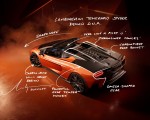
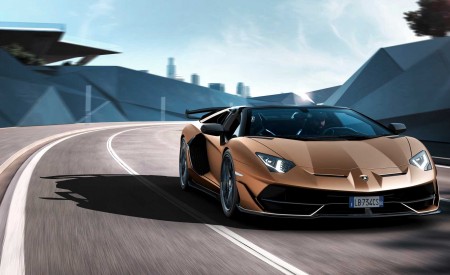
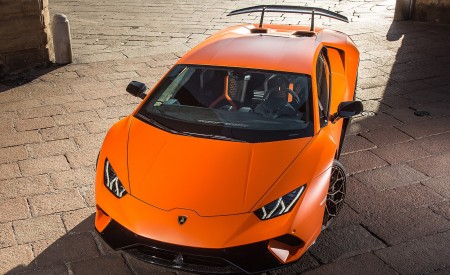
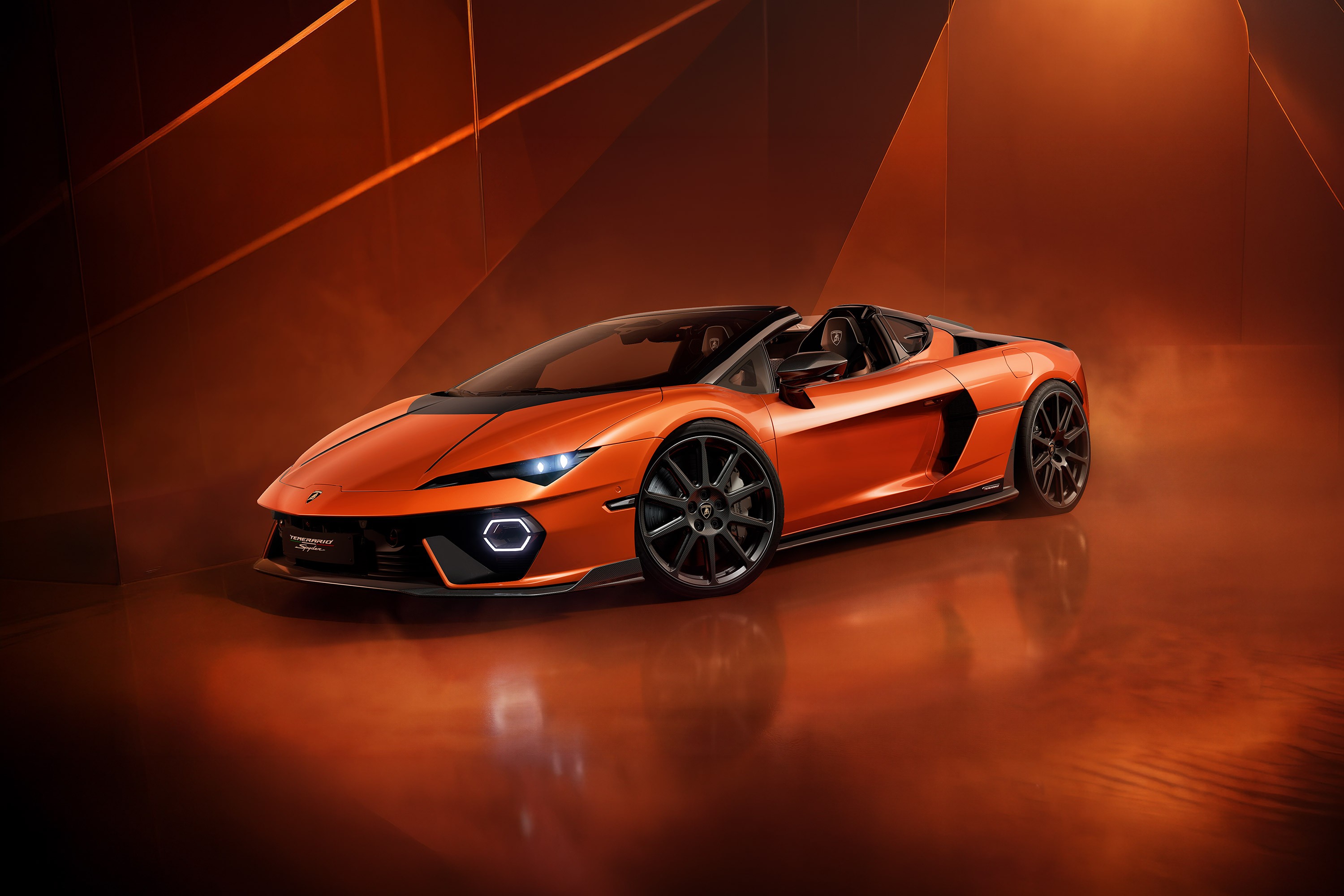
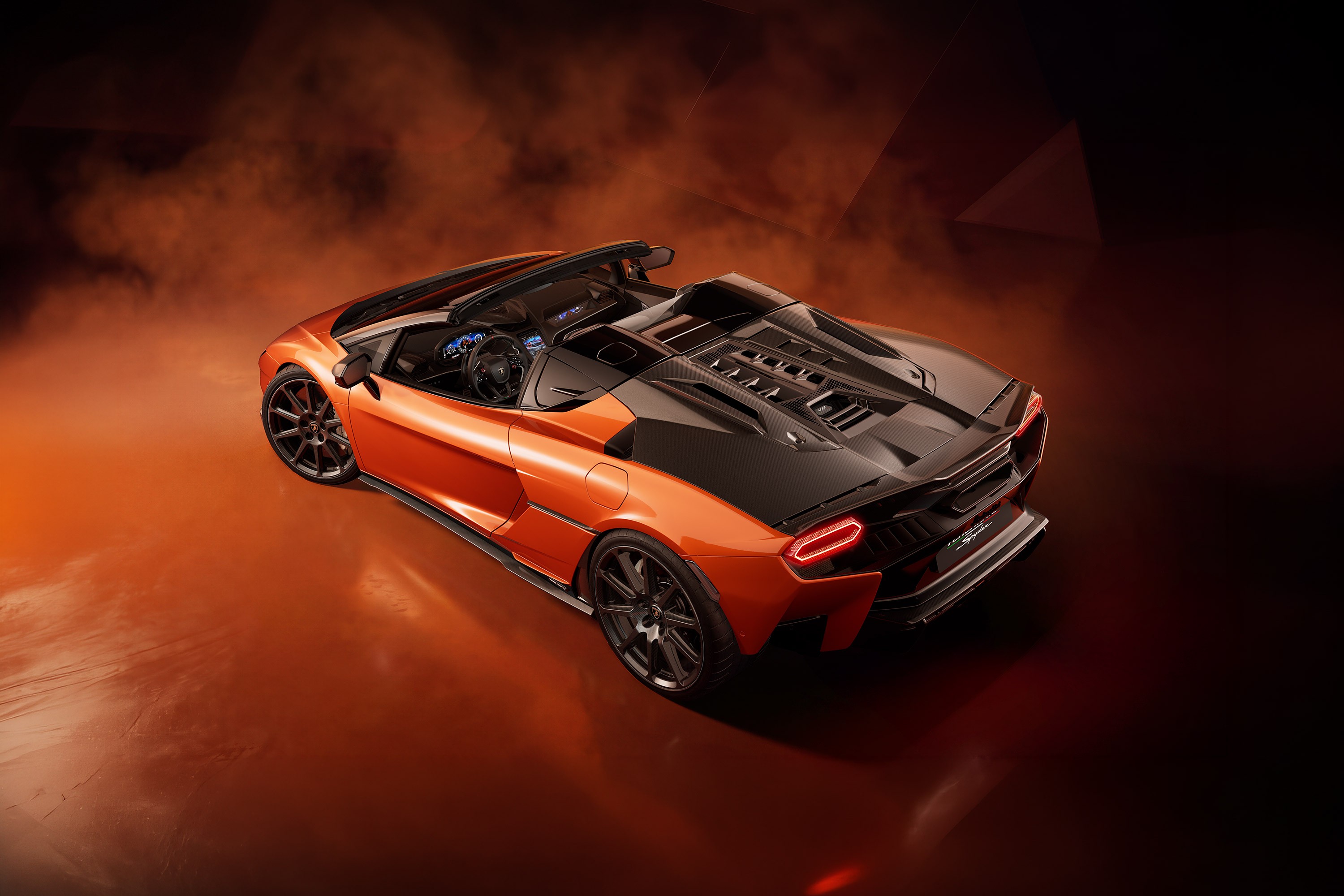
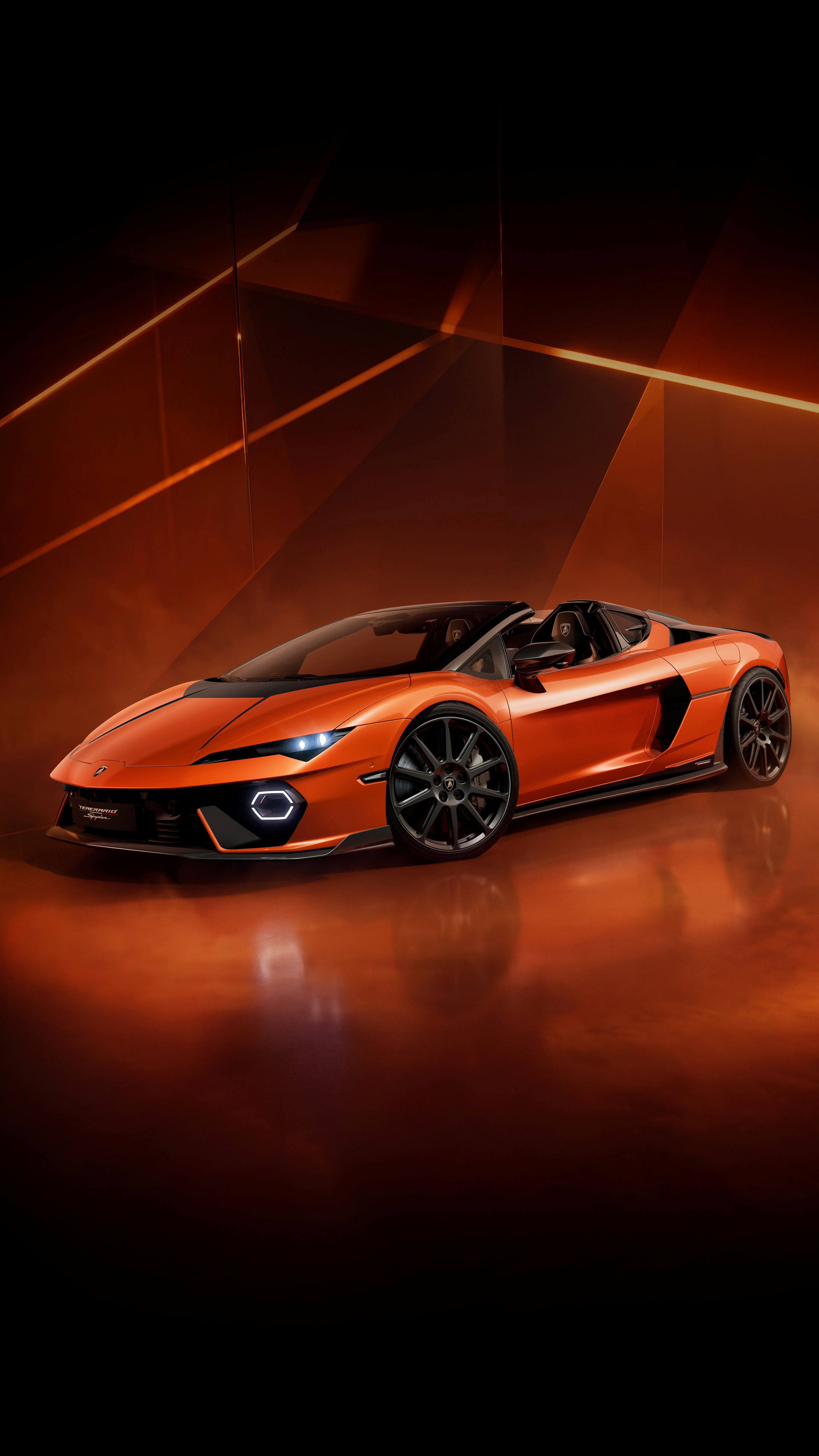
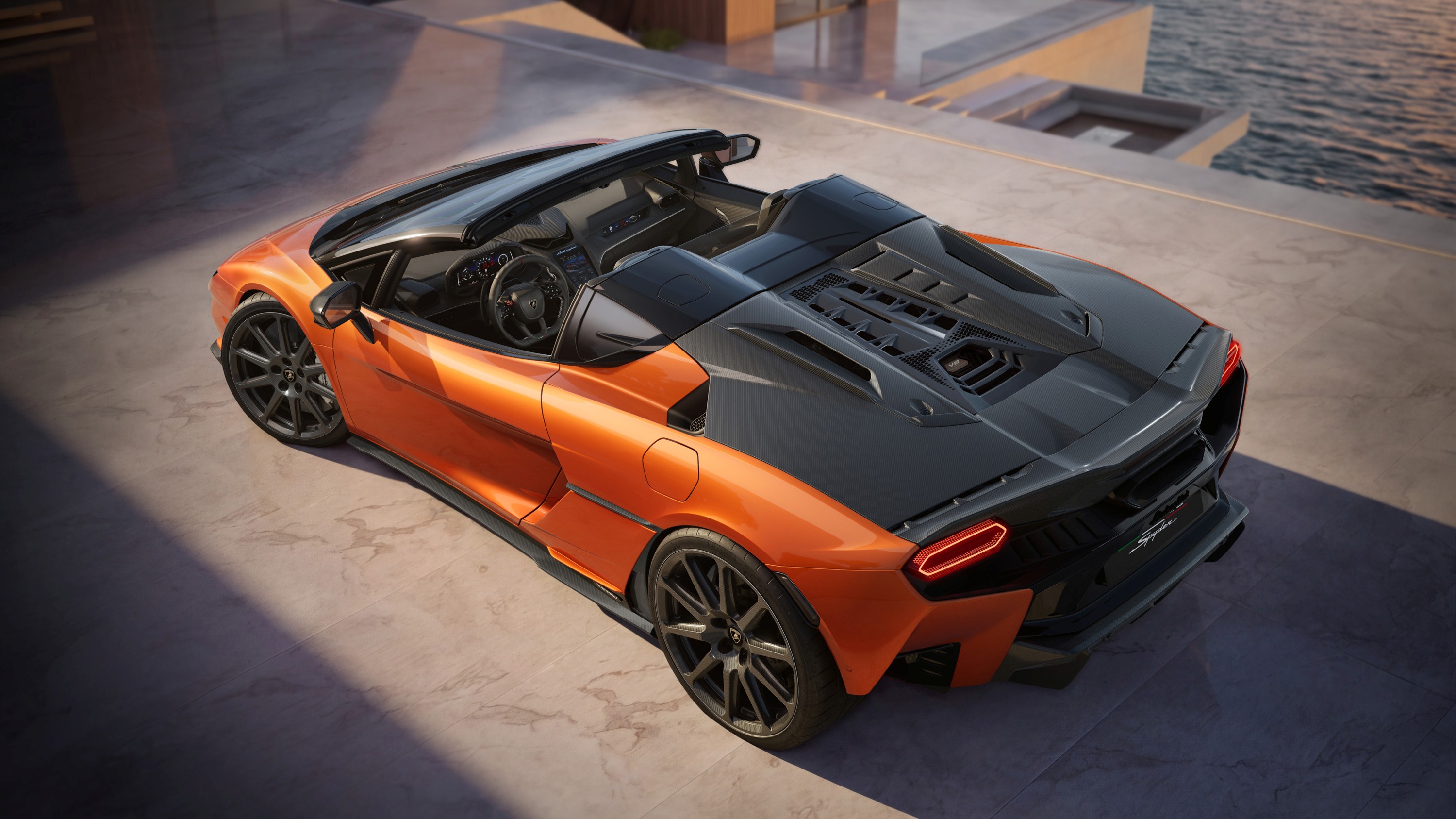
The Lamborghini Temerario Spyder is an open-top supercar featuring a fully retractable hardtop, operated electrically at the push of a button.
It is powered by a 4.0-liter twin-turbo V8 plug-in hybrid system with three electric motors, producing a combined 907 hp.
The Spyder accelerates from 0 to 62 mph in 2.8 seconds and reaches a top speed of 213 mph (343 km/h).
Weighing 1,805 kg, it is 100 kg heavier than the standard Temerario Coupe.
Other highlights include carbon-ceramic brakes, all-wheel drive, an eight-speed automatic transmission, and a three-level neck warmer.
Automobili Lamborghini presented the Temerario Spyder, its new convertible super sports car that is designed to elevate the engaging driving experience and emotion of the Temerario to a new dimension.
The Temerario Spyder is a new interpretation of the Fuoriclasse (in a class of its own) concept: a super sports car that combines the unique character and exceptional performance of the coupé with the sensory immersion of open-air driving that only a convertible can offer. Two different ways of experiencing Temerario, united by the same architecture, the same unmistakable dynamic qualities and the same goal: to generate unique emotions.
In a first for Lamborghini, the Spyder is launched with a retractable hard top. The solution was developed specifically for the model to combine comfort, driving precision and aerodynamic efficiency, in both the closed and open configurations.
Open-air driving develops the relationship between driver, car and surroundings, particularly enhancing the acoustic dimension of the powertrain. The Lamborghini twin-turbo V8 features a flat-plane crankshaft and technical solutions derived from the world of motorsport. The even firing order and reduced rotating masses allow the engine to rev to 10,000 rpm in normal operation, with the limit raised to 10,250 rpm when Launch Control is engaged – the highest engine speed of any series-production open-top super sports car with a turbocharged engine. Deep and full at low revs, the sound progressively gains intensity and definition as engine speed rises, accompanying the V8's delivery in a continuous crescendo all the way to the highest revs.
 Lamborghini
 Lamborghini
 Lamborghini
 Lamborghini
 Lamborghini
 Lamborghini
 Lamborghini
 Lamborghini
 Lamborghini
 Lamborghini
 Lamborghini
 Lamborghini
 Lamborghini
 Lamborghini
The new model continues a Lamborghini tradition of open-top super sports cars that began in 1976 with the Silhouette. Now, fifty years later, that tradition encompasses a new, electrified generation.
"Temerario Spyder takes the Fuoriclasse concept into a new dimension, amplifying the emotions that underpin the Temerario experience," says Stephan Winkelmann, Chairman and CEO of Automobili Lamborghini. "It is a super sports car that raises the bar still further for performance and driving dynamics, adding the unique engagement of open-air driving. With 920 CV and the first retractable hard top ever fitted to one of our Spyders, we offer customers two different experiences of the same car, with no compromise in emotion, technology or driving pleasure."
Design: two configurations, one unique DNA
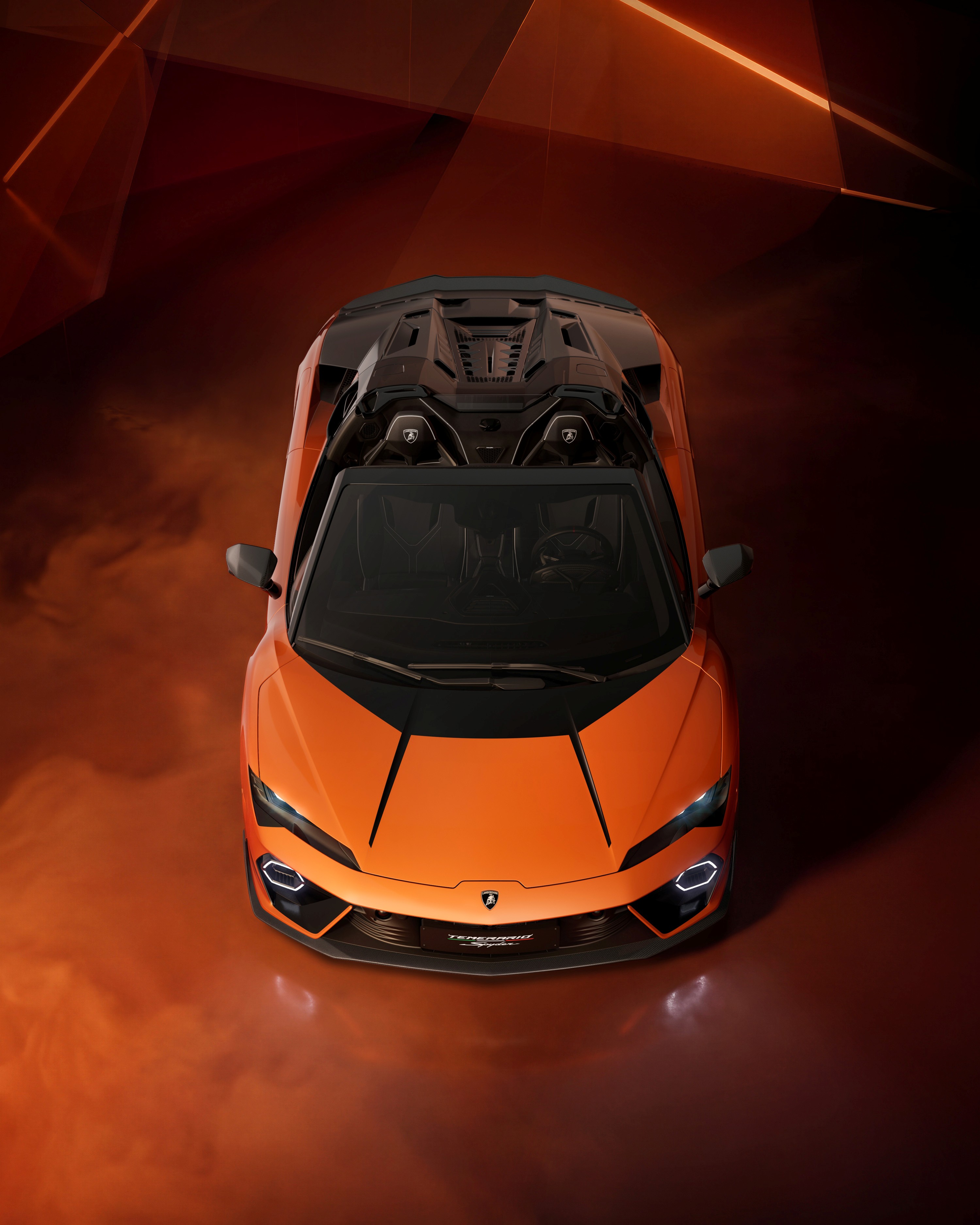
The Spyder reinterprets the Temerario design language that was introduced at the model launch, with through a new architecture conceived around the open-air driving experience. The coupé's athletic proportions, pure surfaces and clean lines remain instantly recognisable, while the adoption of the retractable hard top required the designers at Centro Stile Lamborghini to completely rethink the upper and rear sections of the car.
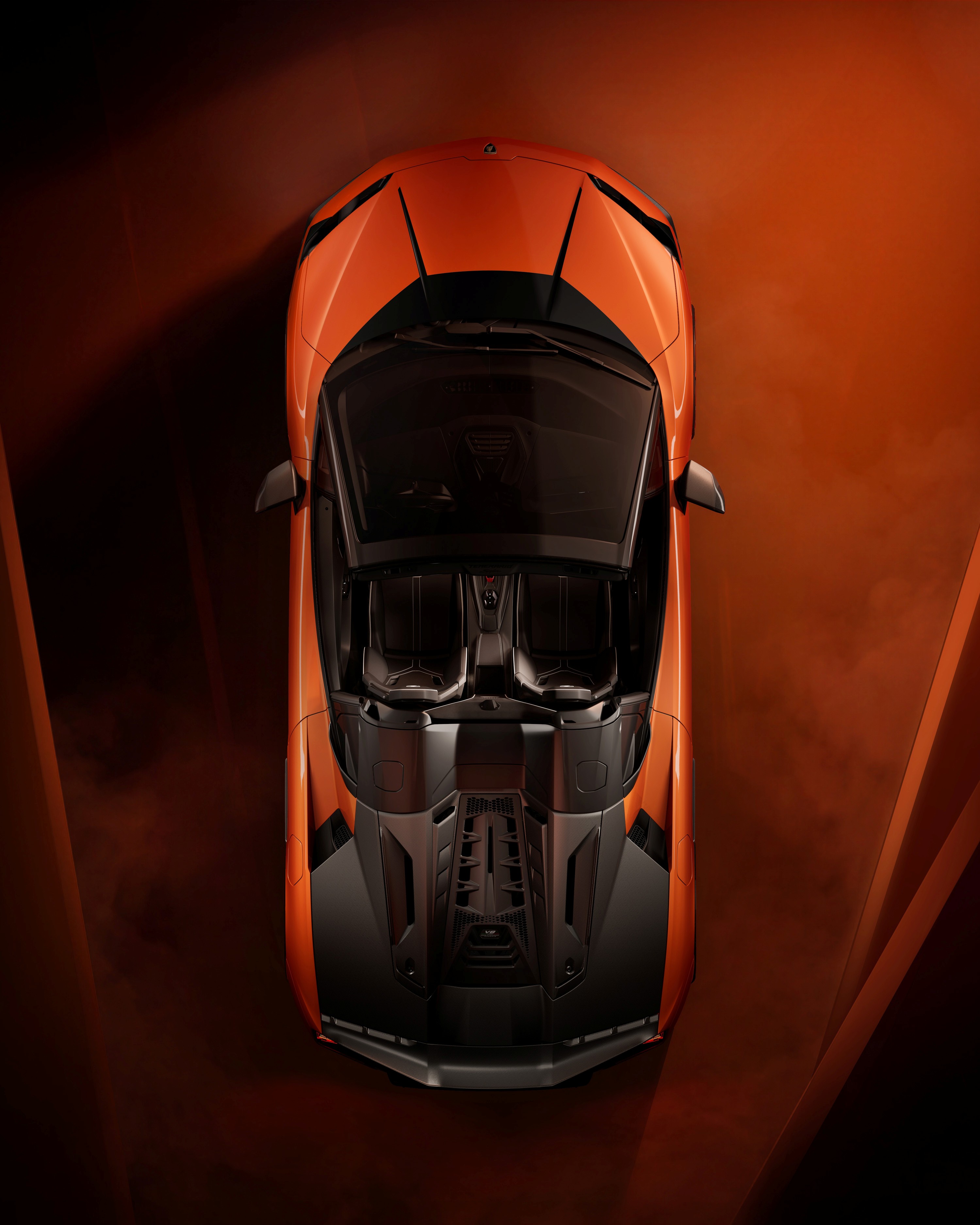
With the roof closed, the profile retains a compact, continuous silhouette, integrating the hard top into the volume of the cabin without altering the tension of the lines that characterises Temerario. With the roof open, the absence of the upper volume makes the car look even lower, and highlights the relationship between cabin, rear shoulders and powertrain.
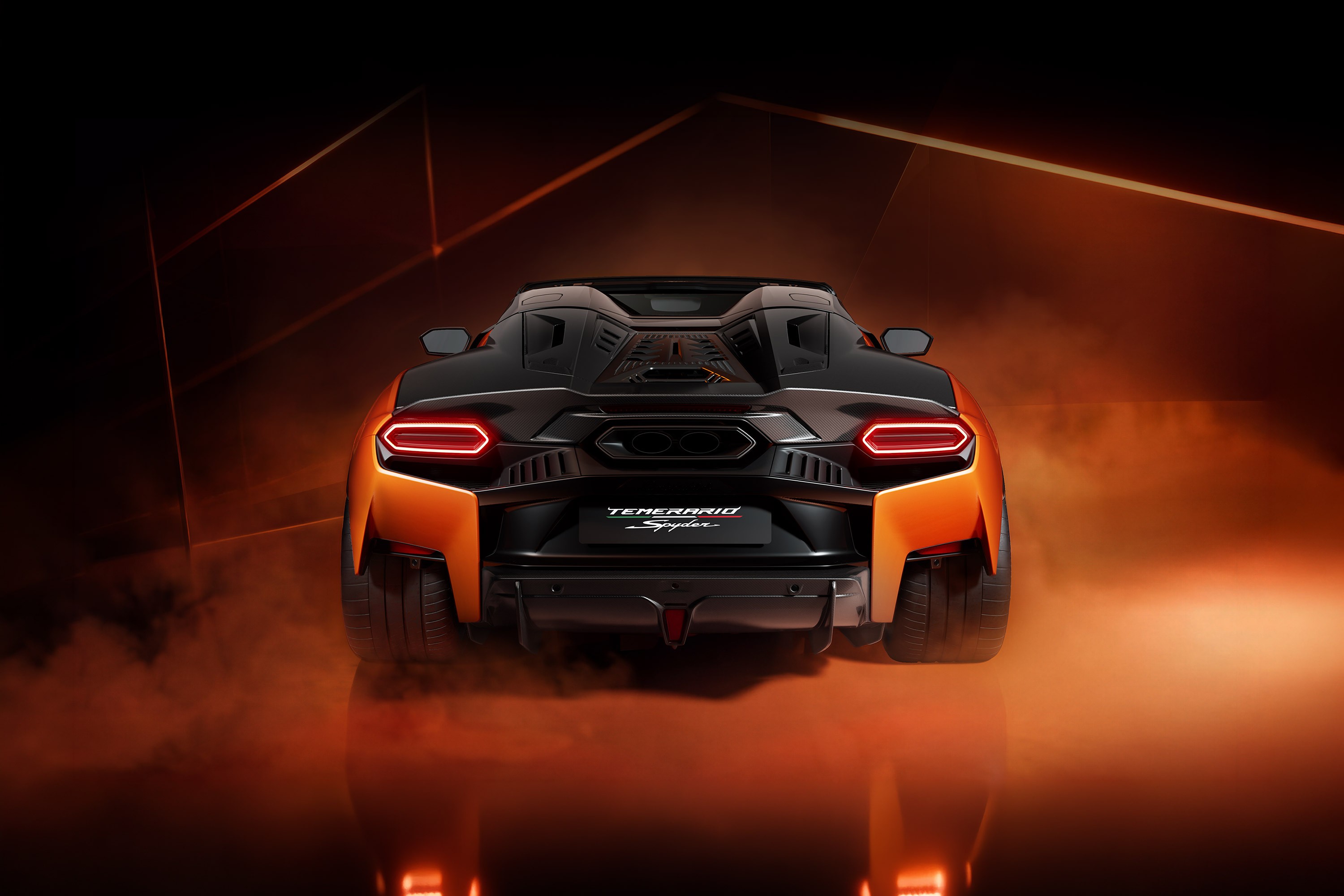
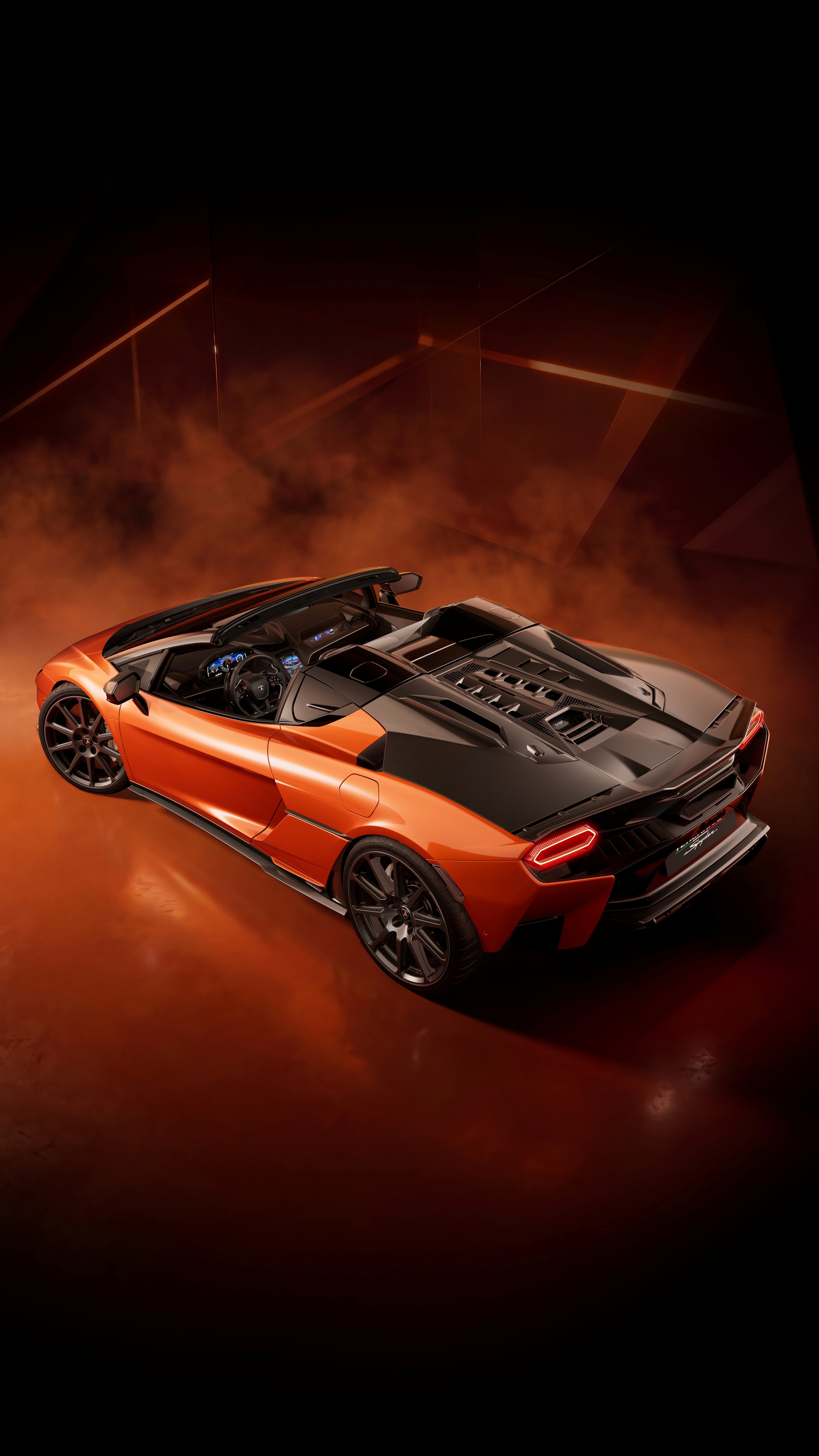
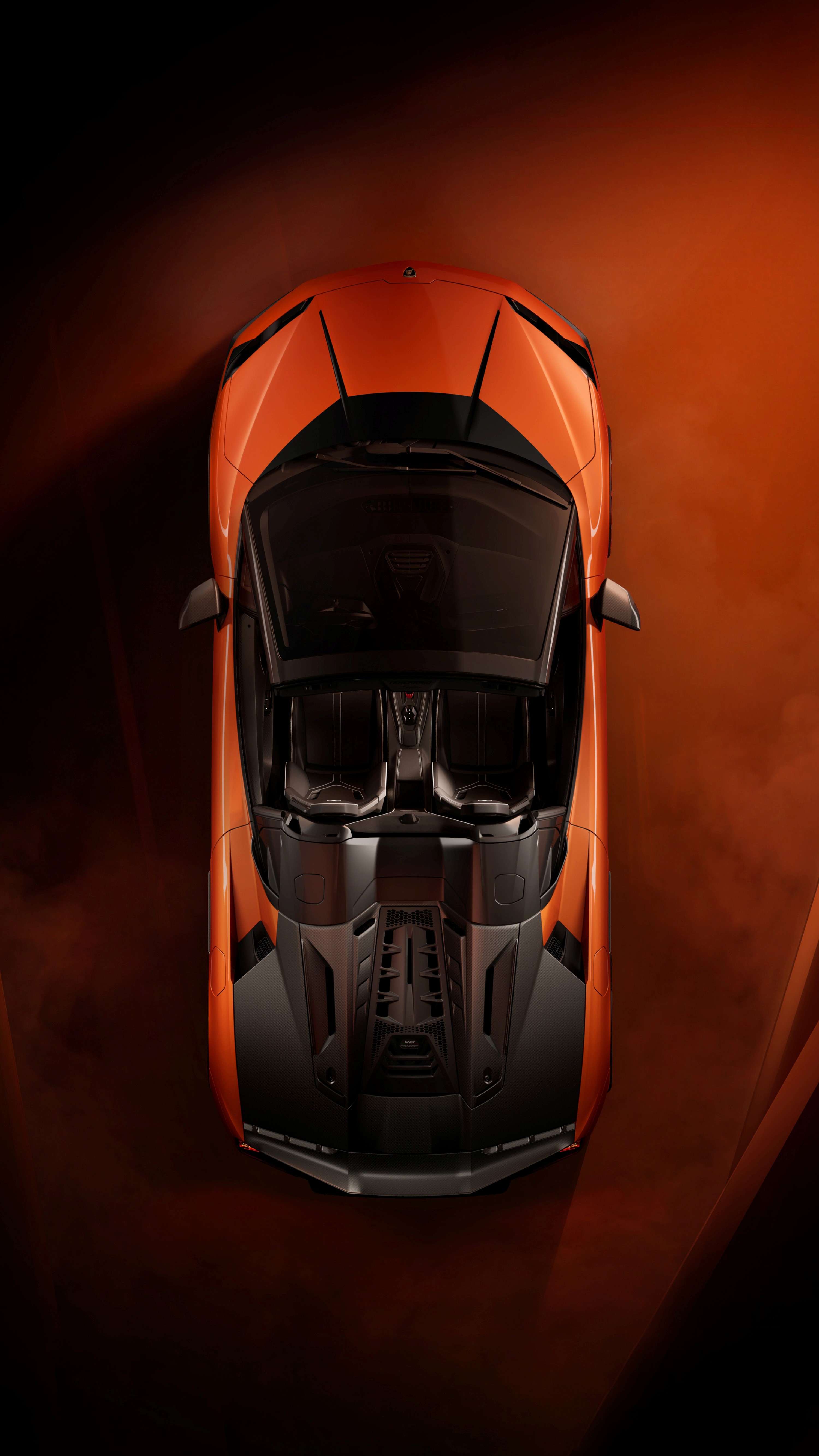
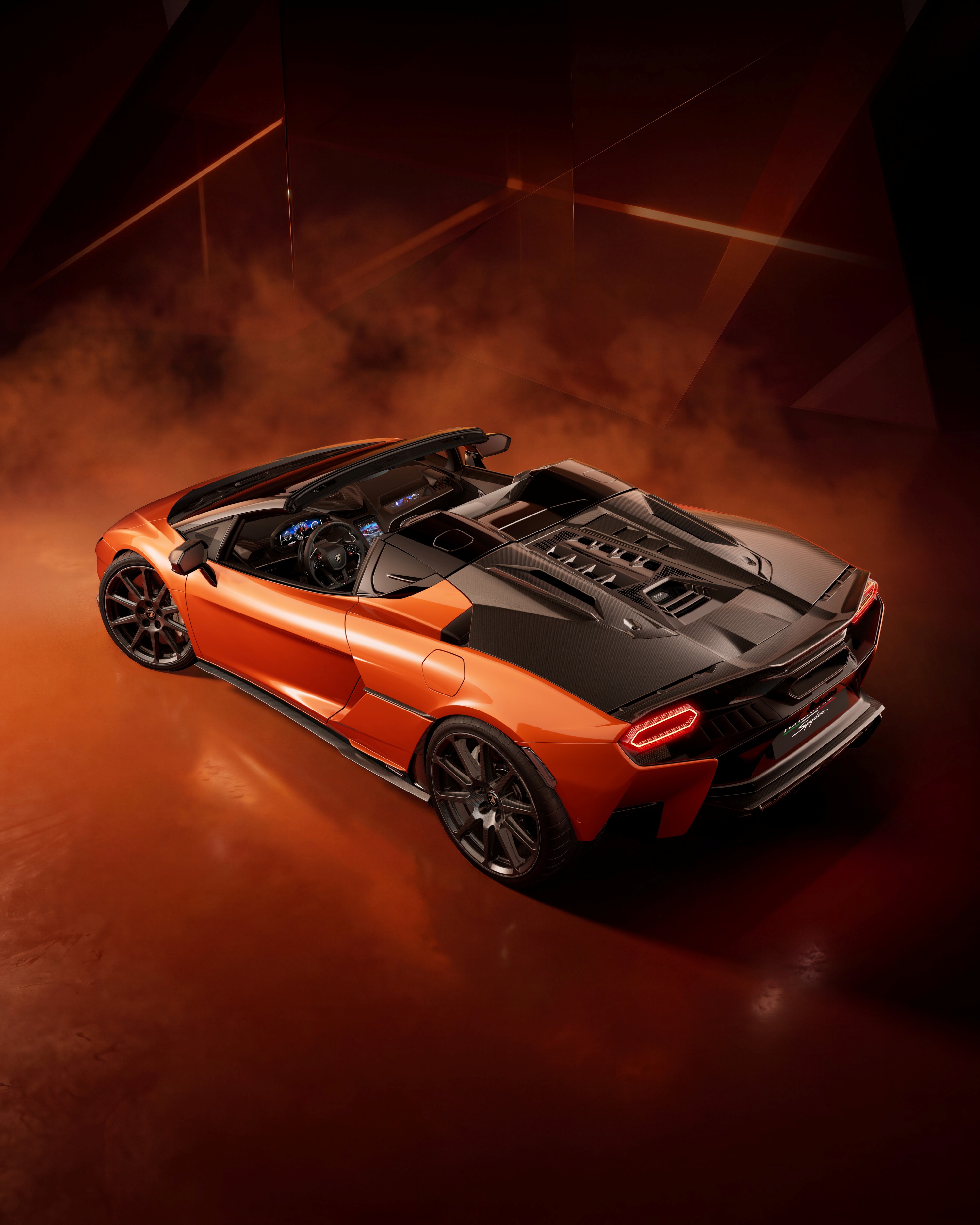
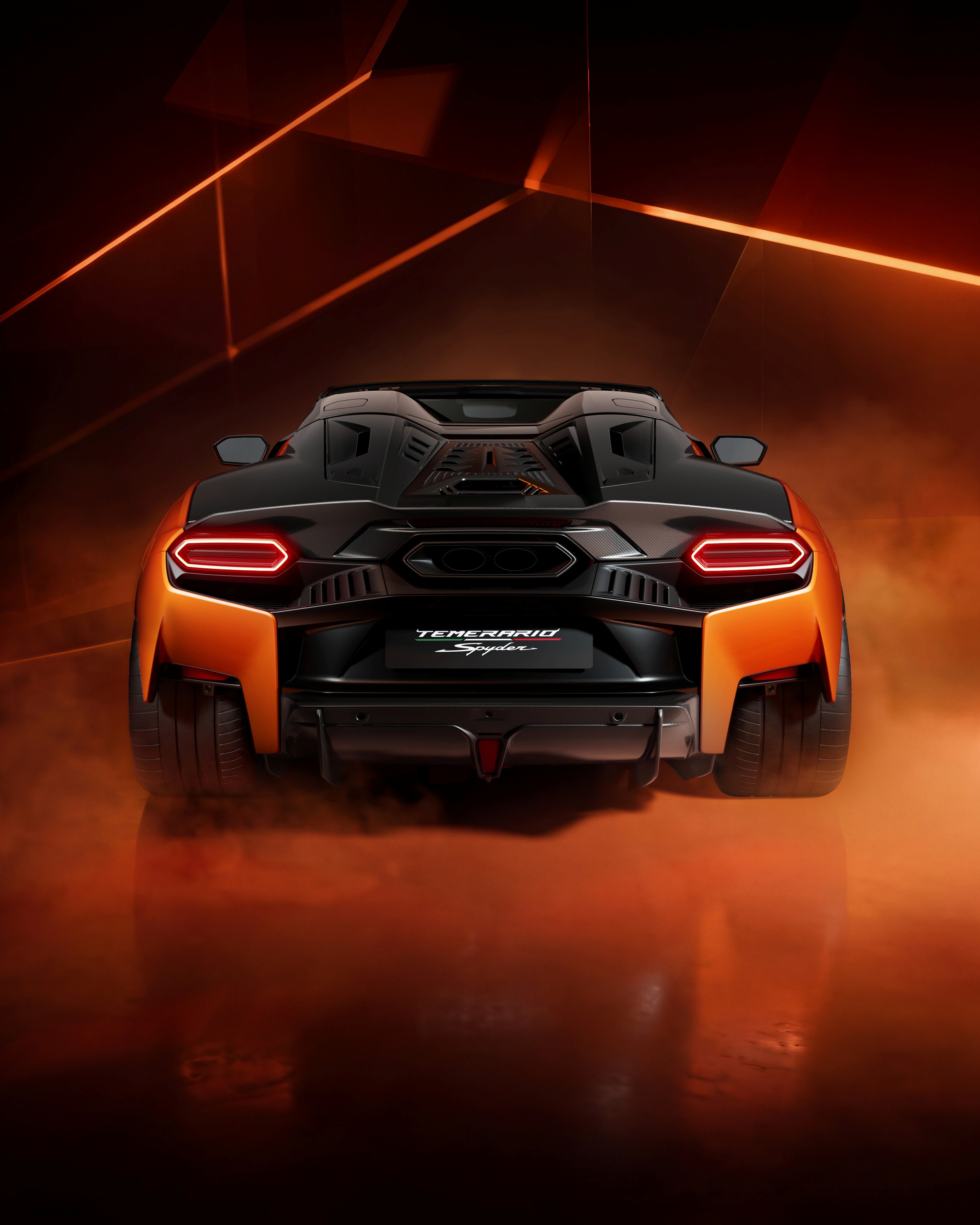
Behind the driver and passenger, two rear streamlined cowls with a distinctive racing profile visually extend the cabin towards the tail and are among the most recognisable features of Temerario Spyder. Their hexagonal geometry draws on one of the most distinctive stylistic elements of Lamborghini design and helps define the new architecture of the rear, creating visual continuity between cockpit, engine cover surfaces and engine bay.
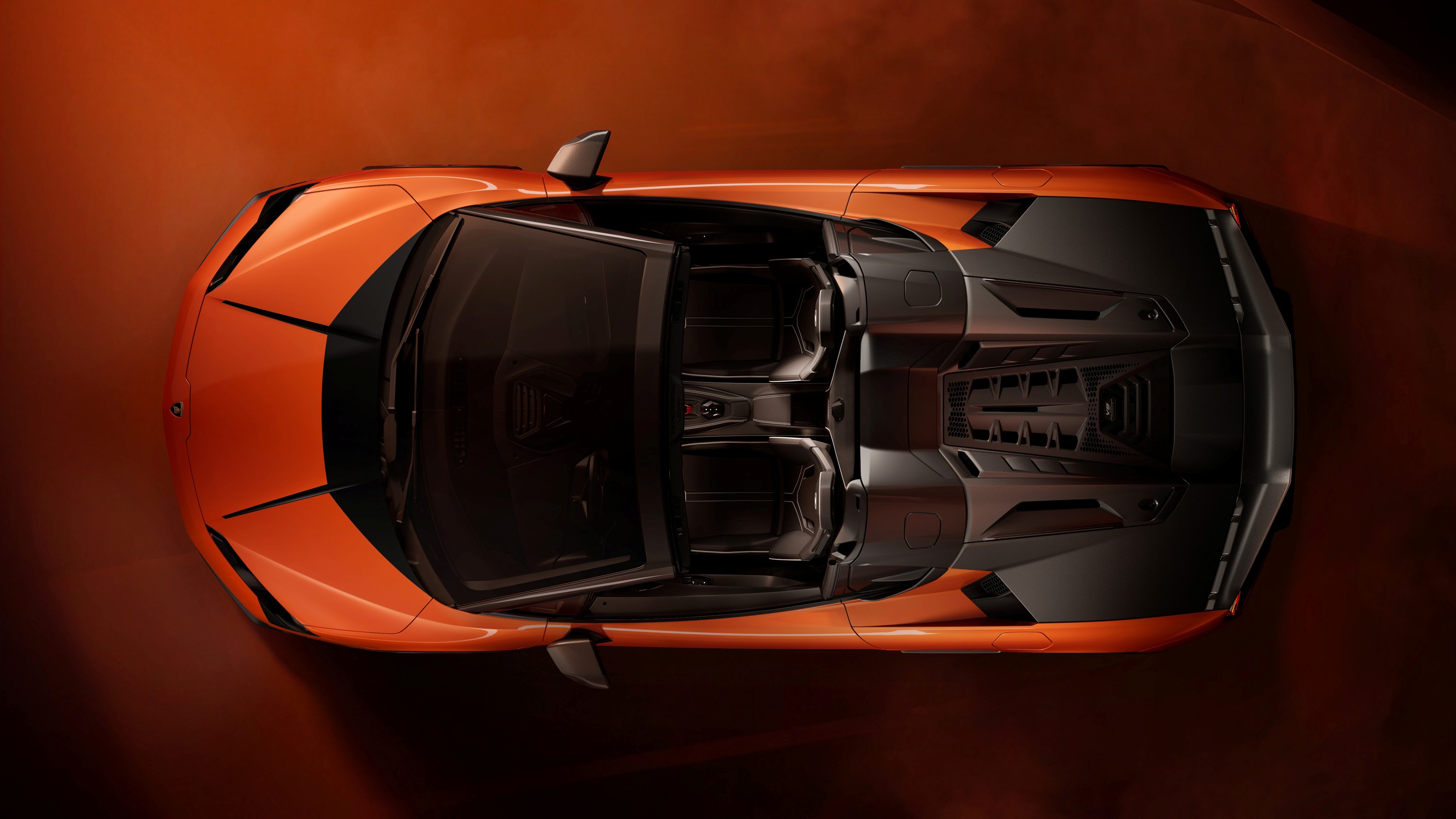
The new engine cover that houses the twin-turbo V8 showcases the technical heart of Temerario, while air intakes, openings and aerodynamic components make visible the relationship between form and function. In the open-air configuration this approach is further enhanced, turning the mechanics into an integral part of the car's visual experience.
"With Temerario Spyder we did not simply want to take the roof off the coupé, but to reinterpret our essential and iconic design language through a true open-air architecture," says Mitja Borkert, Design Director of Automobili Lamborghini. "The most stimulating challenge was integrating a complex system such as the retractable hard top without turning it into an add-on, preserving the purity and tension of Temerario's proportions. At the same time, we wanted the V8 to remain a focal point: the technical heart of Temerario is visible because, for us, mechanics are part of the aesthetic experience of a Lamborghini."
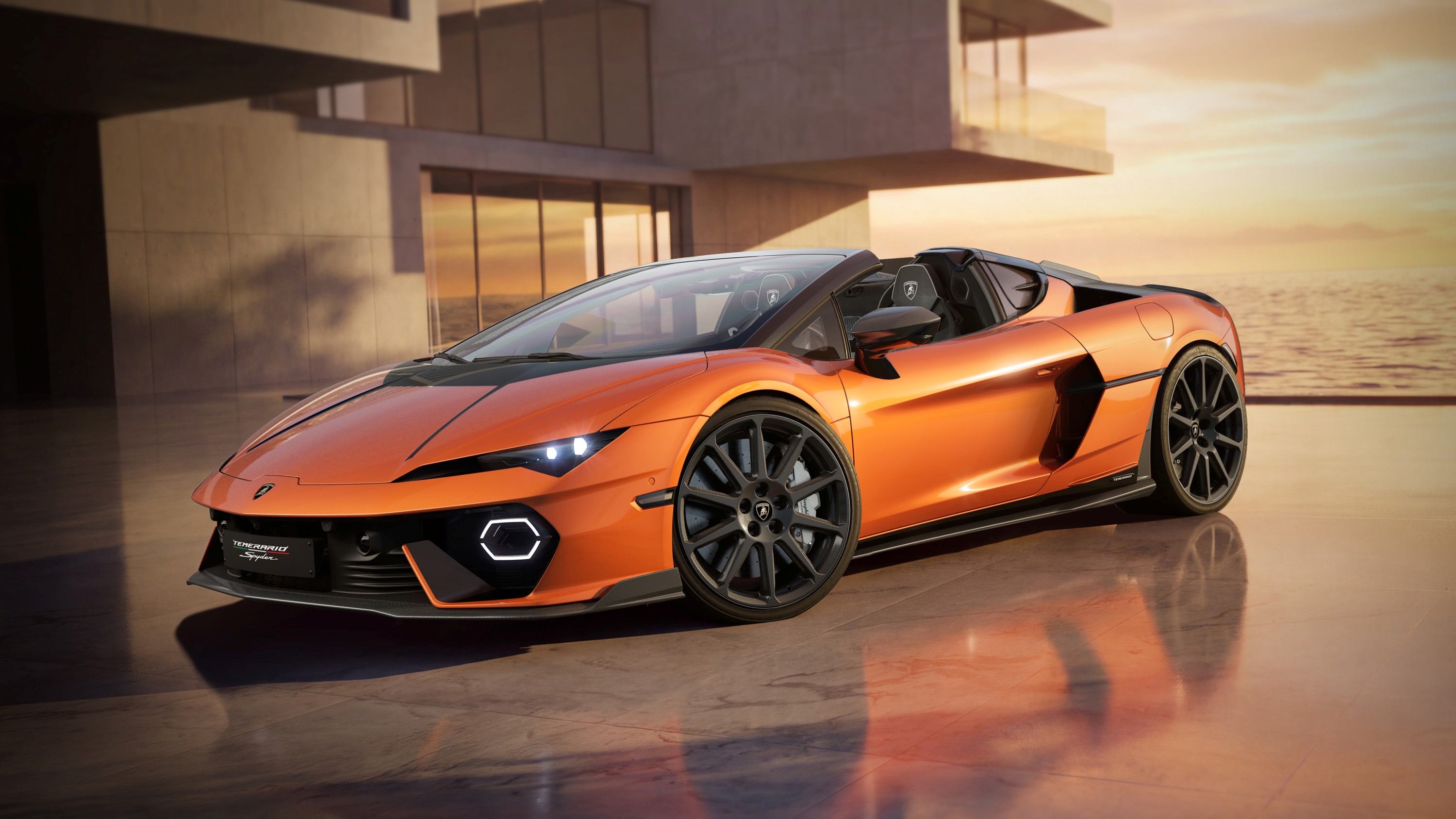
The launch configuration interprets this approach through a sophisticated combination of colours and materials. The bodywork is finished in gloss Blu Cepheus, combined with the Style Pack Shiny Black and exposed carbon fibre elements. Velador wheels in Nero Lucido, paired with black brake calipers, further accentuate the car's sporting character. The launch configuration of the for Alleggerita Package is Body Arancio Egon, details shyny black, carbon fiber roof paired with black interiors with white stitching in contrast. For the Alleggerita Package, the launch configuration features Arancio Egon bodywork with Shiny Black details and a carbon-fibre roof, paired with a black interior featuring contrasting white stitching. The combination highlights the more performance-focused character of the Alleggerita version while maintaining a refined and distinctive visual identity.
The cabin, by contrast, features a Bianco Polar configuration, chosen to underline the bright, refined character of the Spyder, with leather and Corsatex by Dinamica microfibre upholstery combined with carbon fibre elements, striking a balance between elegance and sportiness.
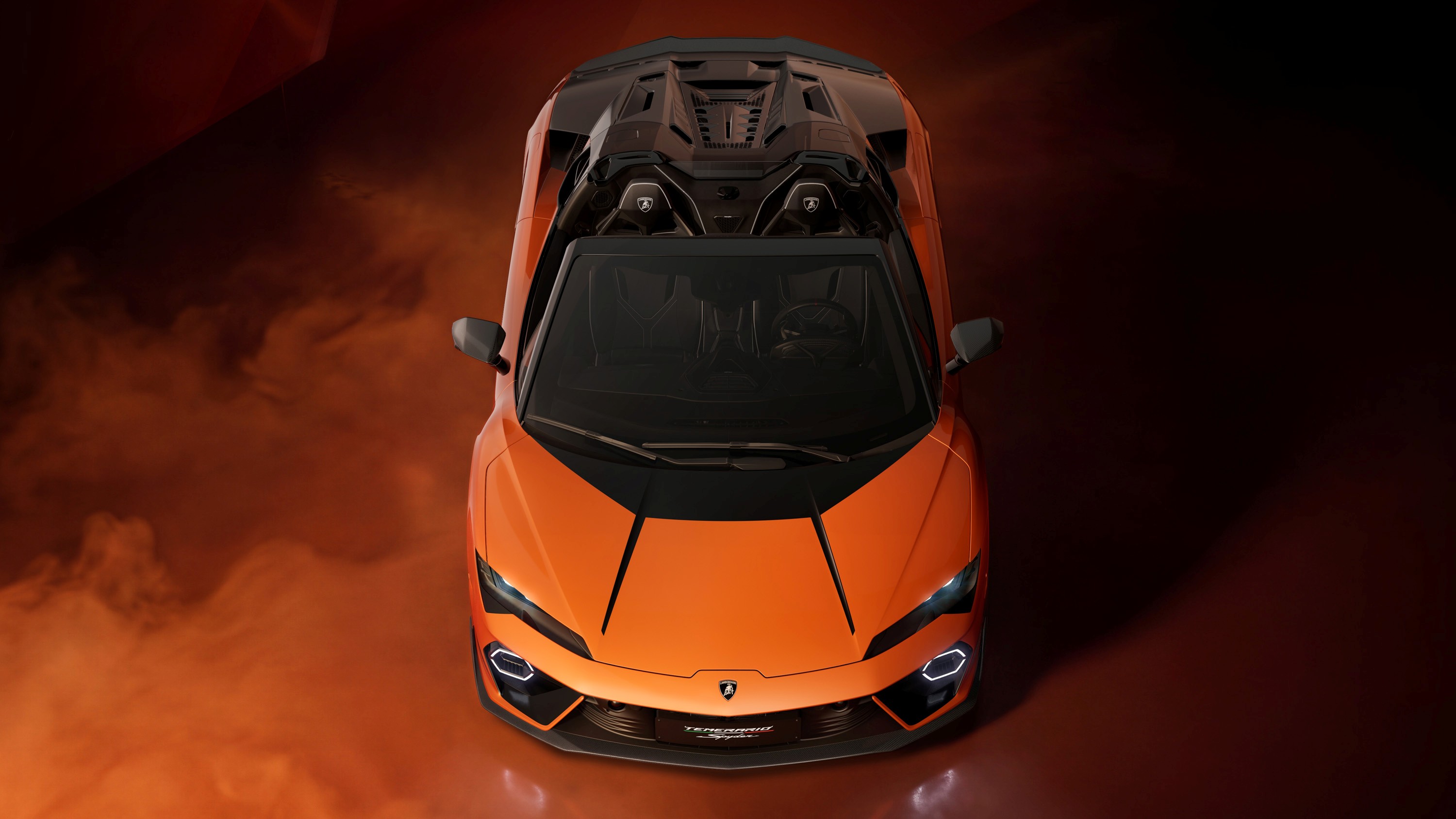
For customers wishing to further emphasise the sporting character of Temerario Spyder, an exclusive livery is also available, featuring a two-tone scheme with Nero Noctis extending across the bonnet and two contrasting black stripes running longitudinally along its surface. The graphic treatment enhances the car's low, dynamic proportions and gives the front end an even more distinctive and performance-oriented appearance.
The first retractable hard top on a Lamborghini Spyder
The first retractable hard top ever featured on a Lamborghini stems from an architecture developed specifically for Lamborghini Temerario Spyder, characterised by a distinctive dual-blade configuration, a vertical stowed position and a fully electric operating system. At the heart of the system is an innovative patented operating mechanism that enables the roof's distinctive vertical kinematics.
The dual-blade layout and its kinematics are specific to Temerario Spyder. The cycle is managed by ten electric actuators. The use of a fully electric system eliminates the need for traditional electro-hydraulic circuitry and its pump, minimising noise during opening and closing and contributing to a more compact architecture. The movable rear window can also be electronically adjusted, allowing occupants to modulate both aerodynamic protection and the presence of the engine sound inside the cabin.
The dual-blade roof folds vertically behind the seats, in a particularly low position close to the car's centre of gravity. With the roof open, the centre of gravity drops by 3 mm when compared with the closed configuration, while its longitudinal position remains substantially unchanged and the weight distribution is unaltered. A traditional solution with horizontal roof stowage would instead raise the centre of gravity by approximately 7 mm and shift it 11 mm towards the rear axle. The kinematics developed by Lamborghini therefore keep the mass of the roof low and close to the centre of the car, reducing its influence on vehicle dynamics. The lower centre of gravity limits roll moment, while the centralisation of masses promotes a sharper response in changes of direction, helping to preserve agility and high-speed stability in both configurations.
With the roof closed, Lamborghini Temerario Spyder retains the aeroacoustic comfort, precision and usability of a super sports car designed for both short and long journeys. With the roof open, the way driver and passenger perceive speed, sound and the world outside changes. The aim, then, is not simply to offer a convertible version of Temerario, but to allow the driver to choose how to experience the car according to the road, the moment and the type of experience desired.
"Temerario Spyder embodies the concept of two souls, one Fuoriclasse," says Fermín Soneira, Chief Technical Officer of Automobili Lamborghini. "It introduces unique technical innovations specifically developed for the open-air driving experience, while preserving the high-performance hybrid architecture and outstanding dynamic capabilities of the Temerario Coupé. Our patented vertical roof concept keeps the centre of gravity low when the roof is open without altering the car's weight distribution. Together with the dedicated body structure and aerodynamic development, this allows the driver to experience the intensity of the V8 at 10,000 rpm and the car's performance at speeds of up to 343 km/h, while retaining the precision and confidence that define Temerario."
Compared with earlier Lamborghini Spyder models with fabric soft tops, the retractable hard top also opens up new personalisation possibilities: the rigid surface of the roof becomes a full part of the car's aesthetic design, broadening the combinations available through the Ad Personam programme and reinforcing the distinctive character of each Temerario Spyder.
A new structural architecture for the open-air experience
The chassis of Lamborghini Temerario Spyder was developed specifically for the open-air configuration, with the aim of preserving the highest levels of structural rigidity and dynamic precision even without the roof as a load-bearing element. The result is the most advanced Lamborghini Spyder ever in terms of chassis engineering, capable of delivering an open-air driving experience with no compromise in performance, control or engagement.
Compared with Huracán Spyder, the new architecture delivers a six per cent increase in static torsional rigidity, nine per cent in dynamic bending stiffness of the body shell and six per cent in dynamic torsional rigidity. A stiffer structure allows the suspension and vehicle control systems to work more effectively, improving turn-in precision, stability and the quality of feedback transmitted to the driver even in the most extreme conditions of use. Temerario Spyder thus combines the freedom and sensory intensity of open-top driving with a level of precision and responsiveness never before achieved by a Lamborghini Spyder.
The load-bearing structure derives from the Body-in-White of the Coupé version, designed according to a multi-technology spaceframe philosophy developed to withstand the high stresses generated by the hybrid powertrain, combining excellent mechanical characteristics with efficient mass containment.
For the Spyder version, the architecture has been further evolved through the redesign of the main structural nodes and the introduction of specific stiffening elements. The work focused on the central structural ring of the cabin, with new reinforced sections and the main load paths optimised for the requirements of the new vehicle architecture. Particular attention was paid to the area behind the seats, completely redesigned to accommodate the retractable hard top in the vertical position. This development work has laid the foundations for benchmark levels of rigidity and dynamic quality in the open-top super sports car segment.
Built entirely in aluminium, the spaceframe uses high-strength alloys for high-pressure die castings, high-strength hydroformed extrusions and large hollow, closed-section thin-walled castings produced using internal cores. These solutions have significantly reduced construction complexity while at the same time increasing the level of functional integration required by the hybrid architecture. Compared with the previous Huracán EVO Spyder, the number of structural components has been cut by 50 per cent, while welds requiring heat input have been reduced by 80 per cent, with benefits in terms of production efficiency, weight and structural performance.
Two souls, one Fuoriclasse
"Temerario Spyder was not conceived simply as the convertible version of the Coupé," stated Paolo Racchetti, Product Line Director Temerario. "From the outset, our goal was to preserve the full range of Temerario's character while adding an even more direct emotional dimension. This is a super sports car with different souls: comfortable and intuitive in Strada, playful and direct in Sport, and precise and performance-focused in Corsa. With the roof open, these characters are amplified by a more immediate connection with the V8, the road and the surroundings; with the roof closed, the same dynamic precision, comfort and usability remain fully intact. The result is unfiltered emotions in every driving mode, whether the roof is open or closed."
Underpinning the performance of Lamborghini Temerario Spyder is the HPEV architecture developed for Temerario Coupé, in which the 4.0-litre Lamborghini twin-turbo V8 is integrated with three axial-flux electric motors.
The powertrain delivers a combined 920 CV (677 kW), with maximum torque of 800 Nm at clutch level, generated by the combustion engine together with the P1 electric motor. The combustion engine, designed and developed entirely in Sant'Agata Bolognese, delivers 800 CV (588 kW) and can reach 10,000 rpm, an exceptionally high engine speed for a series-production turbocharged engine.
The two turbochargers are positioned inside the V formed by the 90 degree cylinder banks, that helps make the engine architecture more compact and shortens the path of exhaust gasses to the turbines, promoting quick throttle response. Maximum boost pressure reaches 2.5 bar.
The ability to reach such high revs also stems from the use of a flat-plane crankshaft, with a 180 degree angle between the crankpins. This solution, derived from the world of motorsport, promotes an even firing order between the two cylinder banks, reduces rotating masses and makes a decisive contribution to the V8's responsiveness and sound identity. Titanium connecting rods further limit moving masses, while the cylinder heads are made from A357+Cu aluminium alloy, also used in racing applications. The finger followers, with a DLC (Diamond Like Carbon) coating, are designed to withstand the loads generated by high engine speeds.
Paired with the V8 are three axial-flux electric motors: one located between the combustion engine and the eight-speed dual-clutch gearbox, and two on the front axle. The particular architecture of these units delivers high power and torque density in compact, lightweight packages, facilitating their integration within the hybrid system. The combination of combustion and electric power allows the Temerario Spyder to accelerate from 0 to 100 km/h (62 mph) in 2.8 seconds and from 0 to 200 km/h (124 mph) in 7.3 seconds, reaching a top speed of 343 km/h (213 mph).
The electrified all-wheel drive and active torque distribution between the four wheels also make it possible to profoundly alter the car's behaviour according to conditions and driving style. Temerario Spyder offers a total of 13 driving experiences, combining the Città, Strada, Sport, Corsa and Corsa ESC Off modes, selected via the upper left rotary dial on the steering wheel, with the Recharge, Hybrid and Performance hybrid system strategies, managed by the upper right rotary dial. The button with the chequered flag also activates Launch Control.
In Città mode, comfort and efficiency are a priority, and the car can run in fully electric mode, with maximum power of 190 CV (140 kW), or use Recharge to restore the battery charge level via the V8. Strada, meanwhile, is calibrated for out-of-town roads and long journeys, combining comfort, efficiency and sporting characteristics. The all-wheel drive intervenes as required, while the electrified front axle manages active torque distribution; maximum power reaches up to 800 CV (588 kW) in Hybrid and up to 725 CV (533 kW) in Recharge.
Selecting Sport provides a more responsive character, and is geared towards driving pleasure. The powertrain can deliver up to 920 CV (677 kW), while gearbox, suspension and dynamic control systems prioritise agility and speed of response. In the open-air configuration, the closer connection between cabin and surroundings makes the V8's progression even more directly perceptible.
In Corsa mode, Lamborghini Temerario Spyder reaches its most performance-focused configuration. In combination with Performance, the powertrain delivers 920 CV (677 kW) and the management of the electrified front axle is calibrated to make the most of active torque distribution and all-wheel drive. With the roof open, the V8's climb towards 10,000 rpm becomes an even more direct part of the driver's experience.
Completing the range of adjustments is Drift Mode, developed to allow the driver to manage oversteer in a controlled manner. Selectable via the lower right rotary dial on the steering wheel, it offers three levels of intervention: from the first, which facilitates oversteer while keeping the yaw angle contained, to the third, aimed at the most experienced drivers and characterised by wider yaw angles.
An unmistakable sound
The sound was developed around the regular sequence of combustion events of the flat-plane V8. Among the components that most define its character, the characteristic fourth-order harmonic is particularly prominent, one of the noblest and most recognisable acoustic signatures of the V8 architecture. Deep and full in the first part of the rev counter, the timbre progressively gains intensity, definition and higher frequencies as engine speed rises, accompanying delivery in a continuous crescendo all the way to 10,000 rpm. The sound components transmitted to the cabin through the air and through the structure are calibrated to further strengthen the connection between driver and powertrain.
The engine's particular architecture contributes directly to its sound identity. A dedicated link between the cylinder banks optimises the acoustic response according to engine speed, while the silencer and exhaust valve modulate the behaviour of the system under different operating conditions. The exhaust system emphasises the combustion process through ducts with smooth internal surfaces; the geometry, height and transverse position of the tailpipes have also been defined to increase the clarity of the sound and enhance its higher-frequency components.
The flat-plane crankshaft also generates a specific spectrum of vibrations, the intensity of which increases progressively with engine speed. Transmitted to the car's structure, these help create an experience that is not only acoustic but also physical. The lightweight body panels and the structure of the Body-in-White contribute to the transmission of sound and vibration components, while the vibrations felt through the seat increase progressively as the engine approaches its highest speeds.
On the Spyder, this relationship between mechanics, sound and perception is further amplified by the open-air configuration. With the roof open, the sound of the V8 blends directly with the surrounding environment, while the adjustable rear window makes it possible to modulate the level of aerodynamic protection and the presence of the sound inside the cabin.
The result is a more immediate and engaging experience, in which the progression of the engine is perceived by the driver seamlessly, while the sonic pulsations that accompany lift-off phases spread into the surrounding environment, amplifying the emotional character of open-air driving.
The Città, Strada, Sport and Corsa modes each retain a specific acoustic character. In Città and Strada, comfort and consistency of the sound response prevail; in Sport and Corsa, the V8's characteristic orders and the harmonics of the intake system are accentuated, accompanying rising engine speed with an increasingly intense sonic signature. With the roof open, this evolution becomes even more perceptible, turning the sound of the V8 into one of the most authentic expressions of Temerario Spyder's character.
Aerodynamics developed for open-air driving
The aerodynamics have been designed to ensure stability at high speeds and comfort inside the cabin with the roof open. The geometry and relative position of the upper windscreen cross-member and the aerodynamic elements integrated in the rear section of the roof have been optimised to control the airflows affecting the cabin. Air is channelled towards the rear of the car and the spoiler, keeping the more turbulent components of the flow away from the occupants. The adjustable rear window also makes it possible to adapt aerodynamic protection to the height and position of the occupants. Together with the greater roominess of the cabin, these solutions have improved the level of comfort compared with Huracán EVO Spyder.
Even with the roof closed, the surfaces of the hard top have been developed with particular attention to the management of external airflows, helping to improve aero acoustic comfort compared with Huracán EVO Spyder.
Overall, the aerodynamic development allows Temerario Spyder to preserve the same dynamic character in both configurations and to express its performance fully with the roof either closed or open.
Comfort and versatility in every season
Lamborghini Temerario Spyder has been conceived to broaden the occasions on which a Lamborghini super sports car can be enjoyed in the open air. The neck warmer system integrated into the seats generates a flow of warm air, adjustable across three levels, around the necks and shoulders of the occupants, extending open-top use to cooler days as well.
The new cabin architecture, shared with the Coupé, preserves a low driving position centred on the driver, significantly increasing space and visibility compared with Huracán EVO Spyder: legroom increases by 46 mm and headroom by 22 mm, while shoulder and elbow room grows by 9 mm; upward visibility also improves by 4.7 degrees. Temerario Spyder can accommodate drivers up to 2 metres tall. The front luggage compartment offers a capacity of 112 litres and can hold two cabin trolley cases.
Specific suspension tuning reduces secondary vibrations on uneven surfaces by 20 per cent, improving comfort without compromising driving precision. Lamborghini Temerario Spyder broadens the character of the Temerario family without altering its identity.
Ad Personam for Temerario Spyder
Temerario Spyder further expands the possibilities offered by Lamborghini's Ad Personam programme, allowing customers to create an increasingly individual interpretation of the new open-top super sports car. Alongside the launch colours, the programme offers around 400 exterior shades, complemented by an extensive selection of special finishes, liveries and bespoke details.
Among the new possibilities are further interpretations of Lamborghini's harlequin finishes, whose colour and reflections evolve as the light interacts with the surface. The offer includes Blu Hal, Verde Agave, Oro Alba and Celeste Kami, each available in both gloss and matt finishes. Variants with more subtle colour transitions are also available, offering a more understated interpretation of the same changing effect.
Exterior personalisation is further extended through new liveries developed around some of Temerario Spyder's most distinctive elements, including the rear wing, engine cover, diffuser and front section of the bumper, as well as configurations inspired by the colours of the Italian Tricolore. The theme can be carried into the cabin through dedicated Tricolore embroidery, creating a visual connection between exterior and interior. This approach is consistent with Lamborghini's broader Ad Personam philosophy, in which colour, materials and graphics can become an integral part of the creative process rather than simply individual finishing choices.
Further opportunities for individualisation include the possibility to specify the rear Lamborghini script in a wide range of colours, introducing new contrasts and distinctive details to the exterior. Inside the cabin, the same attention extends to the Start & Stop flap, which can be configured in a selection of colours beyond the traditional red.
For customers seeking an even higher degree of personalisation, Temerario Spyder introduces customisable illuminated door sills with dedicated lettering, together with carbon-fibre interior plaques that can be personalised with bespoke graphics and content. These elements represent only part of the possibilities available through Ad Personam, continuing Lamborghini's approach to personalisation as a means of translating each customer's individual vision into a unique configuration. Lamborghini itself describes Ad Personam as an increasingly integral part of the ownership experience and a vehicle for individual self-expression.
Temerario Spyder Alleggerita
For customers seeking an even more performance-focused configuration, Temerario Spyder is available in the Alleggerita version, which makes extensive use of carbon-fibre reinforced polymer (CFRP) to reduce mass and further optimise the car's dynamic response. The front splitter, rocker covers, rear bonnet, rear upper panel and underbody panels are made from CFRP, while the cabin features carbon-fibre door panels and a carbon-fibre passenger footrest. When combined with the available carbon-fibre wheels, these measures deliver a total weight saving of 22 kg compared with the standard Temerario Spyder. In addition to reducing overall mass, the carbon-fibre wheels lower unsprung mass, further supporting responsiveness and precision in dynamic driving.
An immersive audio experience by Sonus faber
The High-End Sonus faber Sound System, developed by the sound artisans of Vicenza to deliver an immersive and natural listening experience, is offered. The 750 W Class D system uses seven speakers: a full-range centre channel, two tweeters and two midwoofers integrated into the doors, plus two full-range speakers positioned behind the driver and passenger for the Surround function. Specific tuning, the use of natural materials and proprietary Sonus faber algorithms recreate a precise, enveloping soundstage; through the infotainment system, Surround mode further extends the depth and width of sound reproduction.
A dedicated sound signature by Akrapovi
As part of the Lamborghini Accessories portfolio, Temerario Spyder is available with the exclusive lightweight Titanium Exhaust system developed by Akrapovi. The system marks a new chapter in a longstanding technical collaboration: Huracán established the foundations of the partnership within Lamborghini's super sports car range, while the collaboration continues today across the Urus family, including Urus SE and Urus SE Performante. With Temerario Spyder, Akrapovi now extends this relationship into Lamborghini's new generation of V8 HPEV super sports cars. Designed and developed specifically for Temerario Spyder, the exhaust is engineered to amplify the natural acoustic signatures of the V8, bringing its distinctive notes and harmonics more clearly to the fore across the entire rev range and further intensifying the emotional dimension of open-air driving.
Achieving this amplification of the engine's intrinsic sound character was one of the main objectives throughout development. Every element was designed to combine excellent flow characteristics with a precisely calibrated acoustic response, with particular attention paid to system volume, large-diameter tubing and silencer architecture. The acoustic response was refined by NVH (Noise, Vibration and Harshness) engineers to emphasise the frequencies and harmonics generated by the V8, allowing its sound to build naturally in intensity and definition as engine speed rises. The system is completed by dedicated outlets, made in Akrapovi's in-house foundry and developed as an integral part of the acoustic tuning, playing a significant role in shaping and amplifying the engine's distinctive sound character.
The result is a sound profile that is deep and resonant at low revs, becoming progressively more defined, incisive and engaging in the mid and high rev ranges. Rather than altering the fundamental voice of the V8, the Akrapovi system brings its characteristic notes into sharper focus, allowing the engine's natural soundtrack to develop with greater presence as it approaches 10,000 rpm. Calibrated to provide intuitive acoustic feedback, the exhaust system lets the driver sense engine load and instinctively anticipate the optimum moment to change gear without having to rely solely on the rev counter. With the roof either open or closed, the amplified acoustic presence of the V8 further strengthens the connection between driver, engine and car all the way to the redline.
The changes go beyond performance and sound, with the new black tailpipe integrated into the rear bumper adding a distinctive visual touch. So, even before the engine starts, it is clear that this is a special Temerario.
Close cooperation between Lamborghini and Akrapovi engineers was essential throughout the development process with a shared goal of creating the perfect exhaust upgrade for the Temerario Spyder. The available space was carefully utilised to create a system with a different configuration and shape from the standard exhaust, incorporating larger-diameter exhaust tubes to optimise the exhaust gas flow. Due to the high temperatures generated in this area of the Temerario, the system is extensively insulated to minimise heat transfer to surrounding components.
The exhaust is constructed from carefully selected high-grade titanium alloys, with different alloys employed in specific areas of the system according to their individual requirements. This tailored approach achieves an optimal balance of low weight, strength, durability and performance, while also providing the excellent corrosion resistance associated with high-grade titanium. With a total weight of just 11.40 kg, the Akrapovi exhaust system is 12% lighter than the standard system. Beyond its weight advantages, titanium offers exceptional strength as well, making it ideally suited to the demanding conditions experienced by a super sports car.
Tyres
As Lamborghini's long-standing partner and exclusive tyre partner for the new Temerario Spyder, Bridgestone has developed a complete range of tyres designed to maximise the supercar's performance, both on track and on the road all year round, thereby meeting the needs of every type of driver.
Specifically, Bridgestone has chosen its iconic Potenza range for the summer and track equipment, designing bespoke Potenza Sport and Potenza Race tyres. The Potenza Sport tyres stand out with a distinctive tread design that maximises handling on dry and wet roads and enhances high-speed performance, bringing out the car's sporting character.
In addition to the standard tyre, a second Run-Flat (RFT) Potenza Sport tyre is also available, allowing the vehicle to continue for up to 80 km at speeds of up to 80 km/h (50 mph) following a loss of tyre pressure, subject to the applicable operating conditions. Bridgestone has tailored this technology specifically for Temerario Spyder to provide grip, traction and road comfort while incorporating Run-Flat technology.
Bridgestone has also designed a Race tyre with the aim of unleashing the supercar's incredible potential. Bridgestone Potenza Race stands out for providing excellent grip, enhanced handling and high performance, which will delight all track-driving enthusiasts. The tyre's grip level is ensured by a compound developed for track use and then transferred to road applications.
Completing the range, Bridgestone has produced a bespoke version of its Blizzak 6 winter tyre, developed specifically for Lamborghini Temerario Spyder for use in winter driving conditions.
Developed and manufactured in Europe, the various bespoke tyres are available in eight sizes, in 20" and 21" diameters.
Braking system
The CCB Plus carbon-ceramic braking system is developed to deliver excellent braking power, precision and consistency of performance even in the most demanding conditions of use. At the front, the 410 x 38 mm discs are paired with 10-piston fixed monobloc aluminium calipers, while at the rear the 390 x 32 mm discs work with 4-piston fixed monobloc calipers. The monobloc construction ensures rigidity and contributes to a precise, progressive response, while the carbon-ceramic discs ensure effective management of high thermal stresses.
Fifty years of Lamborghini convertibles
The history of series-production open-top Lamborghinis began in 1976 with the Silhouette. This was the first series-production Lamborghini with an open roof, and featured a removable rigid roof panel. Its legacy was continued by the Jalpa, which developed the concept further until the end of its production in 1988.
From that point, Lamborghini focused its open-car offering on the V12 Roadsters, starting in 1995 with the Diablo Roadster.
In 2005, the Gallardo Spyder joined the family of V12 Roadsters, introducing a new generation of series-production open-top Lamborghini super sports cars and, for the first time, a fully automatic fabric soft top.
The Gallardo LP 550-2 Spyder subsequently introduced the rear-wheel-drive configuration, while the Gallardo LP 570-4 Spyder Performante brought extensive use of carbon fibre and a significant weight reduction.
In 2015, the Huracán Spyder further evolved the open-air concept through its hybrid aluminium and carbon fibre chassis and aerodynamics developed specifically for the open configuration. The family subsequently grew with Huracán Performante Spyder and Huracán EVO Spyder, the last evolution of the Lamborghini V10 Spyder super sports car.
Fifty years after Silhouette, Temerario Spyder opens a new chapter in the history of series-production open-top Lamborghini super sports cars and, at the same time, a new dimension within the Temerario family.
(Lamborghini Press Release)
Gallery: 2027 Lamborghini Temerario Spyder Wallpapers
47+ car wallpapers of the 2027 Lamborghini Temerario Spyder for desktop and mobile phones. Download 2027 Lamborghini Temerario Spyder wallpapers in high-quality HD and 4K resolutions.