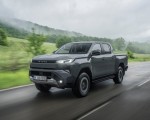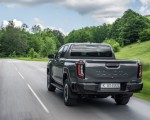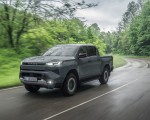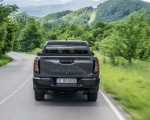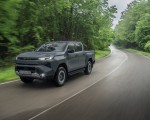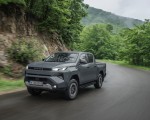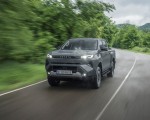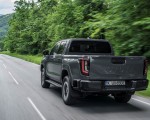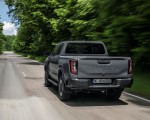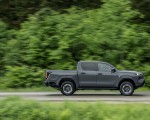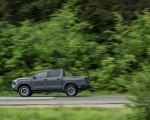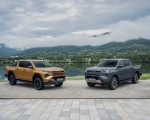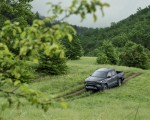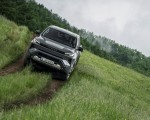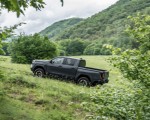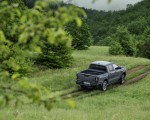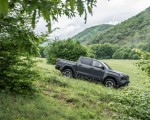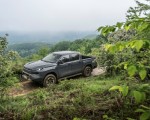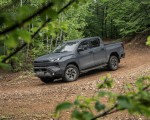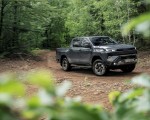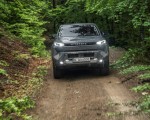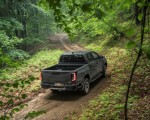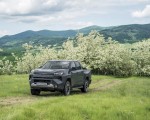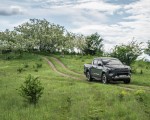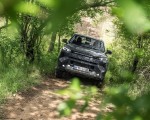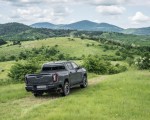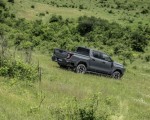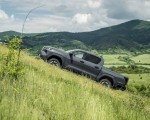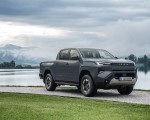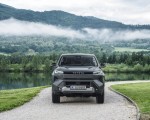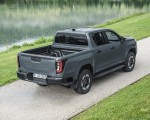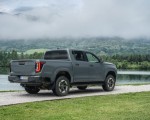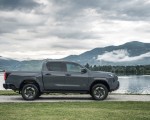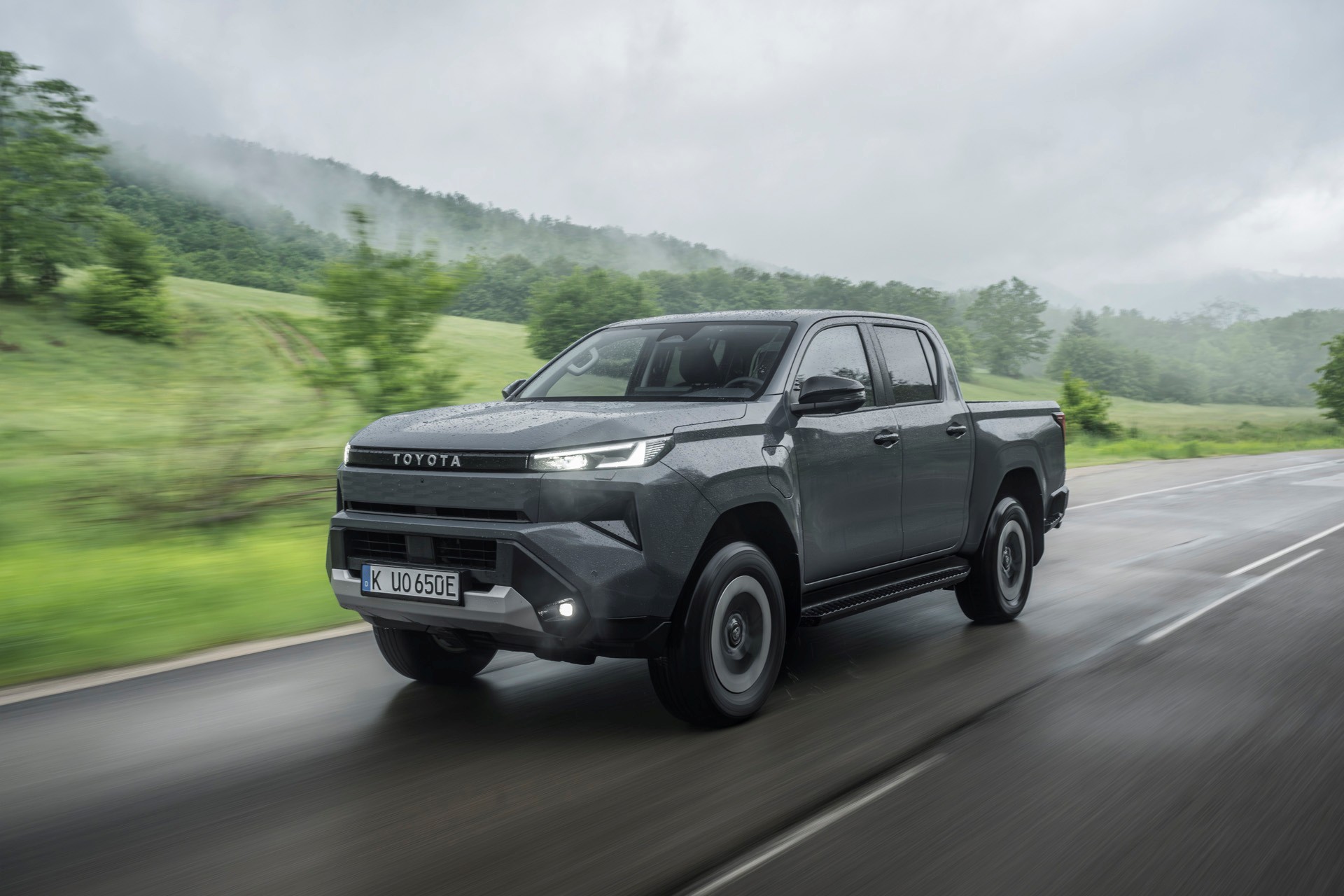
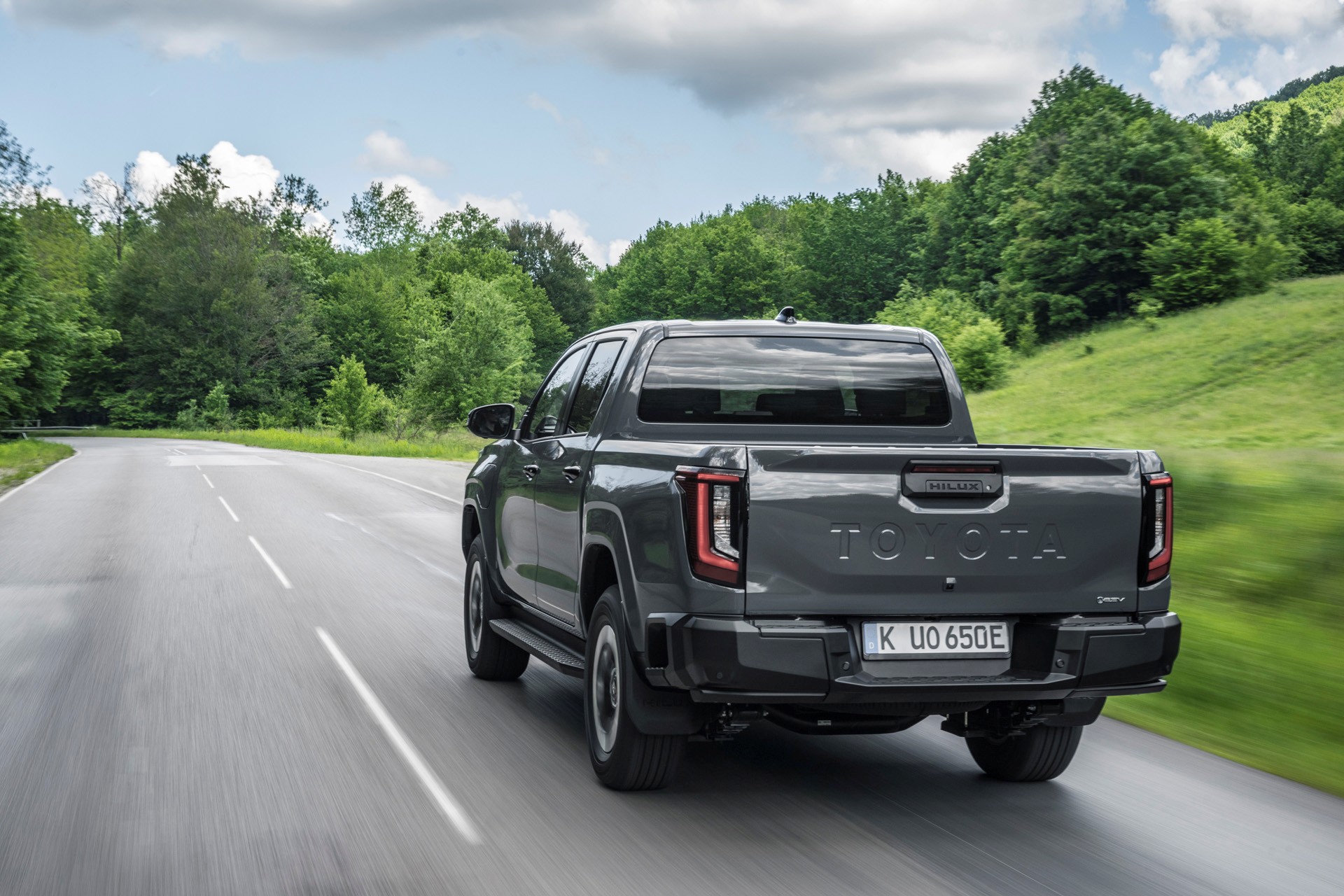
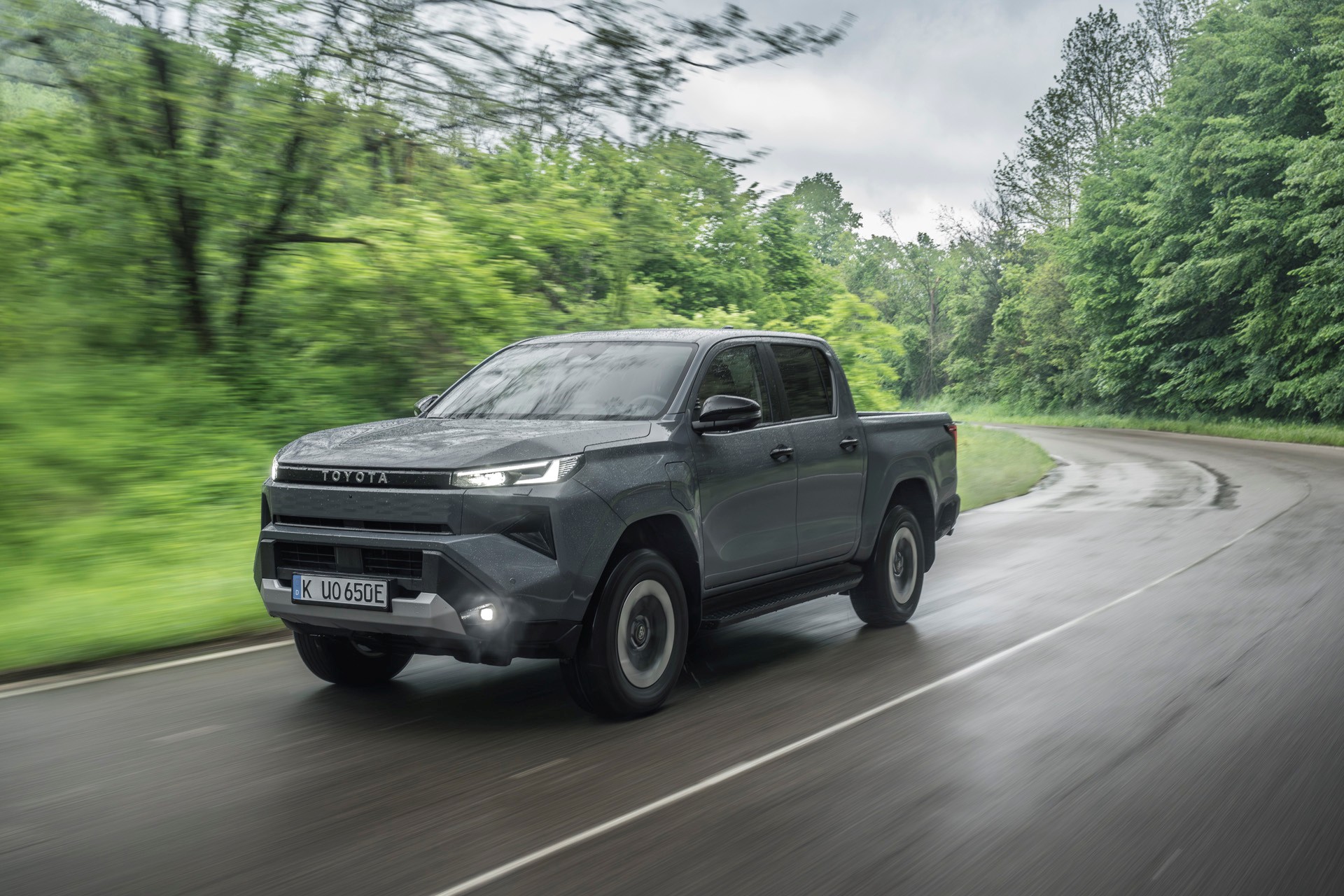
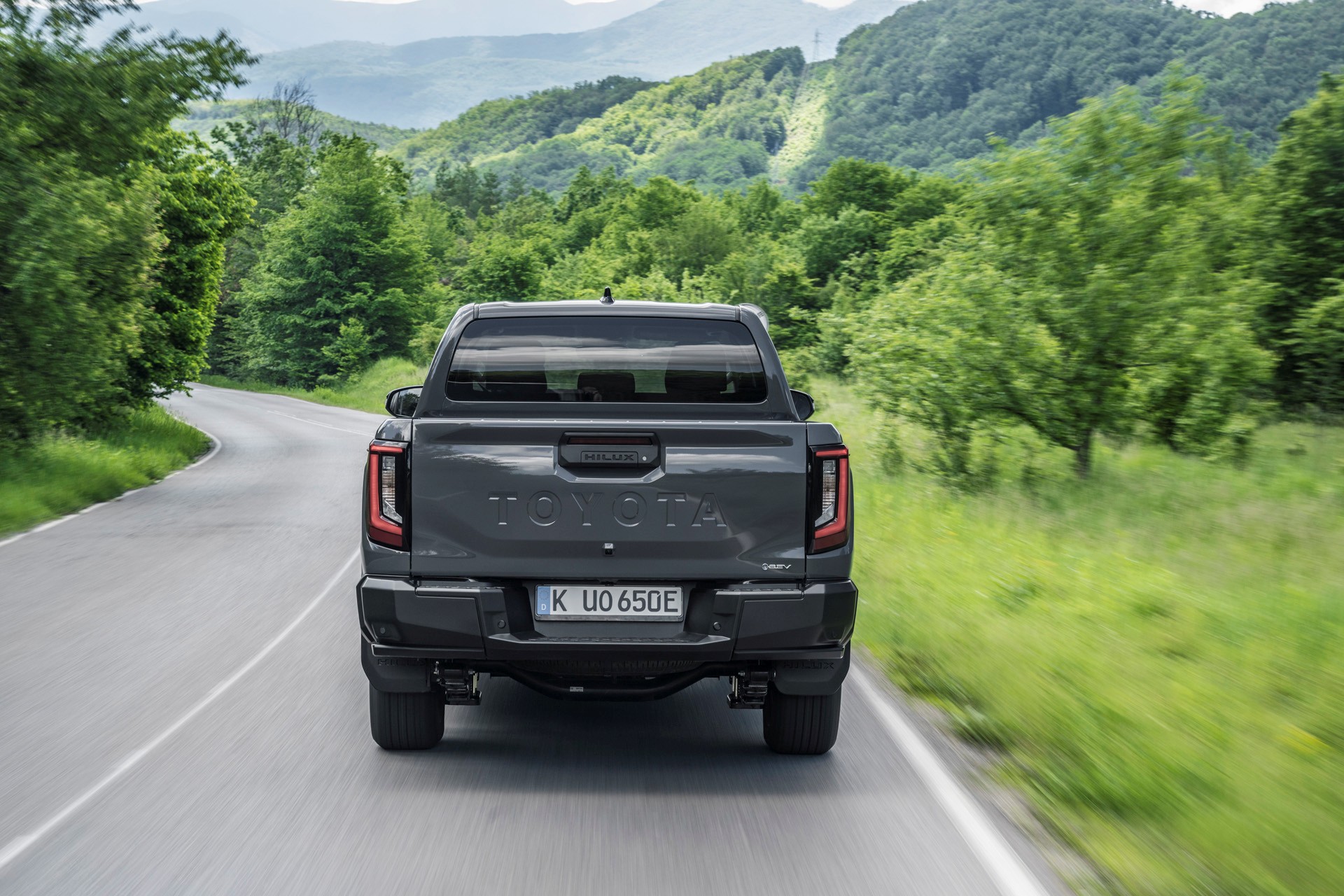
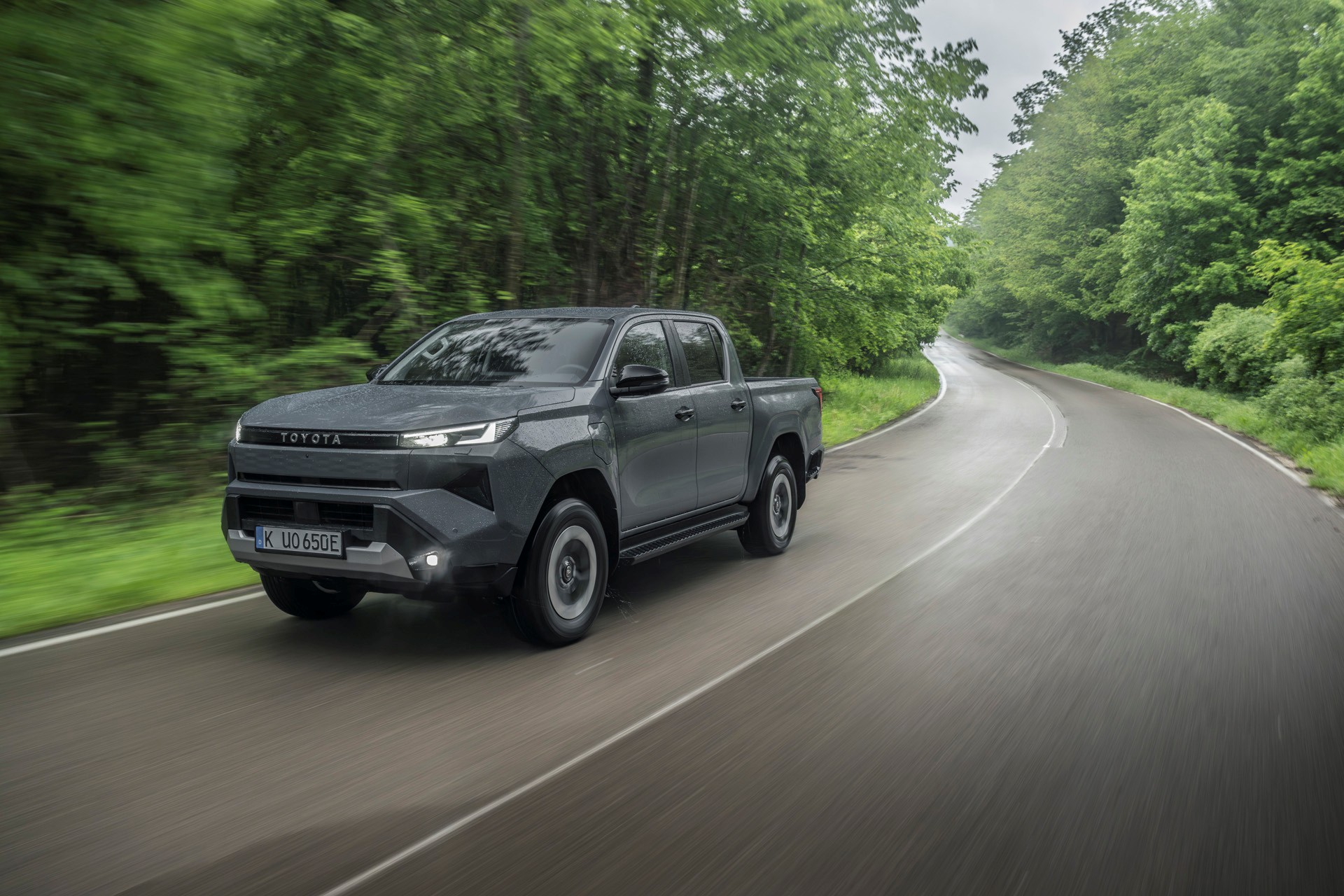
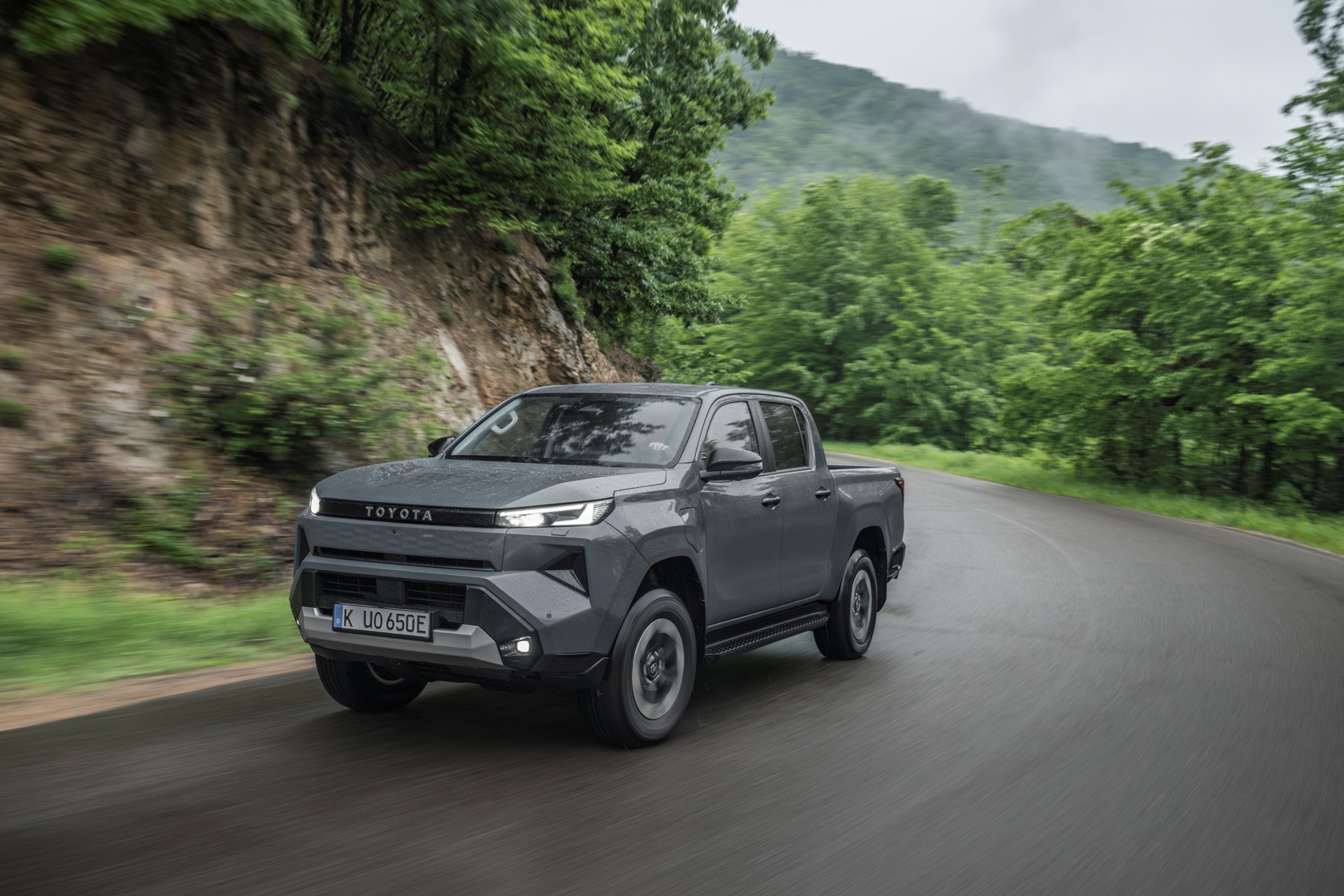
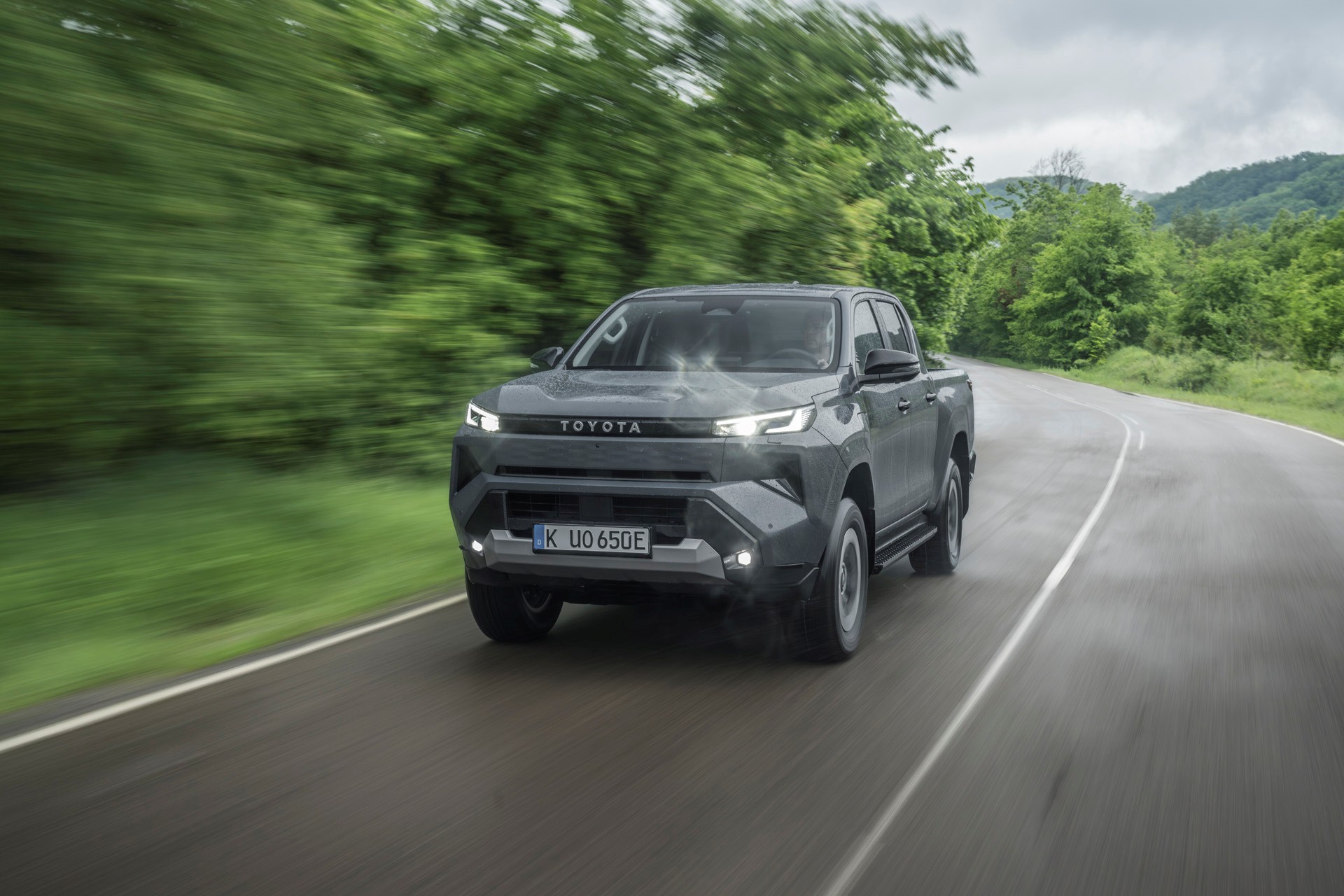
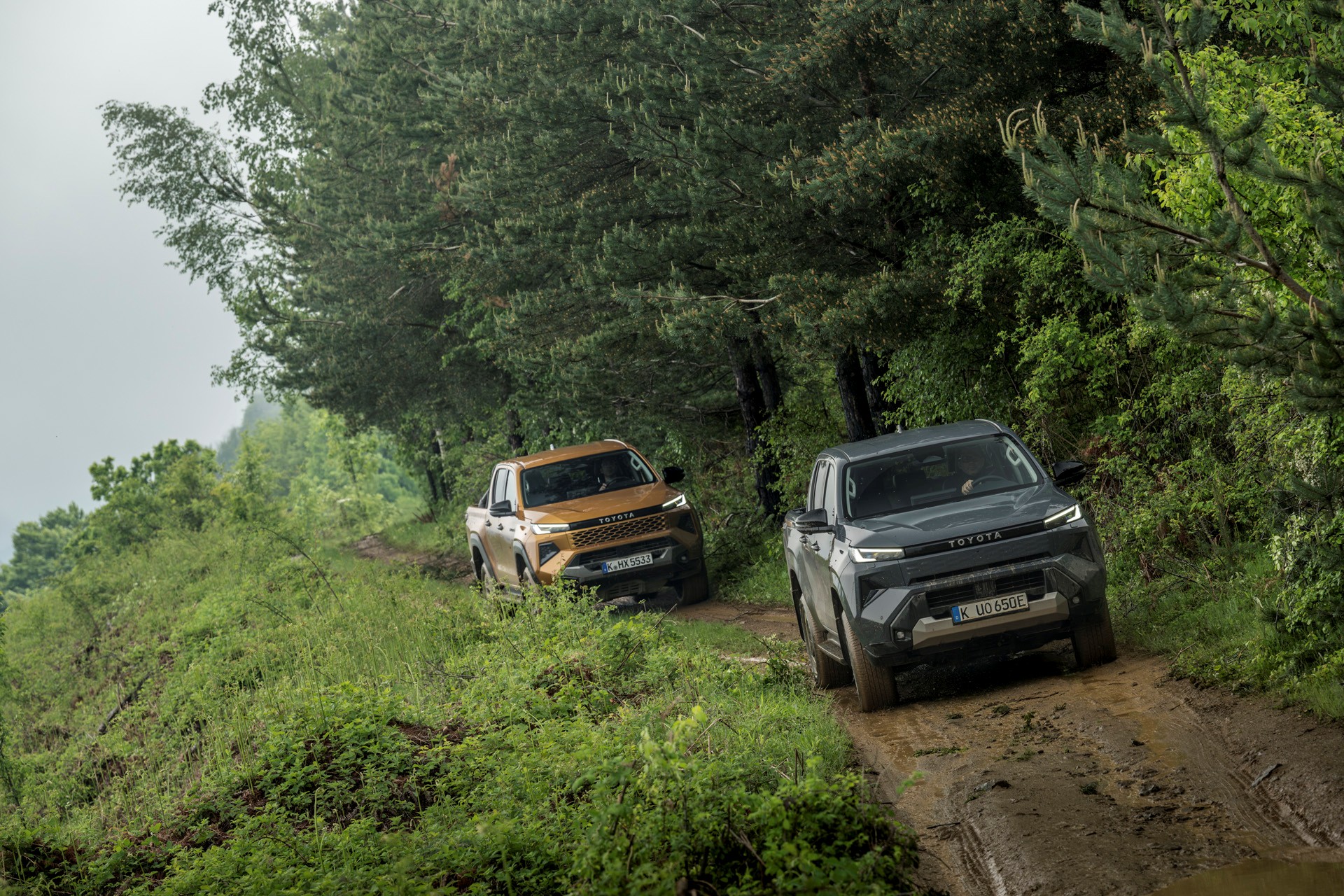
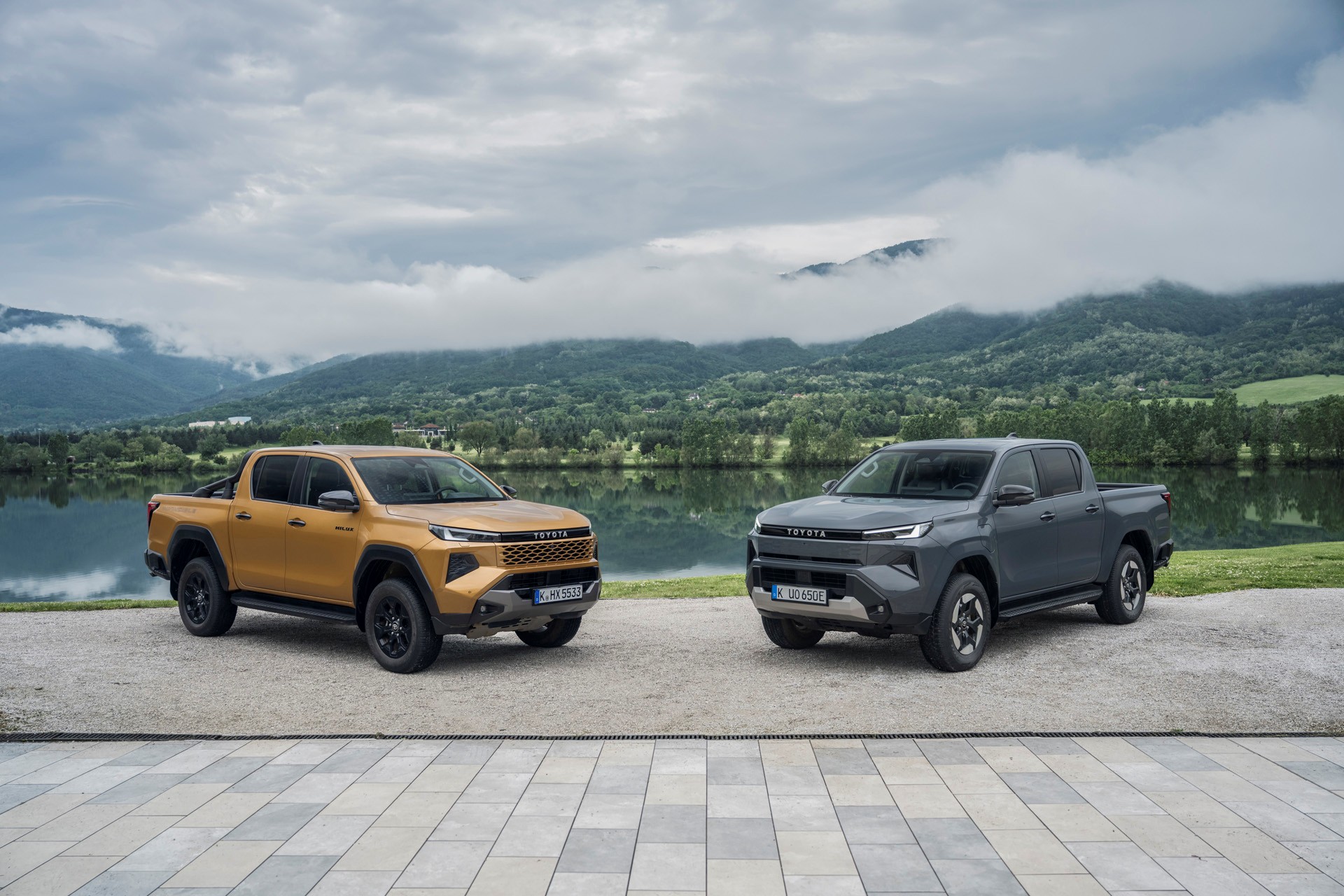
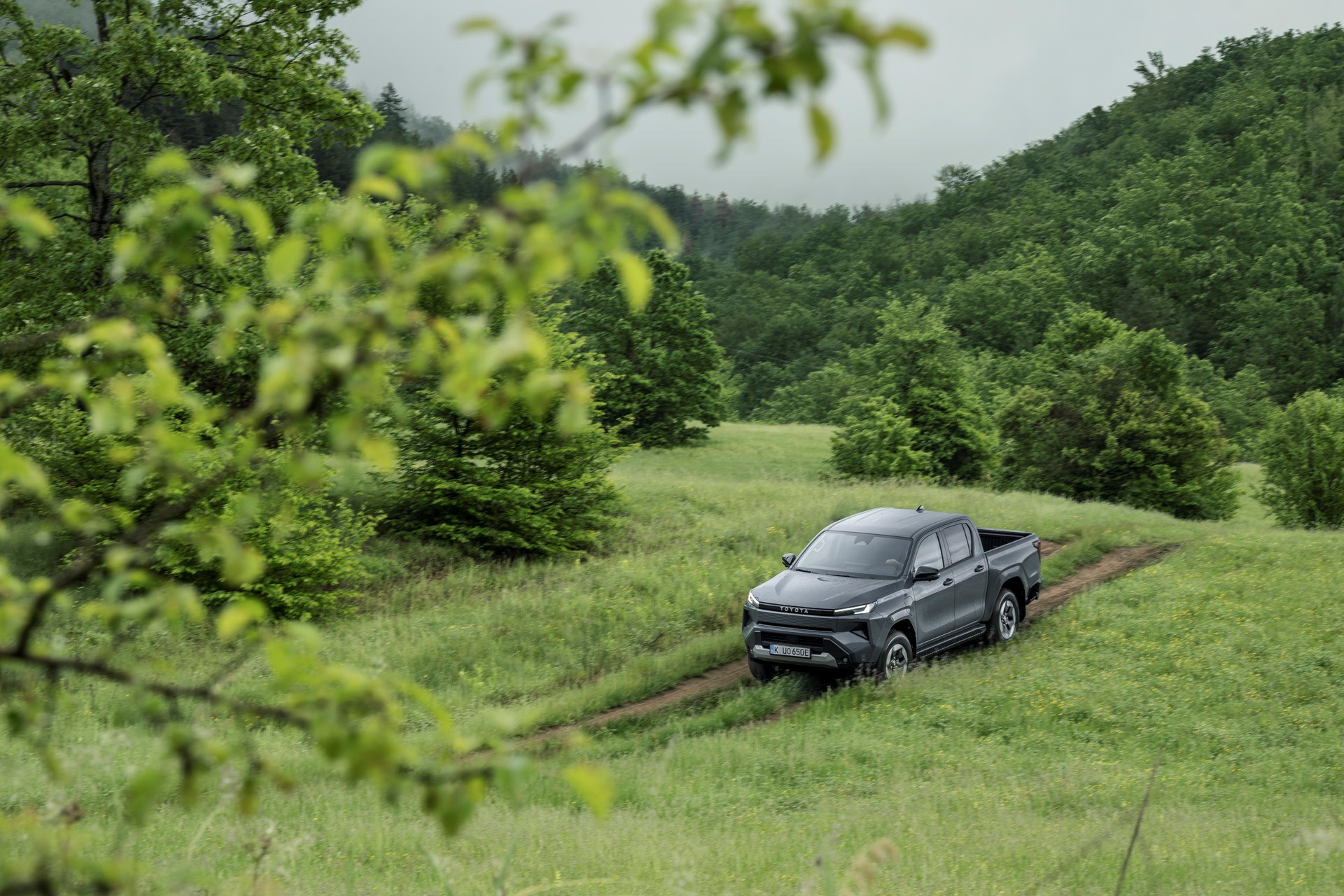
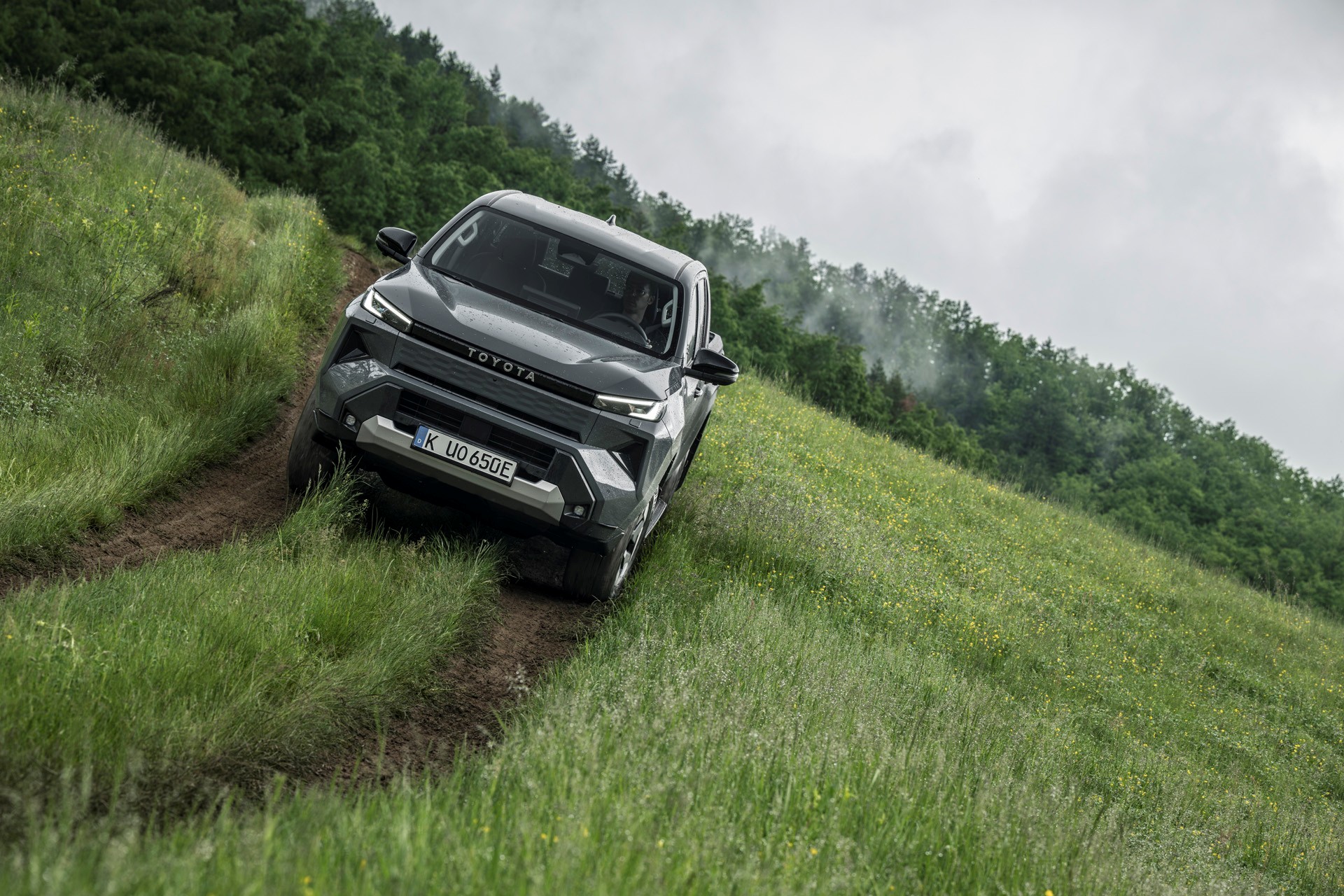
2026 Toyota Hilux BEV Exterior Static
Ninth generation of Toyota’s legendary pick-up.
Offered exclusively in Double Cab format in line with market preference.
Introduced with a wide choice of powertrains to meet different customer requirements, demonstrating the breadth of Toyota’s multipath strategy.
- 2.8 Hybrid 48V diesel mild hybrid with 4WD
Hilux BEV with permanent AWD, the first battery electric Hilux and Toyota’s first fully electric body-on-frame vehicle
Diesel and petrol engine options available in Eastern European markets
Hydrogen fuel cell Hilux scheduled for launch in 2028
With a global reputation for exceptional toughness established across seven decades and with more than 27 million sales to its credit, it might be thought Hilux has little left to achieve. An icon of Toyota Quality, Durability and Reliability, it has taken all challenges in its stride.
There are new horizons to explore, however. The all-new, ninth generation Hilux breaks fresh ground in technology and design while retaining the exceptional performance capabilities that have long made it a leading player in the European pick-up market and the top seller in the Toyota Professional light commercial line-up.
Hilux adopts a Double Cab body style and all-wheel drive across the board – 4WD for the Hybrid 48V and permanent all-wheel drive for the BEV – reflecting customer preference. While retaining similar packaging and dimensions to its predecessor, it presents powerful new styling with a Tough x Agile design concept. The all-new cabin provides sensory quality, comfort and equipment specifications beyond anything previously offered in a Hilux. There is a focus on practicality, too, with 4WD controls – including new Multi-Terrain Select (MTS) and Multi-Terrain Monitor (MTM) on higher grades – centrally grouped to be easily accessible when driving off-road.
 Toyota
 Toyota
 Toyota
 Toyota
 Toyota
 Toyota
 Toyota
 Toyota
 Toyota
 Toyota
 Toyota
 Toyota
 Toyota
 Toyota
TOYOTA MULTIPATH STRATEGY IN ACTION
The range of powertrains demonstrates the scope of Toyota’s multipath strategy. This product approach gives customers different options appropriate for their needs and their access to energy sources and infrastructure, helping them make meaningful and sustainable reductions in emissions towards the goal of carbon neutrality.
The 2026 line-up includes:
Hilux BEV, Toyota’s first body-on-frame vehicle to use a battery electric powertrain, addressing the growing requirements for zero-emission performance, while retaining the essential strength and quality that define Hilux.
Hilux 2.8 Hybrid 48V, featuring Toyota’s diesel mild hybrid powertrain.
Hilux ICE, with a new 2.8-litre diesel (replacing the previous 2.4-litre unit) and the established 2.7-litre petrol engine, to be launched in Eastern European markets.
Moreover, Toyota has confirmed that the Hilux range will be further extended to include a hydrogen fuel cell model, reinforcing the model’s multipath powertrain profile and Toyota’s commitment to developing clean energy solutions. The fuel cell Hilux is expected to be launched in 2028.
With the planned introduction of Hilux FCEV, Hilux will offer more powertrain choices than any other Toyota model currently on the market.
TOUGH X AGILE EXTERIOR DESIGN
All-new frontal design expresses strength and agility
New wheel designs and wider choice of paint colours
Dimensions and packaging aligned with the previous model
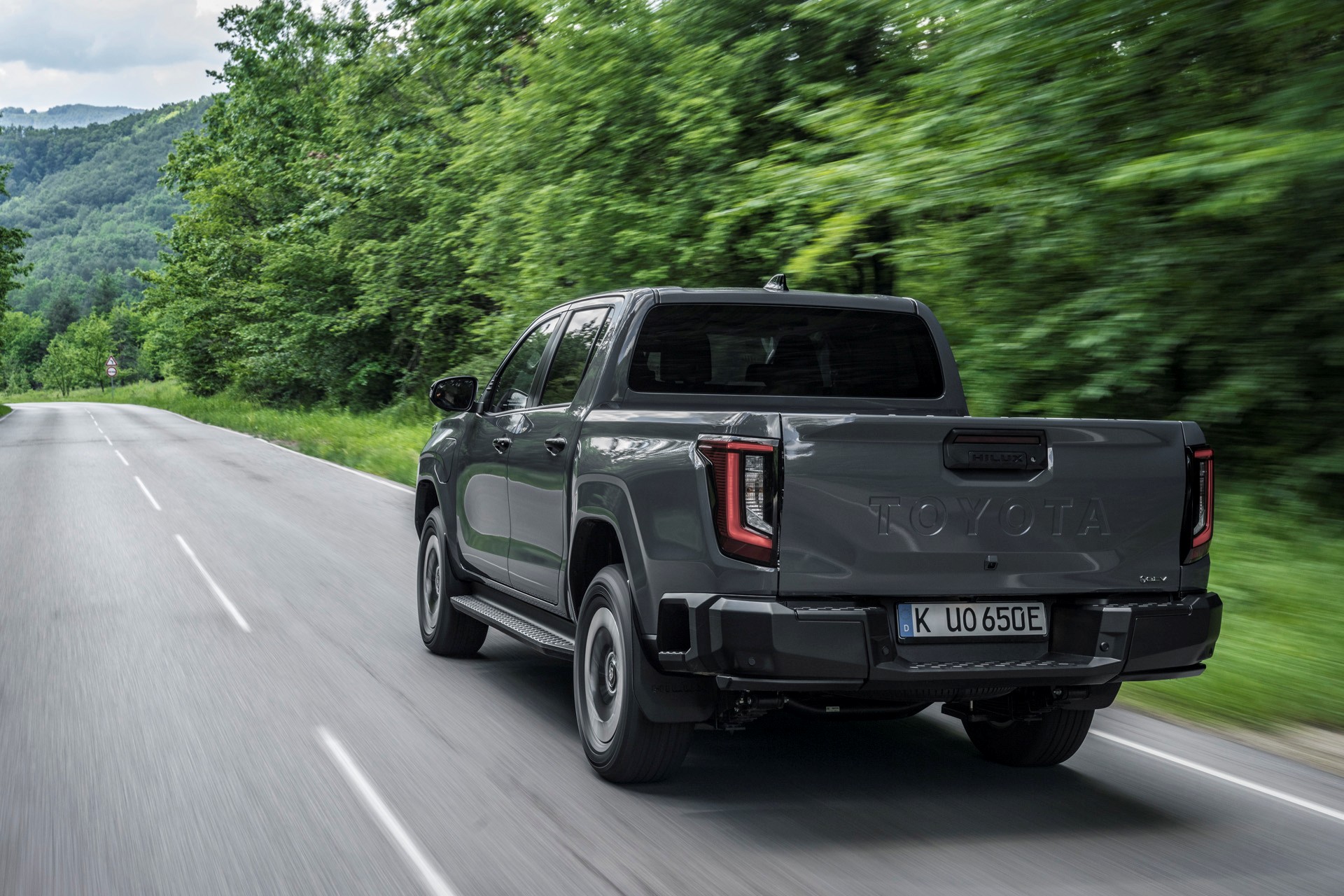
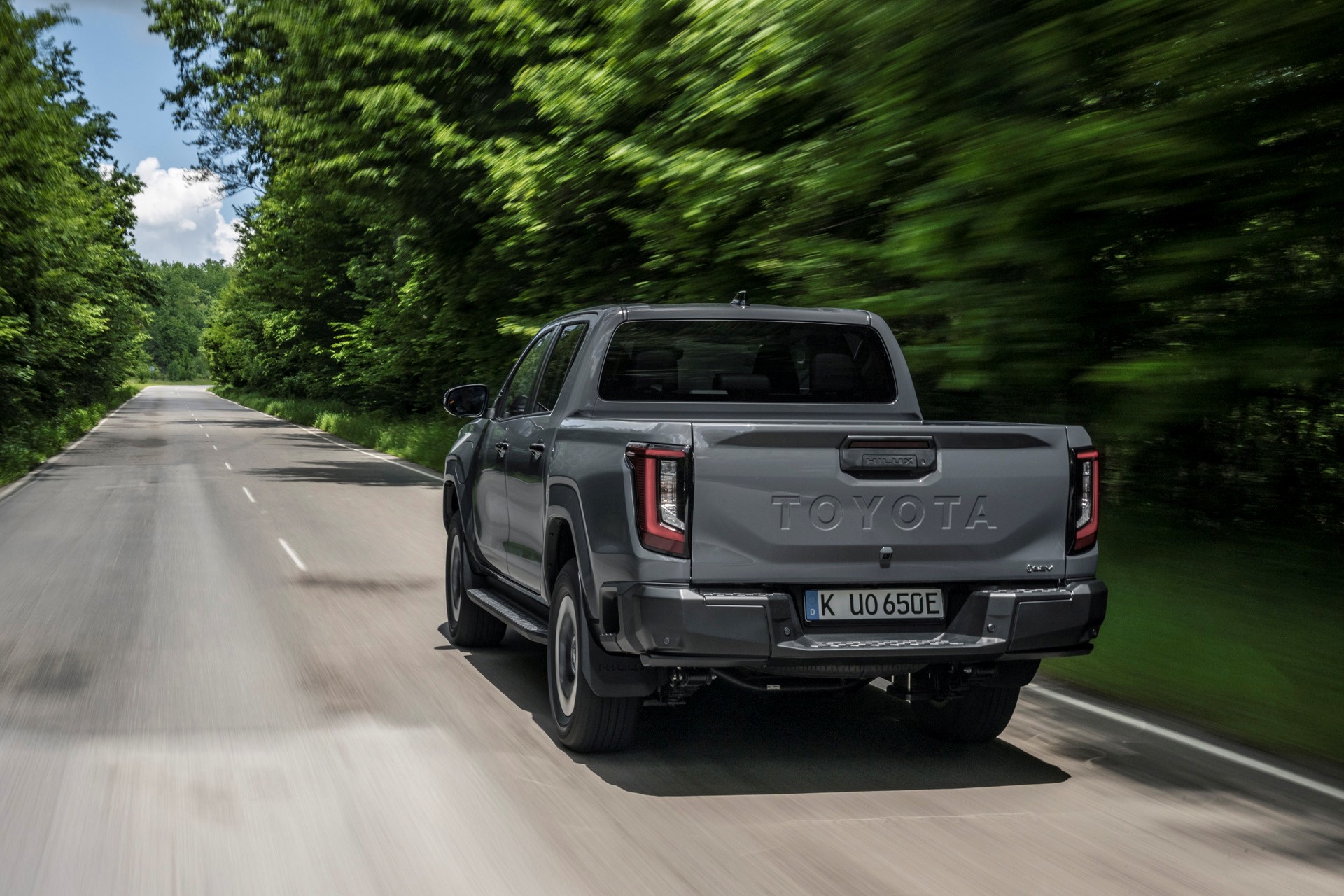
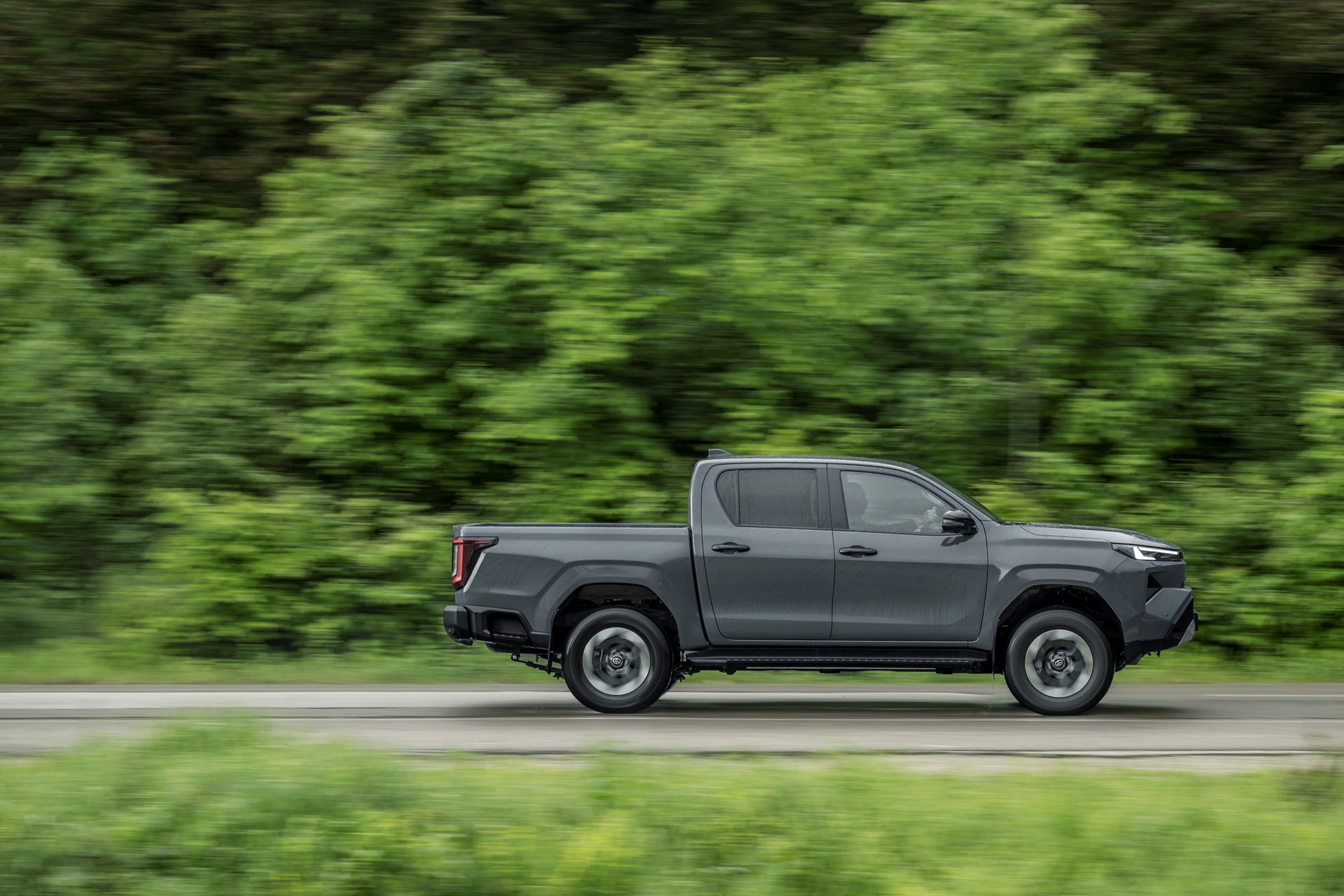
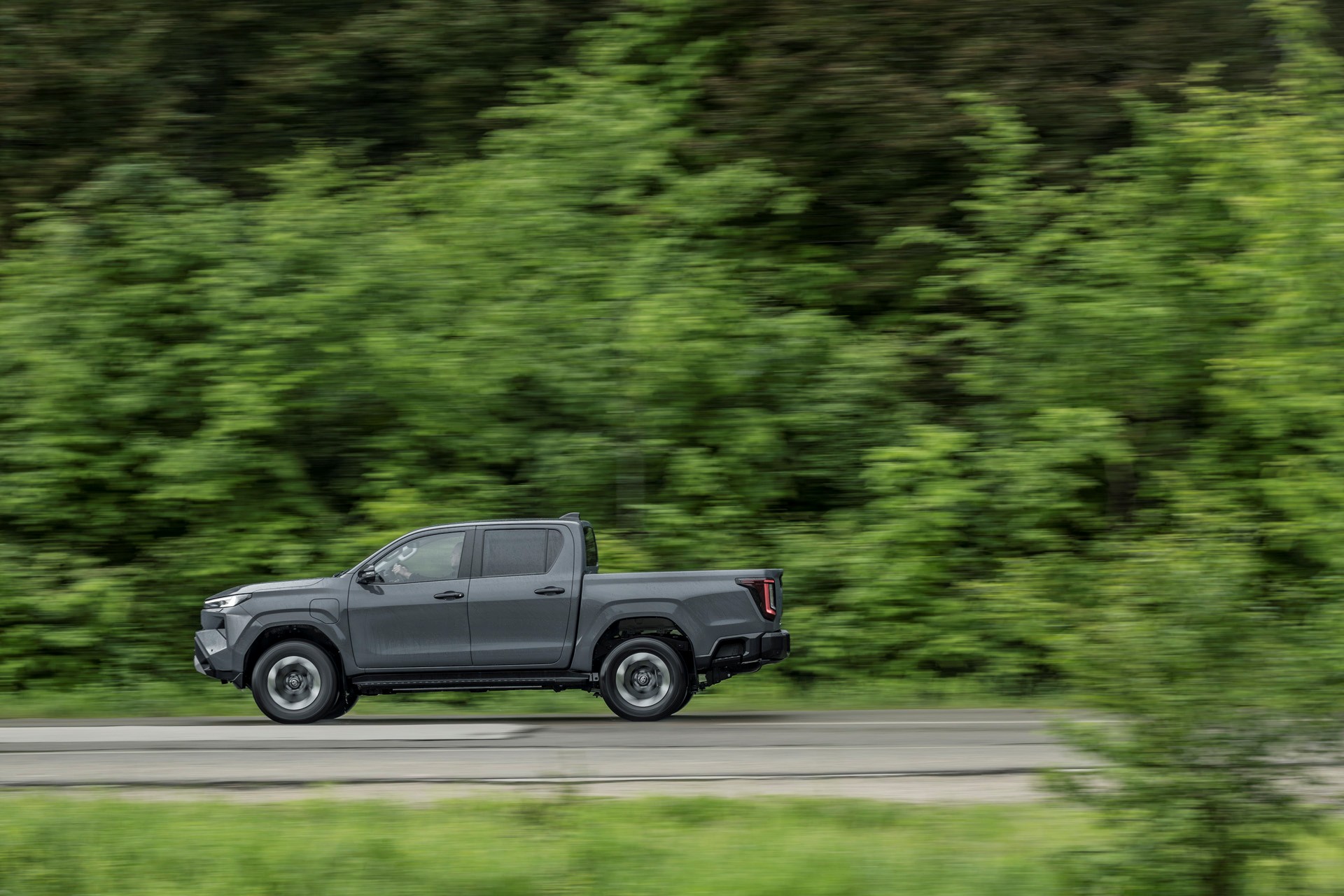
The design of the all-new Hilux – both inside and out – marks a step up from the previous generation, giving the model new proportions and an unmistakeable identity.
Working to a Tough x Agile design concept, Toyota has produced a bold and commanding look that expresses both the model’s rugged performance heritage and more dynamic, contemporary appeal.
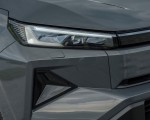
The frontal treatment makes an immediate impact with slim new headlight units linked by a central bar bearing the TOYOTA name in classic style. Below, the grille has a distinctive, modern look with a wide hexagonal mesh pattern, finished in the vehicle’s body colour to create a fully integrated impression. Strong angular detailing can also be seen in the fog lamp bezels, the arching of the upper bumper, the wheel arch trims, the side step tread surface and the alloy wheel designs.
The design takes convenience and the needs of both professional and private users into account as well, including new rear side steps, wider side steps and a revised rear step for easier access to the load area.
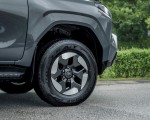
The Hybrid 48V line-up comprises four equipment grades: Entry, Mid, High and the range-topping Invincible. For the Hilux BEV the choices at launch are Entry, Mid and High. The new alloy wheel designs are 17-inch rims finished in matt black for Mid-grade, 18-inch with diamond-cut sections over gloss back spokes for High grade and 18-inch black seven-spoke wheels for the Invincible. These are styled for aerodynamic efficiency and are lightweight, saving about 1 kg per wheel compared to the previous designs. New tyre patterns have also been introduced that give quieter performance. The BEV uses aero-tuned, directional 17-inch wheels with premium diamond-cut facets.
To give Hilux more individuality, the Hybrid 48V is available with eight exterior colour options, including new Sulphur metallic – the signature finish for the top-of-the-range Invincible model – and Storm Grey. At launch, the Hilux BEV offers three body colour choices.
The all-new Hilux’s packaging closely matches that of the previous generation. Principal exterior dimensions for the Hybrid 48V are: overall length 5,320 mm, overall width 1,855–1,885 mm (depending on grade; wider on Mid-grade and above due to overfenders), overall height 1,865 mm, and wheelbase 3,085 mm. The Hilux BEV shares the same length and wheelbase, with a fixed overall width of 1,855 mm and a slightly lower 1,845 mm overall height.
ALL-NEW INTERIOR WITH UNPRECEDENTED QUALITY AND COMFORT
Complete revision of the Double Cab interior, raising all-round quality, comfort and equipment levels
Styling influenced by the interior of the new Toyota Land Cruiser, creating a family feel
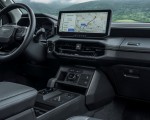
New slimline horizontal instrument panel and enlarged, multi-function centre console
4WD controls rationally grouped together in the centre console for easy access
Smart cabin storage points and cool box
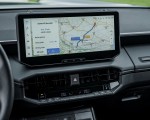
Digital user experience with new 12.3-inch Toyota Smart Connect multimedia display and 12.3-inch driver’s combimeter
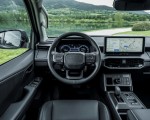
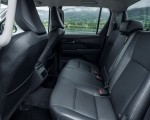
The Double Cab interior is completely new and follows the same Tough x Agile design principle as the exterior. In the most significant upgrade in Hilux’s history, sensory quality has been taken to a higher level. The overall look and feel of the space are influenced by the new Land Cruiser, creating family feeling between the two global legends of Toyota body-on-frame engineering.
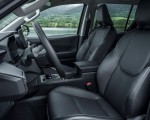
Measures to raise the level of onboard comfort include a new padding material and a thicker upholstery covering for the front seat cushions. The eight-way power adjustable seats on higher grade models have a longer cushion section and feature new padding with superior pressure distribution quality. A new head rest design provides enhanced protection against whiplash injury in the event of a rear-end collision.
The central feature is a slim and lightweight new instrument panel, finished (on higher grade models) in a premium, hard-wearing synthetic leather with single-stitch detailing. It houses a larger, high definition 12.3-inch Toyota Smart Connect multimedia display, positioned immediately above the air conditioning control panel. The Entry grade model features a nine-inch Toyota Touch 3 display.
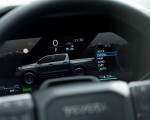
The driver enjoys an improved forward view with a lower meter hood, above a digital combimeter – 12.3 or seven-inch according to equipment grade – offering greater functionality and versatility compared to the previous 4.2-inch muti-information display.
The new 12.3-inchcombimeter can be customised to suit driver preference with Casual, Smart, Tough or Sporty design themes and three layouts with one, two or three dials. Smart, Tough and Sporty options are available with the seven-inch version.
Easy smartphone integration is enabled on all Hilux versions with Apple CarPlay or Android Auto and a wireless charger is provided on higher grades.
Smart storage
The instrument panel houses both a locking glove box and an upper cooled box, large enough to hold two 600ml drink bottles. There are also new-design cupholders on the left and right side with a fully flat lid that opens with a simple push-rotate action and can safely hold a drinks bottle or medium-size coffee cup.
Multi-function centre console
The new centre console is wider and, on higher grade models, 35 mm taller, matching the height of the door arm rest thanks to an increase in the height of the console storage box lid. The lid is also longer so that it can serve as a comfortable arm and elbow rest for people of all body sizes. The size of the storage box itself has increased to 5.7 litres.
A 4WD control area beneath the air conditioning panel groups all the 4WD system switches together for quick, clear operation when driving off-road. Similarly, a separate section lower on the console accommodates shift selector – a new shift-by-wire control for the BEV – electronic parking brake (where fitted) and other drive control switches.
Two USB-C ports are provided in the centre console for device charging and connection. On higher grade models, there is a front wireless smartphone charger and two further USB ports for rear seat passengers.
New-design steering wheel
The steering wheel is a permanent point of contact between driver and car, so Toyota has refined the design with a focus on providing the most comfortable grip and control, introducing thinner spokes and heating that extends around the entire circumference.
Reflecting the Tough x Agile design theme, the centre boss has a new bezel and prominent TOYOTA emblem. The steering wheel switches have also been redesigned and grouped for intuitive use – infotainment functions to the left, driving assistance features to the right and audio controls to the bottom.
HILUX HYBRID 48V
Toyota’s Hybrid 48V system the principal powertrain for the all-new Hilux
Diesel mild hybrid provides quieter and smoother acceleration and stop-start performance
Electric Power Steering (EPS) adopted for the first time in Europe
Maximum power remains 204 DIN hp / 150 kW with 500 Nm peak torque
Hilux also retains its impressive load-carrying capability – payload in excess of 1,000 kg and 3,500 kg towing capacity – and exceptional off-road strength
Off-road performance supported by availability of new Multi-Terrain Select (MTS) system and Multi-Terrain Monitor (MTM) systems
Toyota’s Hybrid 48V powertrain was introduced in the eighth generation Hilux in 2025. Carried forward into the all-new Hilux, it is newly available in all equipment grades – Entry, Mid, High and Invincible – securing a wider market reach with entry-level customers also able to enjoy its technology and performance benefits. It fulfils a wide range of customer requirements, from dependable, powerful workhorse to comfortable and well-equipped transport for day-to-day and leisure use.
Performance and efficiency
The Hybrid 48V’s performance parameters are largely unchanged and delivers improved fuel economy and lower emissions compared to the previous 2.8 diesel. Fuel economy is 9.7-10.0 l/100 km and CO2 emissions are rated at 254-262 g/km (WLTP combined data).
The DOHC 16-valve unit generates a maximum 204 DIN hp / 150 kW at 3,400 rom and produces 500 Nm of torque between 1,600 and 2,800 rpm. Payload is in excess of 1,000 kg and the towing capacity for braked trailers is 3,500 kg.
The mild hybrid system combines Hilux’s well-proven 2.8-litre diesel engine with an electric motor-generator, a 48V lithium-ion battery (housed beneath the rear seats) and a DC-DC power converter. The hybrid components were designed for simple integration and are located so they do not affect Hilux’s off-road performance. For example, the motor-generator is positioned high on the engine, so a 700 mm wading capability is maintained. Likewise, the motor-generator’s drive belt has a fabric layer that absorbs water and maintains consistent tension, even when wet.
The compact electric motor-generator is driven by the engine and charges the hybrid battery. Its benefits include a regenerative braking function recovering energy when the driver comes off the accelerator pedal. Combined with engine braking, this saves fuel, makes driving easier and gives natural-feeling deceleration.
The motor-generator’s operating status is indicated in the driver’s multi-information display with a read-out showing CHG (energy regeneration), ECO and PWR (providing assistance to the engine in both cases).
The stop-start system delivers a more comfortable drive in traffic, with the 48V Hybrid system enabling quicker and quieter restart response.
The electric motor-generator operates in place of a conventional starter motor and is always connected which means restart is enabled even at high engine speeds and there is less delay in immediate restarts after stopping. Progress is also smoother when travelling off-road, over rough ground.
Electric Power Steering (EPS)
The introduction of Electric Power Steering (EPS) provides faithful response, easier manoeuvring on and off-road and less risk of kick-back when driving over rough surfaces. It is tuned for light steering feel for agile manoeuvring at low speeds with increased weighting for stable and less fatiguing performance at high speeds.
Compared to the previous hydraulic system, the EPS is energy-efficient, using electric power only when turning assistance is needed, not when the vehicle is idling or moving in a straight line, further enhancing fuel economy.
Strengthened frame
To maintain the highest crash safety standards, the Hilux’s frame has been developed to provide an even higher level of energy absorption and deformation in the event of an impact, taking the increase in the vehicle’s weight into account. The thickness of the side rails has been increased and the front crossmembers have been adjusted to accommodate the new EPS system and front differential installation. With the increase in front axle load, the suspension towers have an additional fitting point and a thicker body.
Suspension
The all-new Hilux retains its suspension set-up from the previous generation, with independent front suspension front double wishbones front MacPherson struts and a rigid rear axle with leaf springs. Adjustments have been made to maintain strength and durability with the increase axle load, including revised shock absorber damping force and tuning of the leaf springs to reduce the transmission of shock to the body.
At the front, details include new spring rates, increased anti-roll bar rigidity, reshaped lower arms and a new compound has been for the bushes.
Ride comfort
While Hilux is rugged by nature, ride comfort remains a priority. There are new mounts for the engine and cabin which have multi-directional flexibility compared to the previous type.
Extra spot-weld points have been added – an extra 30 in the front floor and six more in the rear floor – to reduce vibration, achieve better damping and enhance the vehicle’s responsiveness.
Braking
For the first time, Hilux is equipped with an electronic parking brake, available on Mid-grade and above and standard on the BEV. This lightweight unit adds to the quality feel of the interior design while also contributing to fuel economy. Its adoption allows for the provision of new Toyota Safety Sense functions, including the Emergency Driving Stop System (EDSS) (further details in the safety and driving assistance chapter below).
The braking system features a new actuator which improves its controllability and durability and is compatible with operation of the Multi-Terrain Select (MTS) and Downhill Assist Control (DAC) systems.
Off-road performance
Exceptional, reliable off-road performance is a defining characteristic of the Hilux brand; and the ninth-generation model is true to that heritage.
Its ability to tackle the toughest conditions is supported by a 309 mm ground clearance and 500 mm of wheel articulation. When navigating slopes, the approach angle is 29° and the departure angle 24°.
Not only can Hilux wade through water 700 mm deep, it can also be kept stationary in those conditions for up to 10 minutes.
Secure progress with Multi-Terrain Select (MTS) and Multi-Terrain Monitor (MTM)
According to equipment grade, the Hilux Hybrid 48V is equipped with the Multi-Terrain Select (MTS) system. This gives the driver a choice of up to five modes to adapt the vehicle’s performance to suit different off-road environments, working in conjunction with the all-wheel drive transmission’s H4 and L4 high and low ranges. An adapted MTS is also provided on the Hilux BEV, details in the BEV chapter below.
Dirt: when driving on unpaved roads, vehicle speed and stability are the same as on paved surfaces. The system provides suitable tyre-ground contact feel on undulating or uneven road surfaces and appropriate driving force, even when towing.
Sand: in H4 range, this mode prevents delivery of excessive drive force, to avoid the vehicle becoming stuck, while still providing enough drive for cruising. In L4 range, higher driving force is provided should the vehicle become stuck, or the sandy surface gives a high level of resistance.
Mud: in this mode the wheels spin to help progress on muddy roads with very low grip levels. Higher driving force is provided in L4 range when the mud is deep enough to cover the tyres.
Deep Snow: this mode can be used when making forward and reverse movements to tackle high snow bumps. When the snow is deep enough to cover the tyres, the system spins the wheels to create a snowplough effect. Moderate drive force is provided when starting off to prevent wheel spin. This mode is not intended for use when driving on packed snow road surfaces.
Rock: this mode is suitable for driving over harsh, rocky terrain, suppressing tyre slippage. Should only two tyres be in contact with the ground, the system will transmit drive force to the other two wheels while simultaneously controlling vehicle speed.
Auto: this automatically engages settings appropriate for the driving surface and conditions.
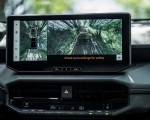
Safe manoeuvring is also supported by the Multi-Terrain Monitor (MTM). Standard on the Hybrid 48V Invincible and optional on High grade, this uses an array of four cameras to provide a real-time 360-degree view of the area immediately around the vehicle. It can also provide an image of the ground beneath the vehicle, indicating the tyre position and path of travel. The driver can also zoom in on the image to obtain a more detailed understanding of the driving surface – particularly useful when navigating through rocks and boulders.
The images are supported by icons linked to the Hilux’s clearance sonars, which turn read when there is a risk of contact. There are also graphics representing each wheel; these will flash when an individual wheel is spinning. Further assistance is provided by an inclinometer, with separate views showing the vehicle’s pitch and roll angles.
A Panoramic View Monitor (PVM) is also available on selected equipment grades to help with precise manoeuvring in tight parking places.
HILUX BEV: A BREAKTHROUGH MODEL
The first all-electric model is an authentic Hilux, with designed-in Quality, Durability and Reliability and genuine off-road capabilities
Permanent all-wheel drive with efficient, lightweight front and rear eAxles that produce high torque
High-capacity lithium-ion battery house within the vehicle’s frame, protected from damage and avoiding any loss of cabin or load space
Multi-Terrain Select (MTS) system programmed for use in a BEV powertrain, adapting vehicle performance to suit different off-road conditions
A technical breakthrough
The BEV model is an integral part of the all-new ninth generation Hilux range, giving customers the option to enjoy the model’s exceptional Quality, Durability and Reliability with the critical benefit of zero tailpipe emissions. It is an authentic Hilux, powered by electricity.
It will enter a new and developing market for electric pick-ups, appealing primarily to businesses seeking to decarbonise their vehicle fleet and comply with increasingly stringent legislation while still enjoying rugged, reliable performance. Hilux BEV will be particularly suited to single-location operations, such as forestry, industrial complexes and infrastructure sites such as airports and ferry terminals. The model will also attract individual buyers – both small businesses and private buyers focused on leisure use.
Accommodating the new powertrain is not at the cost of Hilux’s ability to operate in the most challenging environments, nor the space inside the cabin and load bay. Off-road performance maintains the model’s reputation as a trusted partner that can take challenging terrain in its stride.
This is Toyota’s first use of BEV technology in a body-on-frame vehicle, a construction type that has been key to Hilux’s built-in strength and capabilities from the start. Moreover, this has been achieved without diluting the pick-up’s off-road prowess – for example, the exceptional 700 mm wading depth is equal to the capability of Hilux Hybrid 48V and ICE models.
There is a further breakthrough with the first application of Toyota’s Multi-Terrain Select (MTS) System in a BEV, which automatically adapts vehicle performance to suit different off-road conditions, from rock, sand and mud to dirt and – another BEV first – bumpy mogul surfaces.
Powertrain: energy-efficient eAxles
The powertrain comprises front and rear eAxles that combine an electric transaxle and inverter in a single compact and lightweight unit. They are engineered for optimum efficiency with detailed measures to reduce internal losses and energy lost as heat. To accommodate the eAxles, a new-design front crossmember and an additional rear crossmember have been added to the Hilux’s frame. The eAxles themselves are reinforced and fitted with undercovers to ensure they can withstand harsh off-road conditions. This strengthens the BEV’s profile as a capable vehicle for work duties, true to Hilux’s famous Quality, Durability and Reliability.
The inverter uses silicon carbide (SiC) semiconductors which can handle high voltages and are more efficient (up to 40%) than the traditional silicon type. The front eAxle produces 80 kW and 205 Nm of torque and the rear unit 128 kW 268 Nm, ensuring strong traction and control, particularly in demanding off-road conditions.
As the eAxles generate instant high torque, even at low speed, they are installed with high-stiffness mounts to ensure quietness, ride comfort and stability.
Permanent all-wheel drive (AWD)
The permanent all-wheel drive (AWD) system provides constant and precise control of drive torque delivery between the front and rear axles, in ratios from 100:0 and 0:100. It provides excellent acceleration at start-off and stable handling. When driving through bends, it supports a smooth change in direction on entry with clear steering feedback, with confident line tracing and acceleration in exiting.
New lithium-ion battery
The new battery has been designed specifically for installation within the Hilux’s frame. It is a 59.2 kWh water-cooled lithium-ion unit comprising 80 cells, arranged in five 16-cell modules in 5 modules. The battery’s location required a bespoke unit to be designed, but the length of the space allowed for the necessary number of modules to be housed.
Its operating temperature is controlled using a high-resistance, long-life coolant (LLC) which helps protect against corrosion and is resistant to conductivity – an important characteristic in high-voltage systems.
Robust battery protection for off-road driving
The requirement for the new Hilux BEV to be able tackle challenging off-road conditions called for specific measures to protect the battery from damage. A key consideration was the risk posed by excessive twisting forces in the frame when travelling over rough ground. Toyota met this challenge by designing flexibility into the frame and creating a new battery sub-frame that prevents the battery from being affected by torsional forces. The battery is attached to the low torsion area of the subframe by a patented diamond pattern of fastenings.
The battery is further protected by being located within the vehicle’s frame and by a robust undercover. The frame’s side rails are reinforced with aluminium impact-absorbing sections that provide extra protection in the event of a collision.
CAE simulations and physical testing were used to optimise the battery’s location, ensuring a perfect fit within the frame. The battery’s position helps secure a low centre of gravity, which in turn supports good stability and handling. The installation avoids intrusion in the Double Cab’s interior and load space.
Battery charging
Prompt, consistent charging performance is a key consideration for business customers who need to keep their vehicle’s downtime to a minimum. The Hilux BEV can be charged from 10 – 80% capacity within 30 minutes using a DC fast-charging system of 125 kW or more and CCS2 connection, subject to operating conditions such as the ambient temperature.
AC charging up to 10 kW, for example using a domestic or public wallbox, will deliver a 10 – 100% charge in around 6.5 hours.
Owners can programme smart charging for their Hilux, setting charging start times to suit their work timetable and personal preference, or to take advantage of lower-cost electricity during off-peak periods. They can also set a charging limit of between 50 and 90%.
The driving range is up to 257 km (WLTP combined) and up to 380 km on the city cycle, distances that amply cover the day-to-day requirements of the model’s target business customers, particularly for site-specific work such infrastructure installations and forestry.
QDR: designed-in and tested to the limit
Quality, Durability and Reliability – QDR – have been fundamental to Hilux’s enduring success and global reputation across successive model generations. Toyota’s prime concern was that the new BEV should maintain these essential characteristics and be an authentic Hilux, true to the model’s best traditions.
Thus, the BEV underwent the same rigorous testing programme as other models in the new Hilux range, together with additional tests specific to its electric powertrain. These included deep-water driving to confirm the pick-up’s 700 mm wading depth; high-speed water intrusion checks; off-road durability trials; and total immersion of the battery. To help safeguard against water entering the electric motor, the eAxle breather is set high up on the unit.
With the benefit of these tests, customers are assured Hilux’s essential QDR has not been sacrificed or compromised and their vehicle can be relied on – like any Hilux – to serve as a trusted and highly capable partner.
Electric power steering (EPS)
The Hilux BEV aligns with its mild hybrid sister model in adopting an electric power steering system (EPS, details above),
As with the Hybrid 48V, the BEV’s steering wheel has tilt and telescopic adjustment to help drivers achieve the most comfortable position.
Suspension: a new de Dion rear axle
Traditionally, a practical pick-up requires a rigid rear axle so there are minimal changes in alignment when the vehicle is loaded, combined with leaf springs that can maintain a stable ride height.
Introducing a battery electric powertrain into the equation created new challenges. Using a propshaft to the rear axle would compromise the size of the battery and thus the vehicle’s driving range; and locating a large rear motor in the space usually occupied by the rear differential would compromise ground clearance and increase the unspring mass, impacting ride comfort and handling stability
Toyota solution is a de Dion rigid axle with leaf springs. This allows the eAxle to be accommodated without risking damage or compromising the pick-up’s ability to tackle very rough terrain. As the eAxle can be mounted on the vehicle’s frame, there is a further benefit in a reduction in the unsprung mass.
Authentic off-road capabilities
From the outset, it was a requirement that the Hilux BEV’s off-road performance should be comparable to those of other models in the ninth generation series, ensuring the vehicle could meet a wide range of customer requirements.
To do this, it was critical to engineer a rigid rear structure that can withstand challenging conditions. Additional crossmembers were added to the frame and others reprofiled to accommodate the new rear eAxle, together with the introduction of the new de Dion rigid rear axle (details above).
The BEV’s 29° approach and 24° departure angles, 500 mm wheel articulation and 700 mm wading depth are values similar to those of other ninth generation Hilux models. There is a lowering of ground clearance to 212 mm and a modest reduction in break-over angle to 20°, due to the location of the battery beneath the vehicle floor.
Ready for all roads with Multi-Terrain Select (MTS)
Hilux is the first Toyota BEV to be equipped with Multi-Terrain Select (MTS), a five-mode electronic control system that automatically adjusts vehicle performance to suit different off-road driving scenarios.
In vehicles that use an internal combustion engine – including the new Hilux Hybrid 48V –MTS can be selected when using the L4 and H4 ranges to secure steady progress in challenging conditions. In the Hilux BEV, the system applies precise, direct control of drive torque and braking, replicating the effect of using a low range transmission. It underwent extensive real-world testing on different off-road terrains to ensure customers can use it with confidence in a wide range of operating environments.
In common with the standard MTS, the driver can choose settings appropriate for different surfaces:
Rock, for trails and climbs with large boulders and stones
Sand, for beaches, desert trails and loose sandy surfaces
Mud, for wet and mushy tracks and fields
Dirt, for dirt roads and gravel tracks
Mogul, for bumpy terrain – offered for the first time in a BEV
MTS also provides an automatic mode with which the system adopts the most suitable setting according to vehicle behaviour and driver inputs.
Practical for business
An essential quality for any Hilux is to be a practical and reliable proposition for business users, so the introduction of an electric powertrain could not be at the expense of day-to-day practicality.
The load space is equal to that of the mild hybrid model and the payload is 710-715 kg, according to model grade. This figure was calculated to offer the best balance of driving range, power and practical usability, based on Toyota’s extensive evaluation of BEV customer requirements.
Towing ability was factored in from the start of the development programme: the Hilux BEV can tow up to 1,600 kg, ensuring that it is capable of handling trailers, equipment or leisure loads with confidence.
BEV design details
The BEV shares the ninth generation Hilux’s bold, powerful exterior Tough x Agile design, styling that communicates its strength and robust performance.
Externally some elements denote the difference in powertrain. Most prominent is the absence of the front grille – a characteristic of technically advanced electric vehicles which require less cooling air flow. The area beneath the bonnet and TOYOTA emblem instead has a raised geometric pattern that adds texture and distinctive visual interest.
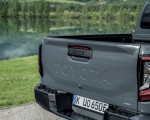
The 17-inch wheels are also specific to the model, lightweight and aero-tuned with a directional design to manage air flow with premium diamond-cut facets around the circumference. Simulations and wind tunnel testing optimised the design for efficiency at all speeds. Elsewhere, the wheel arch mouldings are removed, there is BEV badging on the tailgate and a charging port on the front wing.
The Double Cab interior is also common to the Hilux range, with the exception of the centre console, which is slightly adapted to accommodate the BEV’s smooth, single-action shift-by-wire control and repositioned electronic parking brake switches.
Digital combimeter
The 12.3-inch driver’s digital combimeter offers the same flexibility as that in the Hybrid 48V, with four design options – Casual, Smart, Tough and Sporty. The driver can choose from three layouts, displaying two, one or no dials; widgets can also be added to show electricity consumption and audio information. Settings and content can be changed at any time with ease, using switches on the steering wheel.
TOYOTA T-MATE SAFETY AND DRIVER ASSISTANCE
Hilux equipped with its most comprehensive safety and Advanced Driver Assistance Systems (ADAS) package yet
Third-generation Toyota Safety Sense provided as standard
New functions enabled by the introduction of Electric Power Steering (EPS)
Driver assistance systems include a Blind Spot Monitor (BSM), Safe Exit Assist (SEA) and Parking Support Brake (PKSB)
The all-new Hilux benefits from a wider range TOYOTA T-Mate safety and ADAS features than ever before, including the introduction of third-generation Toyota Safety Sense. Safety systems can be updated over time are kept out-to-date with the seamless delivery of software updates over the air, via the vehicle’s Data Communications module.
Lane Tracing Assist (LTA) is featured for the first time on Hilux, thanks to its adoption of an Electric Power Steering (EPS) system. This provides steering assistance to keep the vehicle centred in its traffic lane; it can also recognise when an off-set driving path is appropriate, for example when passing vehicles parked at the side of the road.
The operating scope of the Pre-Collision System (PCS) is enhanced with the ability to detect motorcycles as well as vehicles, pedestrians, cyclists and oncoming vehicles. Its intersection collision avoidance support also provides greater support with detection of crossing vehicles at junctions.
Emergency Steering Assist (ESA) is featured in Hilux for the first time, enabled by the introduction of electric power steering. When the PCS recognises a hazard such a person walking in the side of the road, a cyclist or parked vehicle and there is a risk the driver may swerve in avoidance, steering assistance and gentle braking are provided, helping the driver manoeuvre safely while keeping the car within its traffic lane.
The Intelligent Adaptive Cruise Control (iACC) is newly able to detect two vehicles ahead for smoother speed management and respond more promptly to a vehicle cutting in front, so braking is less abrupt. It can also suppress the Hilux’s acceleration to avoid unintentional “undertaking” of another vehicle in an adjacent lane. Turn signal-linked control initiates preliminary acceleration when the driver uses the turn indicator to make an overtaking manoeuvre; acceleration is automatically suppressed, however, if the system detects another vehicle in the overtaking lane. The iACC DRC also has improved curve recognition, giving better speed management through bends. With the upgraded system, the driver can now choose from four distance setting options.
Acceleration Suppression regulates the car’s drive force and controls braking if the driver accelerates sharply with an obstacle immediately ahead.
Thanks to the introduction of an Electronic Parking Brake (EPB) and Driver Monitor Camera (DMC), Hilux can be equipped with a new Emergency Driving Stop System (EDSS). EDSS monitors the driver’s steering, braking and use of the accelerator and if there are no inputs over a period of time, it triggers a warning. If there is still no response from the driver, it brings the vehicle to a smooth stop and activates the hazard lights.
With the benefit of Electric Power Steering (EPS), Lane Trace Assist (LTA) is also enabled.
The new Proactive Driving Assist (PDA) provides a range of safeguards in low-speed traffic. Obstacle Anticipation Assist detects hazards ahead such as parked vehicles, pedestrians and cyclists at an early stage and provides steering a braking support to help the driver avoid approaching too close. Deceleration Assist provides smooth slowing when the driver comes off the accelerator when approaching a slower vehicle ahead, or when entering a bend.
In addition to these Toyota Safety Sense active safety features, Hilux is also equipped for the first time with a Blind Spot Monitor (BSM) and Safe Exit Assist (SEA), alerting the driver to traffic approaching from behind and warning if there is a risk of opening a door into the path of passing traffic.
Automatic Flashing Rear Hazard Lights are activated if the Hilux’s rear-facing radar detects a collision risk from vehicles approaching at speed from the rear, prompting the other driver to brake. Similarly, the Rear Vehicle Approaching Indication alerts the driver to decide whether to change lane. This supports safer lane discipline and less stressful driving and helps prevent tailgating.
The Parking Support Brake (PKSB) can prevent the vehicle from striking static objects to the front and rear when moving at low speed, control the car’s drive and applying the brake if needed to avoid an impact.
The new Rear Seat Reminder System will alert the driver if sensors detect movement on the back seats, for example when a child or pet animal has been left in the vehicle.
OWNERSHIP WITH PEACE OF MIND
Toyota Relax warranty available for up to 10 years / 185,000 km
Battery Care Programme guarantees battery performance for up to 10 years / one million km
Remote and connected services via the MyToyota app
Toyota Relax
In common with all Toyota vehicles, the all-new Hilux is protected by a warranty of up to 10 years or 185,000 km – whichever comes first. The first three years of ownership are covered by a manufacturer’s warranty. This is followed by a service-activated warranty, providing an additional 12 months’ / 15,000 km cover up to maximum of 10 years of vehicle age or 185,000 kilometres driven, at no additional cost, each time the vehicle has a qualifying service at an authorised Toyota centre (terms and conditions apply).
Battery Care Programme
Confidence in lasting battery quality and performance is a key consideration for BEV owners. Toyota’s Battery Care Programme provides complete reassurance. It guarantees the vehicle’s traction battery will retain a minimum of 70% of its original capacity for up to 10 years or one million kilometres, subject to annual EV health check at an authorised Toyota centre. This seal of quality applies equally to the rugged new Hilux BEV as to other Toyota battery electric models.
MyToyota app
With the MyToyota app, Hilux owners can access a range of useful remote and connected services. These include locking or unlocking the doors, checking the vehicle’s status and activating the air conditioning system to heat or cool the cabin to a preferred temperature before making a journey. The app also provides a vehicle locating function and the owner can trigger the hazard lights to help find their Hilux in a busy car park.
MyToyota can also provide key driving data at-a-glance and provide timely reminders when servicing is required.
(Toyota Press Release)
Gallery: 2026 Toyota Hilux BEV Exterior Static Wallpapers
55+ car wallpapers of the 2026 Toyota Hilux BEV Exterior Static for desktop and mobile phones. Download 2026 Toyota Hilux BEV Exterior Static wallpapers in high-quality HD and 4K resolutions.