2027 Czinger 21C Spyder
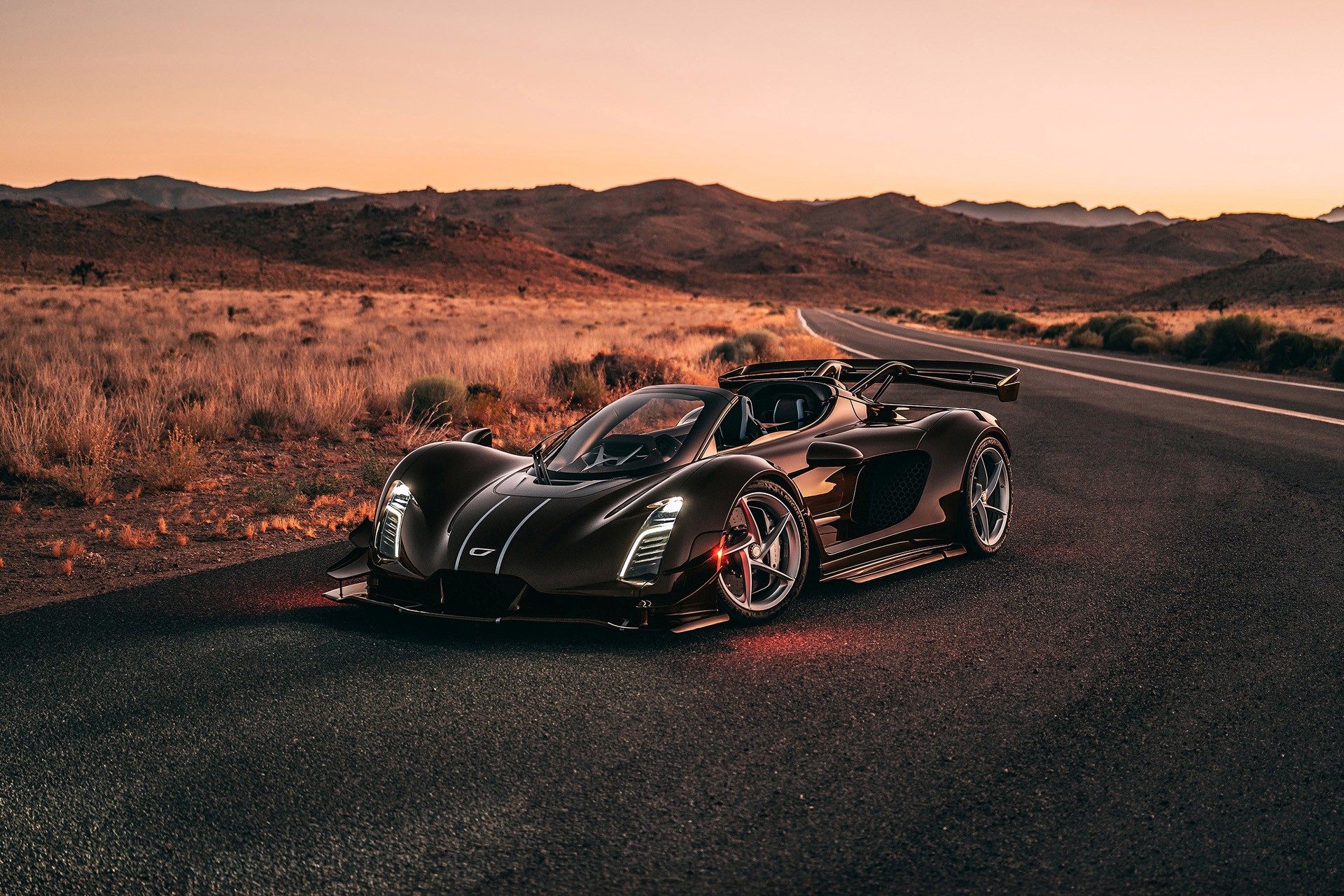
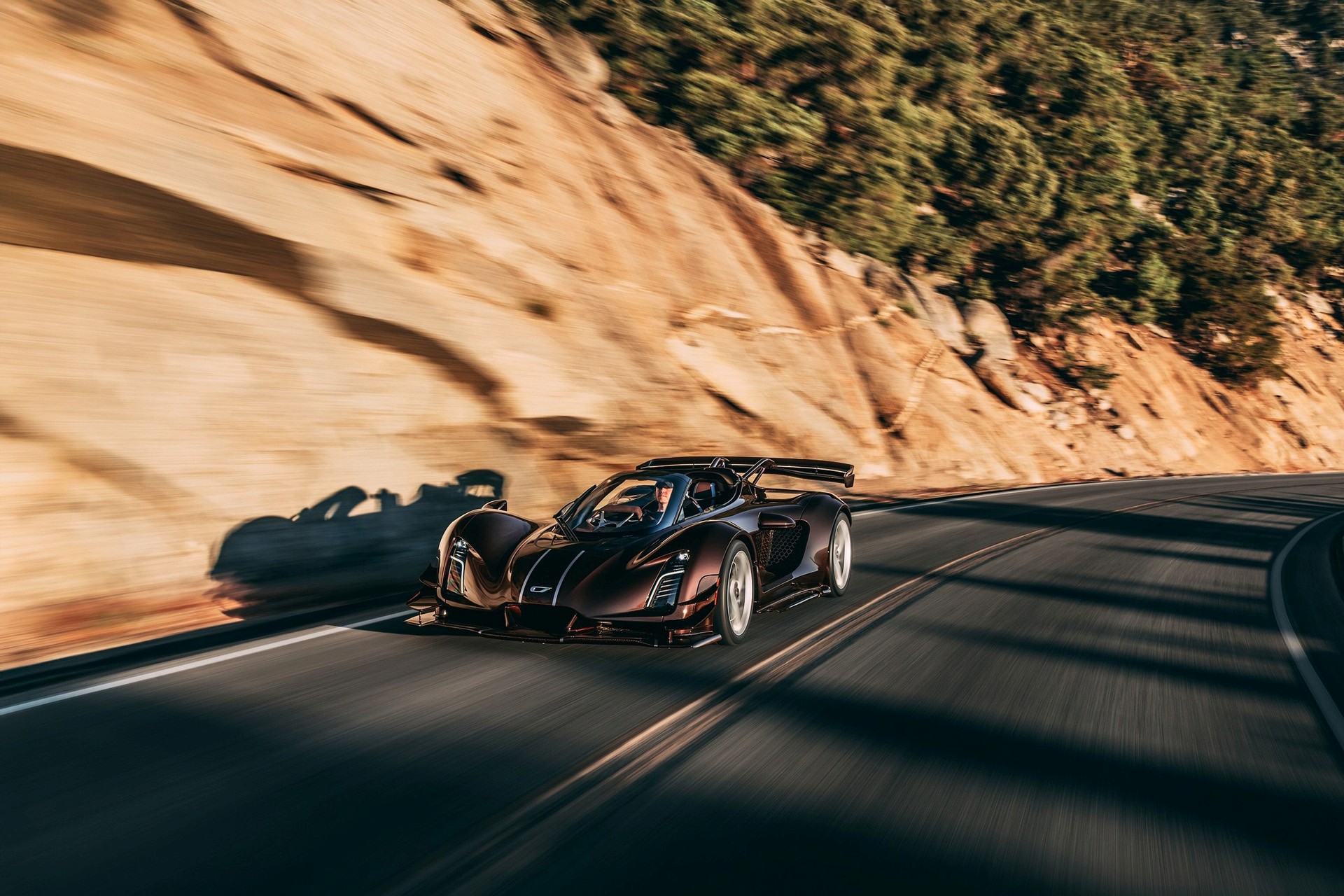
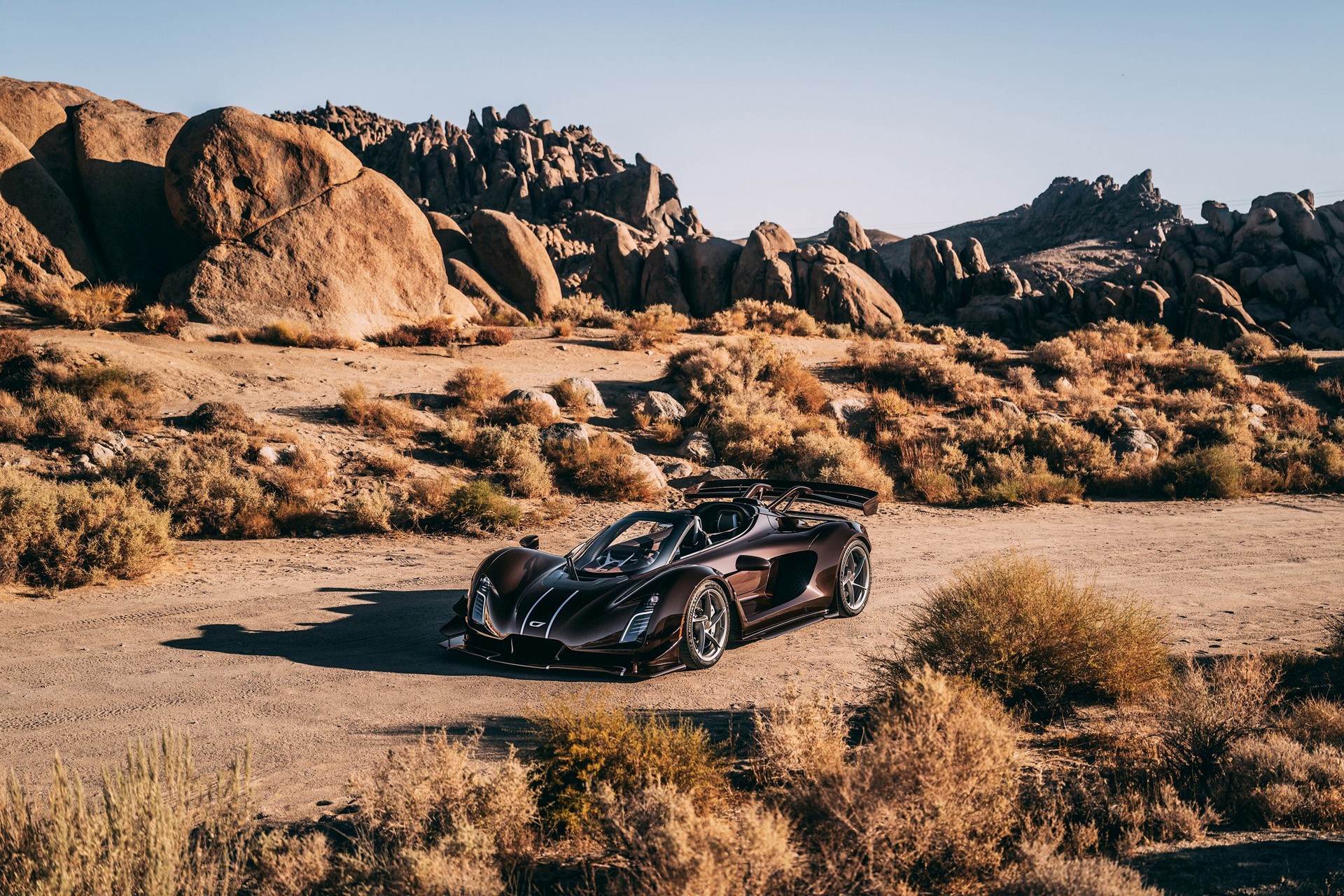
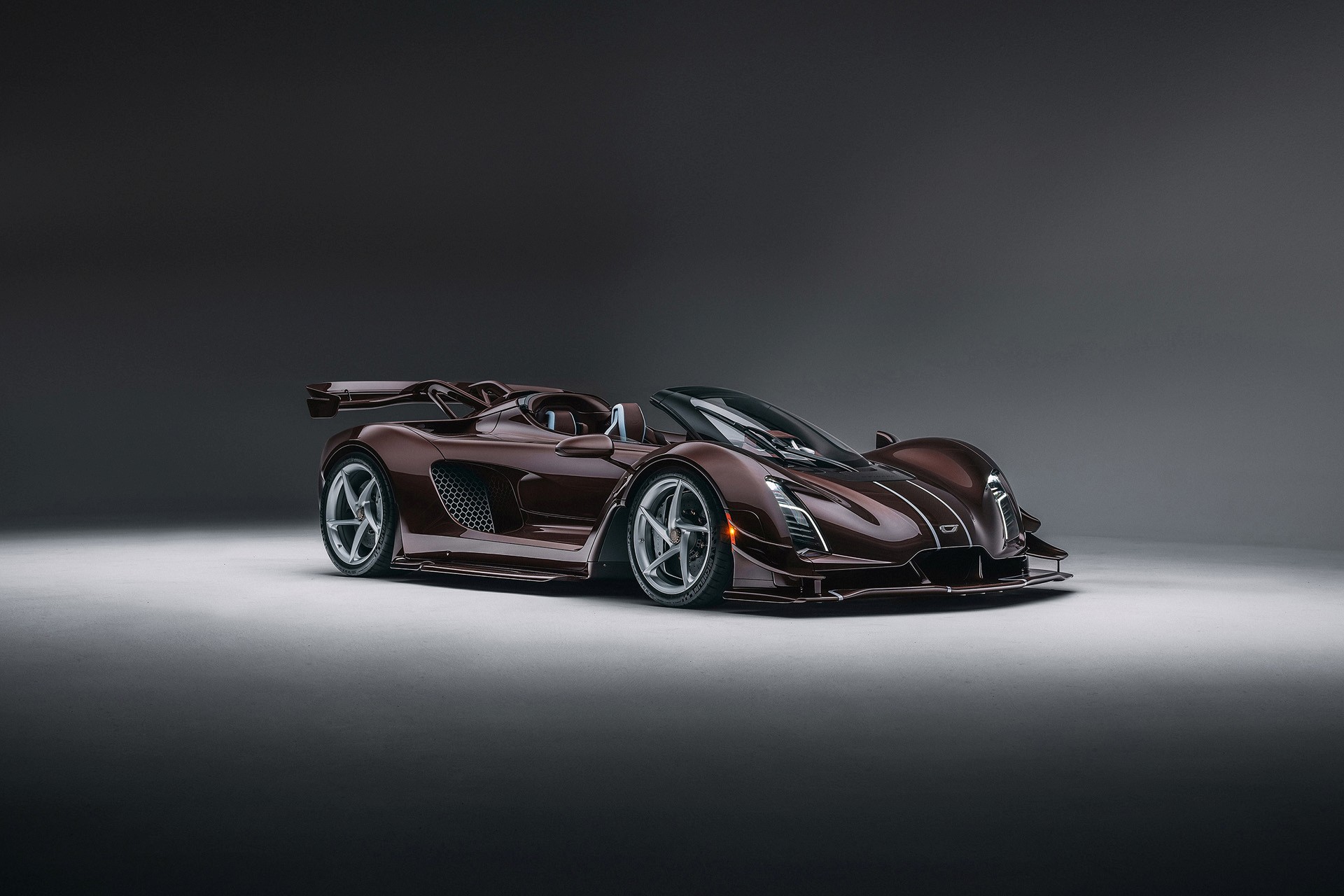
- The 2027 Czinger 21C Spyder introduces an open-top version of the company’s revolutionary hypercar while preserving its extreme aerodynamic performance and futuristic design. The removable carbon-fiber roof allows drivers to experience an immersive open-air driving experience without sacrificing performance.
- The hypercar is powered by a 2.88-liter twin-turbocharged V8 engine combined with an advanced hybrid system that produces 1,250 horsepower. This remarkable powertrain enables the 21C Spyder to accelerate from 0 to 60 mph in just 1.9 seconds and reach a top speed of more than 205 mph (330 km/h).
- One of the car’s most distinctive features is its tandem seating layout, which positions the passenger directly behind the driver to improve aerodynamics and create a fighter jet-inspired cockpit. The vehicle also showcases 3D-printed components and AI-assisted engineering, highlighting Czinger’s innovative manufacturing approach.
- Exclusivity remains a key selling point, as only 30 examples of the 21C Spyder will be produced worldwide. With a starting price of $2.75 million, the model represents one of the most advanced and exclusive American hypercars ever built.
With 21C, Czinger unlocked an entirely new species of hypercar – a vehicle with internal structures bearing greater resemblance to bones than car parts, a vehicle where even the seating arrangement was optimized in the name of experience and performance. A vehicle unlike any other, defined by BioLogic™ Engineering.
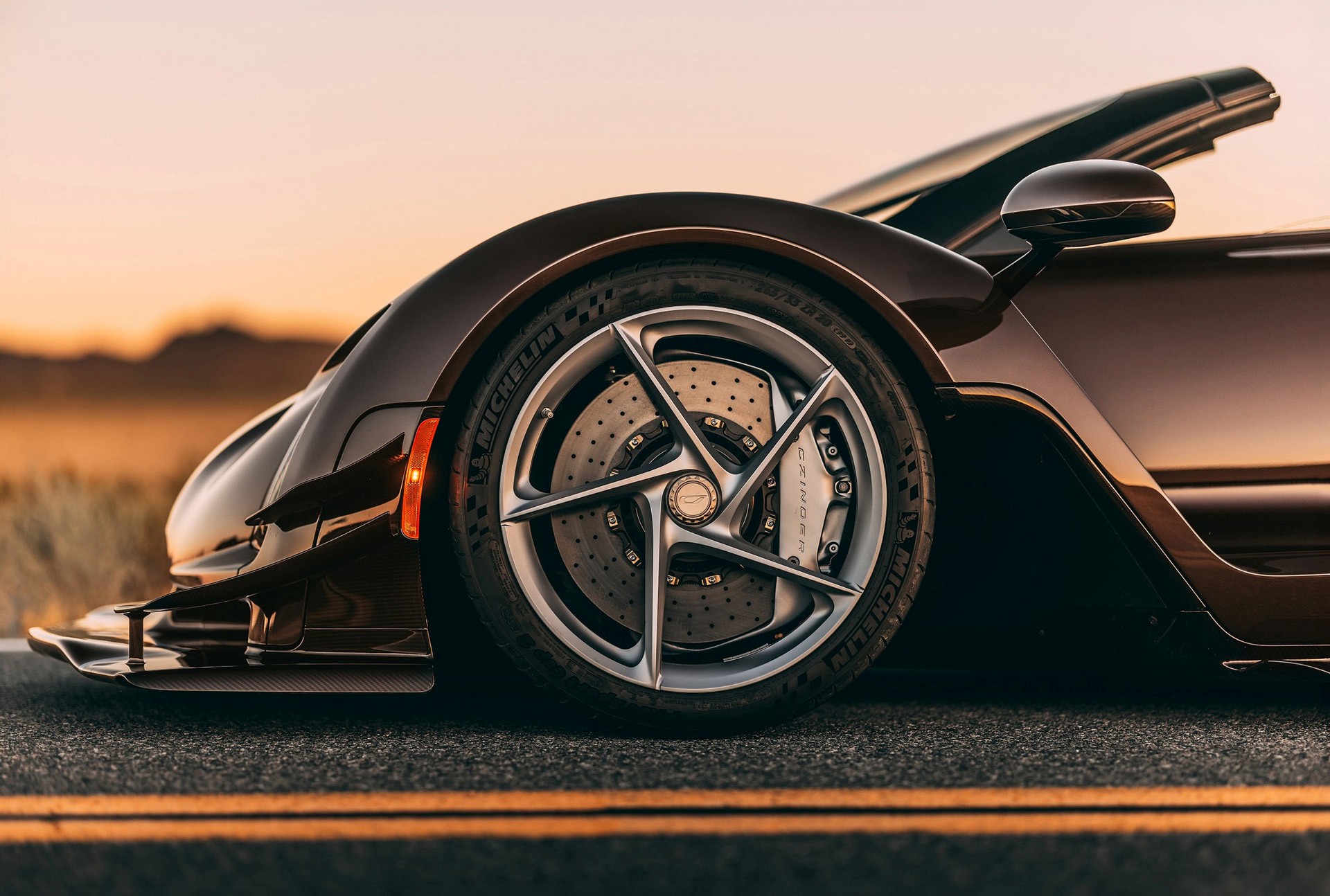
The new 21C Spyder is the most advanced expression of the 21C to date. Spyder debuts BrakeNode™, the world’s first fully integrated, topology-optimized, additively manufactured braking system. Representing years of research and development, BrakeNode™ consolidates the suspension upright, brake caliper, and hydraulic fluid passages into one component while reducing stopping distance by up to 15%.
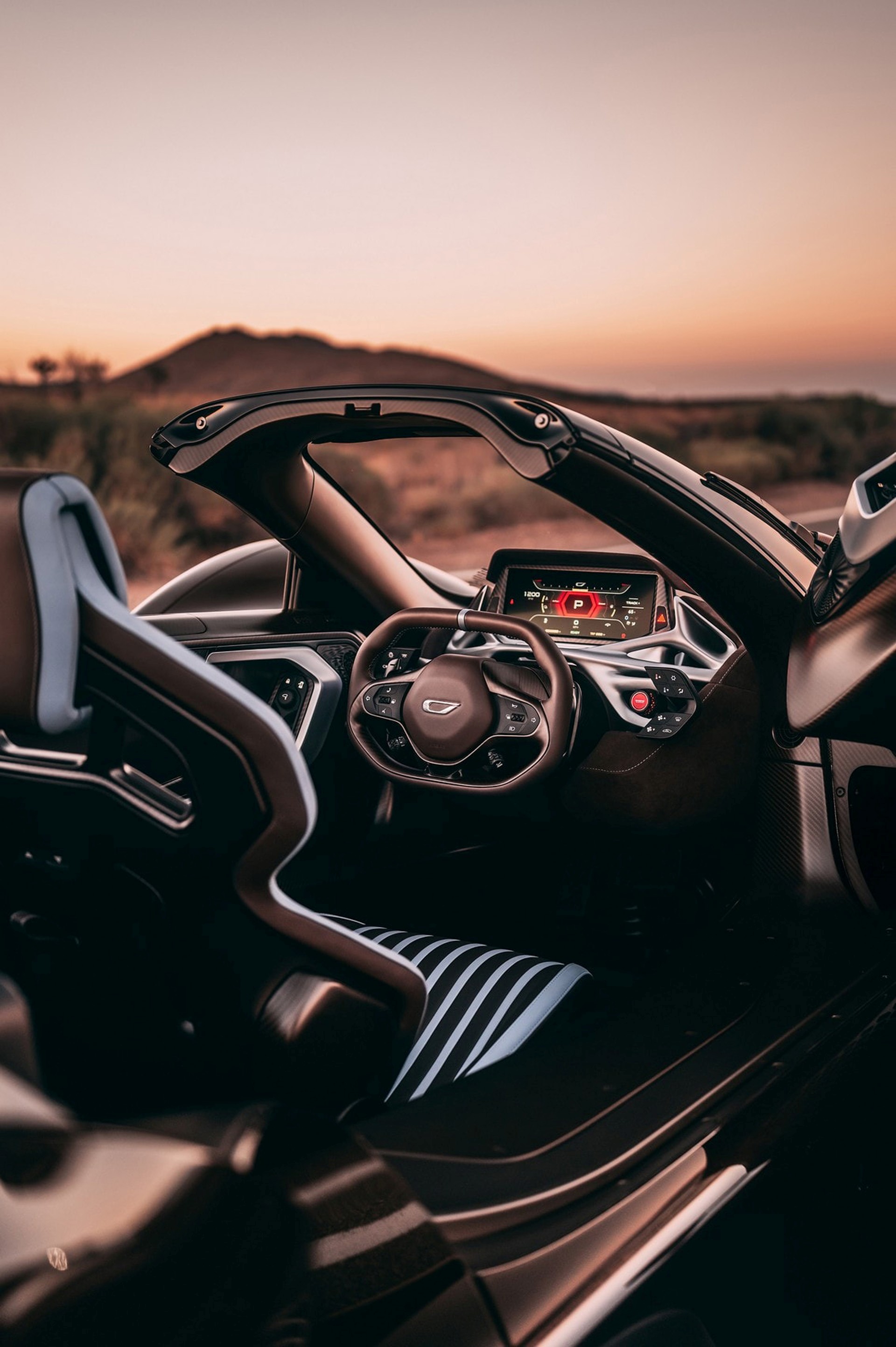
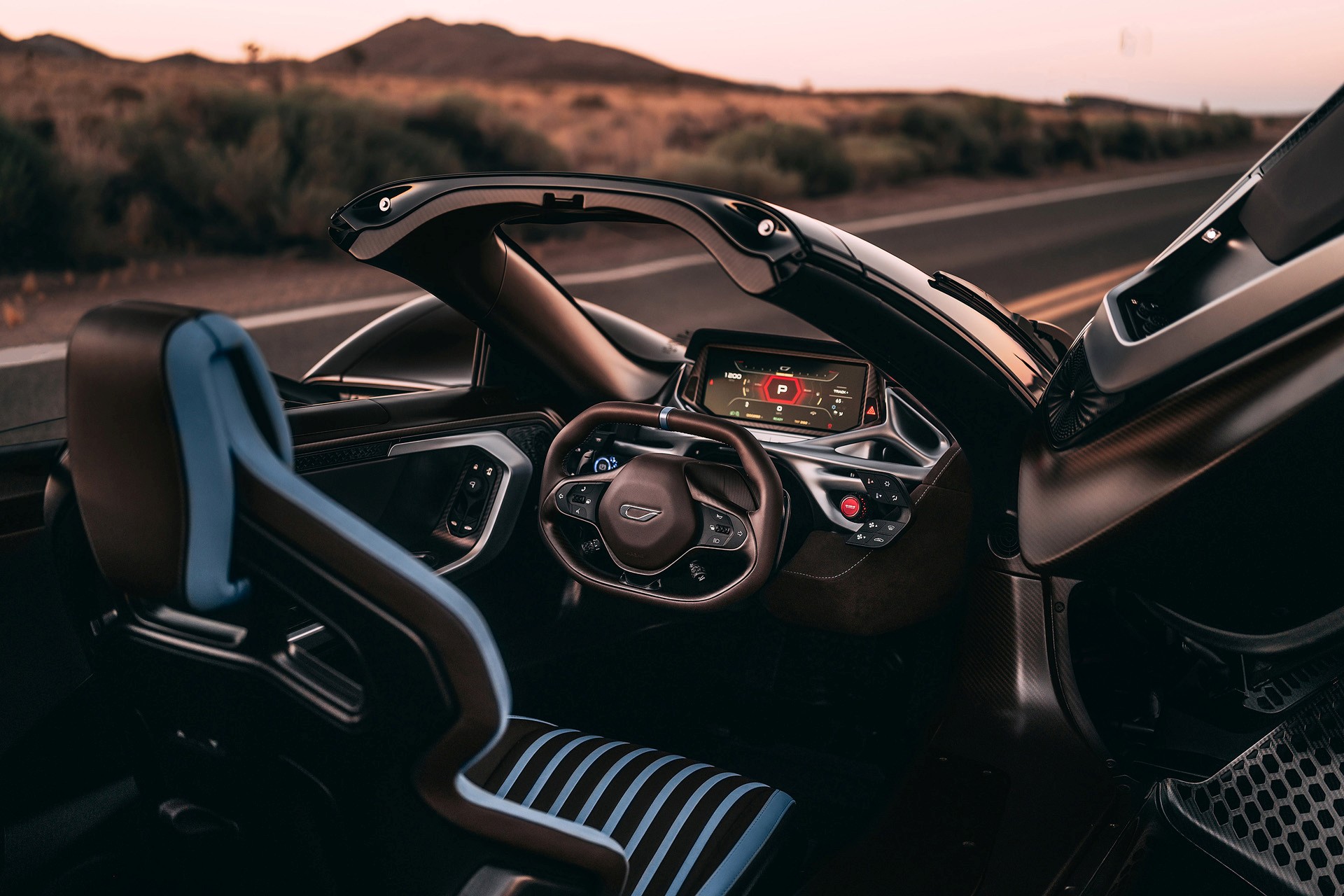
NeuralNode brings BioLogic™ Engineering deeper into the cockpit, consolidating the dash into a central vehicle control system with an exoskeletal form that is both beautiful and functional, with airflow moving through the structure itself into integrated air vents. The vehicle controls, HVAC, steering wheel, and instrument panel are all folded into a single lightweight structure, optimally situated within the most driver-centric seating position in the industry.
Every innovation Czinger designs benefits performance and driver experience. With its roof removed, 21C Spyder’s cabin is filled with the sound of Czinger’s in-house V8 as it revs toward its 11,000-rpm redline, the car accelerating from 0-60 mph in just 1.9 seconds with the full force of its 1,250 hp hybrid powertrain. As speed reaches 150 mph, 21C Spyder produces 3,267 lbs (1,482 kg) of downforce – the most of any open-top road car.
Only 30 will be built.
BrakeNode™ Debuts World-First Braking Technology
BrakeNode™ applies BioLogic™ Engineering to the brake system, redesigning it from the ground up to create the world’s first fully integrated, additively manufactured, and topology-optimized brake assembly – making its production debut on 21C Spyder.
 Czinger
 Czinger
 Czinger
 Czinger
 Czinger
 Czinger
 Czinger
 Czinger
 Czinger
 Czinger
 Czinger
 Czinger
 Czinger
 Czinger
This holistic redesign of the braking system has reduced unsprung mass, increased stiffness, and improved cooling metrics. Combined with all-new brake calibrations, BrakeNode™ improves pedal feel and performance, reducing stopping distance by up to 15%.
Additive manufacturing allowed Czinger to integrate systems across the entire structure. Rather than mounting the caliper to the upright and routing hydraulic fluid externally, BrakeNode™ consolidates these elements, integrating caliper, upright, and hydraulic fluid passages into a single structure. Constructed from Czinger’s proprietary Z301 aluminum alloy, BrakeNode™ results in both functional and structural benefits.
Measured against conventional brake structures, BrakeNode™ both reduces unsprung mass and increases stiffness by up to 30% each. Replacing 21C’s already class-leading additively manufactured suspension upright with one fully integrated system, BrakeNode™ reduces total unsprung mass across the vehicle by a further 6 lbs (2.7 kg) – or 1.5 lbs (0.7 kg) per corner. This was achieved by extensive use of reinforced hollow structures, which comprise up to 37% of BrakeNode™. Further, with the brake caliper now directly integrated into the upright, the possibility of caliper separation in the event of mount failure is eliminated.
Beyond its structural benefits, the use of additive manufacturing enabled Czinger to refine the overall driving experience. This was achieved by optimizing the modal shapes of BrakeNode™, reducing brake squeal and roughness.
Internally, an integrated hydraulic fluid passage threads directly through BrakeNode™ to feed each caliper piston. This not only contributes to mass reduction, but also eliminates a failure point, removing the possibility of any outside interference that poses a risk with traditional external brake lines.
BrakeNode has been tested at up to 500 bars of pressure – eight times greater than 21C’s normal operating pressures – demonstrating the resistance to failure of both the component itself and the aluminum alloy it is constructed with.
In its front calipers, BrakeNode™ incorporates titanium pistons. A material choice trickled down from Formula 1, BrakeNode™ takes advantage of the titanium’s greater heat resistance to reduce brake fade under sustained high-performance use and keep hydraulic fluid 15% cooler compared to stainless steel pistons. With less heat dissipation required, the rear calipers use aluminum pistons to save weight.
BrakeNode™ clamps the brake pads onto carbon ceramic rotors measuring 16.1 inches (410 mm) at the front and 15.3 inches (390 mm) at the rear. Selected after extensive testing, 21C’s pad and rotor pairing maximizes high-performance stopping needs while remaining refined enough for day-to-day driving and compliant with regulatory requirements. A machined disc bell, optimized for mass and cooling with extensive machined pockets and holes, connects the brake rotor to the hub.
BrakeNode™ also enables easier serviceability than a traditional brake assembly. Unlike a typical brake system, there is no need to disconnect the caliper to remove the brake pad or rotor: instead, the pads can be reached through the top of the structure, while the rotors can be tilted out from the side. A drain plug at the bottom of BrakeNode™ makes removing hydraulic fluid a simple process.
The BioLogic™ form of BrakeNode™ is a showstopping design element of 21C Spyder and can be specified in a variety of colors. Available all-new 5-spoke aluminum alloy wheels featuring a more open design emphasize BrakeNode™’s BioLogic™ structures.
BrakeNode™ is standard on 21C Spyder and available as an upgrade on both new and previously delivered 21C HDF and 21C VMax variants.
NeuralNode Is a Multi-Functional Cockpit Control Center
NeuralNode extends BioLogic™ Engineering deeper into the cockpit, replacing the multi-part structure of a conventional dashboard with a single integrated system. Encasing the instrument panel before reaching toward the driver, NeuralNode incorporates new forward-facing air vents designed to maintain optimal comfort during open-top driving. Air flows from the HVAC unit through NeuralNode itself, reaching the vents via hollow channels incorporated within the structure.
As NeuralNode reaches toward the redesigned lightweight, additively manufactured steering wheel – now with a fully upholstered rim for enhanced grip and comfort – two arms extend from either side, serving as mounting points for machined metal lighting, drive mode, and climate controls while bringing key controls closer to the driver’s hands. The door-mounted mirror, window, and infotainment controls are now finished in matching machined metal. Additionally, 21C Spyder’s cabin features new additively manufactured phone and key mounts, along with a cupholder for enhanced usability.
Like 21C HDF and 21C VMax, 21C Spyder’s driver display doubles as the infotainment system, including full wireless Apple CarPlay integration. Audio is played through a bespoke Morel Hi-Fi system tailored to the vehicle’s unique cockpit. The 650-watt system includes eight speakers in total: two bespoke, ultra-thin sub-woofers in the lower cabin, plus three additional speakers in each door (including woofers, coaxial speakers, and tweeters). Carbon fiber speaker cones ensure weight is kept to a minimum, while Digital Signal Processing tunes the audio in real time to provide optimal sound output. Unique additively manufactured speaker grilles spread the BioLogic™ design ethos further throughout the cabin.
An Otherworldly Driving Experience – Amplified
With its roof removed, 21C Spyder pushes 21C’s otherworldly driving experience to an entirely new level. The sound of Czinger’s in-house V8 floods the cabin as it revs toward its 11,000 rpm redline – every cycle of the airbox now prominently heard through the roof-mounted intake – while the rush of wind on either side of the central seating layout makes clear this is an experience that is singular in automotive.
Each dynamic characteristic of 21C Spyder’s drive – steering weight, brake progression, the way the chassis loads through a corner – was tuned as part of 21C’s ground-up approach. The team behind that tuning draws its experience from the most demanding performance environments in the world, including Formula 1, Le Mans prototypes, top OEMs, and aerospace. The result is a vehicle that emphasizes its connection to driver and road, building confidence at any speed without compromising performance.
Feedback through the hydraulic steering system arrives instantly and directly – from the balance of the front motors’ torque delivery to the weight of the wheel itself, precision is felt through every corner. Brake pedal feel is tuned to closely resemble that of a racecar, with a pressure-based approach that gives the driver greater control over the amount of braking force applied while simultaneously facilitating a more intuitive relationship between input and response. Acceleration from the bespoke powertrain is immediate and relentless, pinning the occupants to their seats as 21C Spyder unleashes its full force.
21C Spyder doesn’t ask the driver to adjust to something incremental. It provides them an experience that has never existed before.
Czinger-Developed V8 Hybrid Powertrain
21C Spyder’s engine is a direct result of the car’s cockpit design. The packaging requirements dictated by the 21C’s aerodynamic goals and inline central seating position left a compact footprint for the engine to sit aft of the cabin. With the BioLogic™ Engineering approach, Czinger designed a bespoke, highly compact 2.88L twin-turbo V8 from the ground-up to meet the targeted performance within the available space.
The V8 revs to 11,000 rpm, well beyond the range of most road-legal engines, while achieving full homologation compliance, including in all 50 U.S. states. In addition to its compact size, extensive use of additively manufactured components – including the exhaust and intake manifolds, catalyst assembly, and thermal management system – enabled the engine’s light 231 lbs (105 kg) weight, 100 lbs (45 kg) less than the average hypercar’s. The engine produces 750 hp on standard 91-octane fuel, making it the most power-dense homologated V8 in production, at 260 hp per liter.
Combustion power is routed to the wheels through a seven-speed single-clutch transmission. Co-developed with Xtrac, the gearbox features several innovations that were world-firsts when debuted on 21C HDF.
One such innovation is the 48-V electrically actuated twin barrel system. It is controlled by three electric motors: one manages the clutch, while the remaining gears operate the transmission’s two selector barrels, each moving independently to enable sub-100-millisecond shifts. Torque from the powertrain’s electric motors fills the gaps between shifts, smoothing gear changes during both high-performance and lower-speed driving.
21C’s gearbox casing is the first in a production vehicle to be topology-optimized and additively manufactured. This approach enabled exceptional production quality and structural performance while minimizing mass, resulting in the gearbox’s torque capacity of 750 Nm per kilogram – the highest of any road car – while keeping the entire transmission system, including actuation, to just 242 lbs (110 kg).
The combustion engine is coupled with two permanent-magnet synchronous electric motors on the front axle, driving each front wheel independently. A third electric motor, the Motor Generator Unit, is connected to the crankshaft. It primarily serves as a generator, using energy from the combustion engine to charge 21C’s pair of 2.1 kWh (4.2 kWh total) 800-V batteries, but also helps drive the engine crank to prevent turbo lag. Together, the electric motors generate an additional 500 hp total, bringing combined system output to 1,250 hp and 691 lb-ft of torque.
While the gas engine primarily powers the rear wheels, 21C’s hybrid system allows surplus combustion power to be recuperated, stored, and distributed to the front axle as needed. Working in conjunction with Czinger’s V8, the instant torque and all-wheel-drive traction enabled by the electric motors produces staggering performance: 21C Spyder launches from 0-60 mph in just 1.9 seconds, blasts through the quarter mile in 8.7 seconds, and continues to a top speed of 205 mph.
Fighter Jet Without the Canopy
Like 21C HDF and 21C VMax, 21C Spyder features a fighter jet-like central inline seating arrangement. Chosen in the name of performance, the inline arrangement enables a narrower cabin design that minimizes frontal area and maximizes aerodynamic efficiency while simultaneously centralizing weight distribution.
Once inside 21C Spyder’s cockpit, further advantages of the design come into sharp focus. Like the fighter jets it was inspired by, 21C Spyder provides a panoramic view from the driver’s seat. Further, the pedals are aligned with the steering wheel and driver’s seat, creating an ideal position to maximize control when left-foot braking during high-performance driving.
Sitting aft of the driver, the passenger is treated to an experience akin to a fighter jet co-pilot’s, with prominent induction noise from the air intake mounted just above their seat and an expansive view with 21C Spyder’s roof removed. 21C’s rear seat was designed to accommodate passengers up to 6′ 5″, ensuring comfort for both occupants.
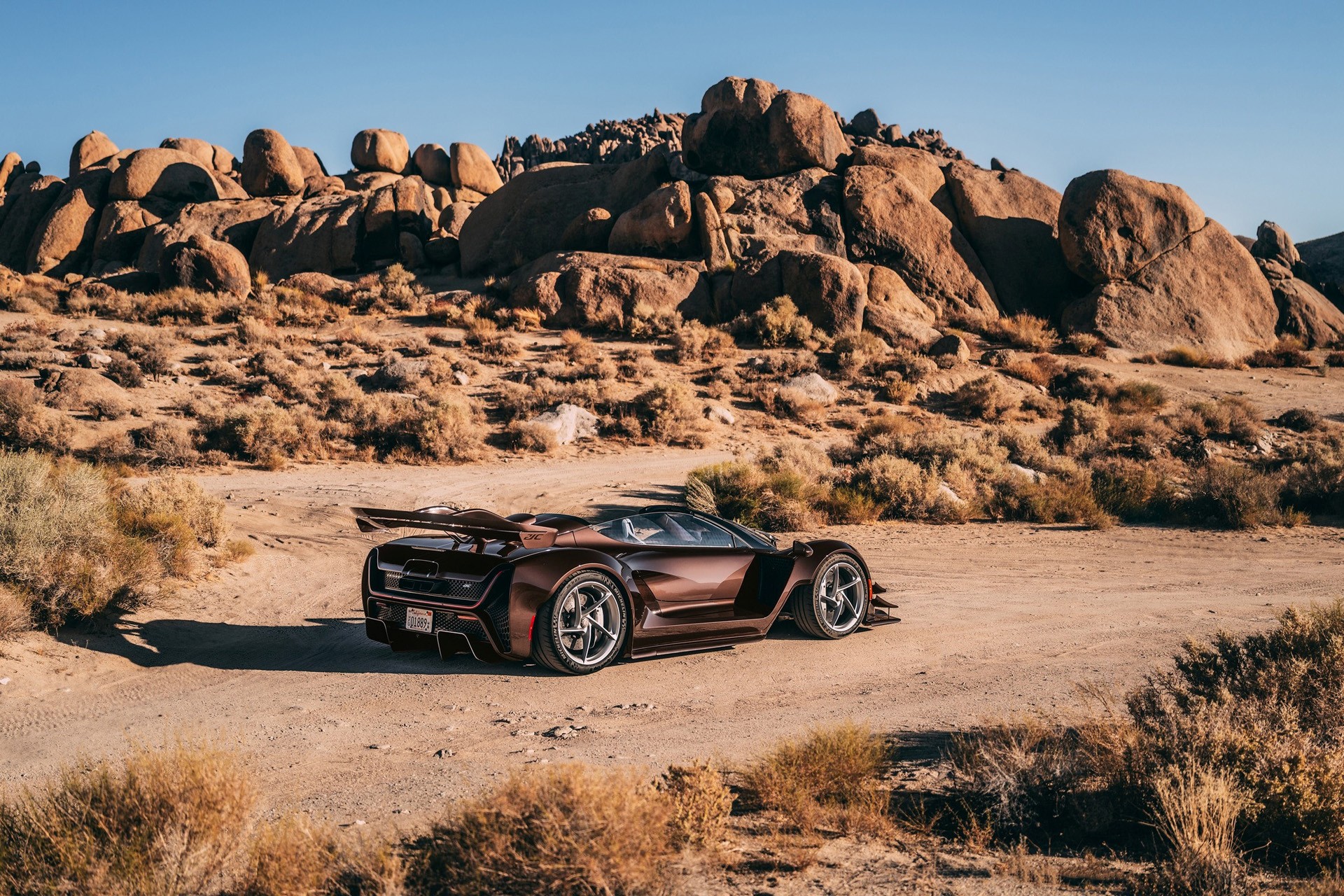
21C Spyder’s removable canopy – a carbon fiber hardtop roof – allows the hypercar’s silhouette to remain entirely intact when in use. The hardtop roof is exceptionally lightweight, at just 22 lbs, and is easily detached via two latches located within the cabin. When it is not in use, the hardtop roof can be stored on its dedicated BioLogic™ Roof Mount – included with every 21C Spyder and comprised of additively manufactured aluminum and carbon fiber. In addition to the hardtop, a soft top that can be stowed within the vehicle is provided for on-the-go use in the event of unexpected weather.
The Most Downforce of Any Open-Top Road Car
At 150 mph, 21C Spyder generates an immense 3,267 lbs (1,482 kg) of downforce with its roof removed, the most of any open-top road car. With the roof in place, that figure rises to 3,307 pounds (1,500 kg) – identical to 21C HDF, with which 21C Spyder shares its aggressive aerodynamics package. 57% of the pressure is biased toward the rear, enhancing high-speed stability by aligning with 21C’s slight rear weight bias.
At the front of 21C Spyder, an extended splitter works in ground effect to generate a low-pressure field ahead of the front axle, while managing the airflow that feeds the rest of the car’s aerodynamic surfaces. Mounted just above the splitter on either side, twin dive planes direct air away from the front wheels, keeping the turbulent wake of the rotating tires from disrupting the cleaner airflow needed by the underbody and rear diffuser.
21C’s cockpit design not only minimizes frontal area – contributing to a lift-to-drag ratio of 3.0:1 – but also enables the architectural freedom for full-length channeled side splitters on either side of the chassis, a configuration impossible in a conventional side-by-side cabin. Along each splitter, carefully shaped surface details build and sustain a controlled low-pressure system that generates downforce along the full length of the car, re-energized by a slotted inlet just ahead of the rear tires.
Beneath 21C Spyder, a multi-channel full-length diffuser runs the length of the underbody, with a kick line positioned directly behind the rear occupant. The diffuser surface wraps around the additively manufactured rear subframe, powertrain ancillaries, and gearbox casing.
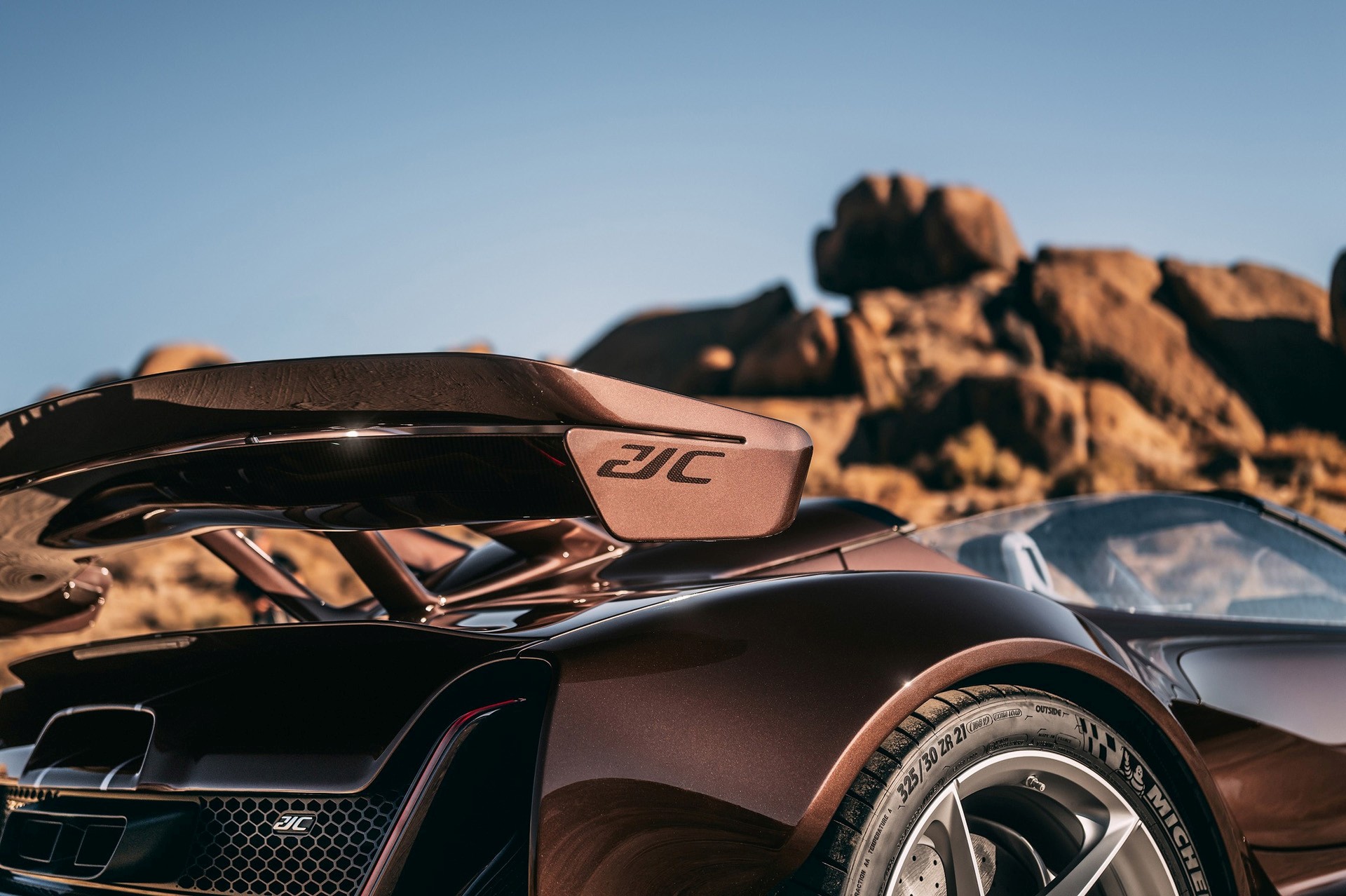
21C Spyder’s dual-element, 76-inch rear wing dominates rear downforce generation. A floating upper panel works in conjunction with a lower panel to generate high downforce with minimal drag, while swan-neck uprights maintain alignment between the panels at speed. Slotted wing endplates allow pressure to bleed off in a controlled manner, enhancing efficiency and airflow stability. The wing’s height – the highest point on the car, measuring 45 inches from the ground – and position also create a low-pressure zone behind the car that actively draws heat from the rear bodywork and the diffuser beneath. The wing’s aero balance and overall efficiency can be optimized for specific circuits via its three-way adjustable assembly.
BioLogic™ Engineering: Rethinking Automotive Design
At the heart of every 21C variant is BioLogic™ Engineering, Czinger’s core design and performance philosophy in which human ingenuity is unshackled from constraints and turbocharged by the most advanced toolset in the industry. Guided by first principles, rather than restricted by the tools and conventions that have historically defined automotive design, BioLogic™ Engineering unlocks entirely new possibilities.
By compressing natural evolution into digital timescales, BioLogic™ Engineering produces structures that are optimized, stronger, and fully integrated, treating a vehicle as a system rather than an assembly of parts. The result looks and feels like it’s from the future, but is derived from the oldest logic there is – the universal laws of physics.
The approach is consistent throughout the car. A component’s form is discovered through its function, not by the standards that have traditionally governed automotive design.
21C’s most striking design element was arrived at through this philosophy. Czinger’s engineers chose a central inline seating arrangement to create the most aerodynamic, balanced vehicle possible. At the same time, the decision maximized the driver’s experience by placing them at the center of the vehicle. Every other major system on the car was built under the same discipline.
Elsewhere, the same reasoning consolidates parts that would otherwise exist separately: the Load-Bearing Manifold, for example, combines the engine mount with coolant channels in a single compact structure. The resulting structure simultaneously removes a point of failure, eliminates unnecessary mass, and allows the engine to be mounted as closely to the center of 21C as possible.
When BioLogic™ Engineering results in the combination of multiple vehicle systems into a single structure, Czinger designates it a Node – a naming convention reserved for the platform’s most significant consolidations, such as BrakeNode™ and MegaNode. MegaNode integrates the steering rack, electric motor housings, front suspension components, and front crash structure, reducing weight by 25% versus each component standing on its own.
23% of 21C Spyder is additively manufactured utilizing processes developed by Czinger’s vertically integrated sister company, Divergent Technologies. When joined to 21C’s carbon fiber monocoque, many of these parts comprise the BioLogic™ Chassis. Debuted on 21C as the world’s first Pareto optimal chassis, the BioLogic™ Chassis incorporates the monocoque with additively manufactured parts including the MegaNode, side and rear crash structures, rear subframe, and rear suspension components.
The carbon fiber monocoque is hand-laid in a state-of-the-art facility, with each piece of pre-impregnated carbon fabric placed with precise laser-alignment. Because 21C was designed with a Spyder variant in mind from the outset, the bottom section of the tub did not require structural reinforcements. However, due to the removable roof, 21C Spyder adds additional carbon fiber piling in its A-pillars to maximize rollover safety. Altogether, the tub weighs only 276 lbs. Combined with 21C Spyder’s extensively BioLogic™ Engineered components, the entire vehicle weighs 3,571 lbs (1,620 kg) dry, just 22 lbs (10 kg) more than 21C HDF.
Suspension Compliance Without Performance Compromise
21C’s suspension is a dual A-arm pushrod system with inboard springs and electronically adjustable dampers. Every major component has been designed with BioLogic™ Engineering as the central approach.
Czinger’s control arms are additively manufactured to satisfy load, stiffness, and aerodynamic requirements simultaneously while also achieving a 20% reduction in weight versus a conventional setup. The lower control arms sit directly within the airflow beneath the car, with tapering cross-sections shaped to manage that airflow cleanly, reducing drag by 10% compared to a conventional control arm’s shape. This tapering design was only achievable with the structural flexibility afforded by additive manufacturing.
Racecar-stiff suspension and real-world road compliance are typically at odds, but additive manufacturing enables the freedom to optimize geometry without many of the constraints imposed by traditional manufacturing methods. This allows engineers to precisely tailor the stiffness of a structure, allowing suspension components to deliver the precision and responsiveness expected on track while maintaining the compliance needed for real-world road driving. This methodology extends to components such as suspension rockers, where rapid iteration allows engineers to refine motion ratios, ride height, and overall suspension kinematics without the time and cost of conventional tooling.
At the front of 21C, a three-piece Z-bar is used for its compact footprint and lighter weight compared to a traditional sway bar. The entire corner assembly is additively manufactured, allowing mounts for wiring harnesses, brake lines, and ancillary systems to be built directly into the suspension structure itself – eliminating secondary hardware, reducing part count, and simplifying assembly.
Adjustable dampers offer different levels of firmness designed to maximize road compliance or provide optimal performance capability in coordination with the selected drive mode. In their firmest Track+ setting, the dampers are stiffened by 50%. Working in conjunction with a 25mm drop in ride height, this keeps 21C’s aerodynamic platform consistent under load, allowing the aero package to consistently deliver its full downforce.
Engineered for Road and Track
From its earliest development, 21C was engineered to be as usable on public roads as it is on the racetrack. That commitment required full compliance with the world’s most stringent safety and emissions regulations, including Federal Motor Vehicle Safety Standards (FMVSS) and California CARB – the latter being the most complex certification process in existence for a vehicle of this performance level.
To comply with California’s CARB emissions and OBD requirements, Czinger developed and calibrated an advanced controls system from scratch. 21C is constantly monitoring all emissions-related components, ensuring that each is responding as expected and within allowable emissions limits. Further, Czinger implemented a unique startup sequence for 21C: When the combustion engine is cold, its startup process is extended, allowing the catalytic converters to warm up and engage full functionality. However, made possible by the electric motors on its front axle, 21C is immediately able to begin driving under its own power while the engine startup sequence completes.
21C underwent more than 35 crash tests during development, with further roof crush tests conducted for 21C Spyder. All variants are compliant with FMVSS in addition to safety regulations in markets around the world.
Every 21C variant can be driven without compromise over a wide range of driving environments, a capability enabled by its four distinct drive modes: Street, Sport, Track, and Track+.
Street mode prioritizes efficiency and driving ease, delivering power through the front electric motors alone below 60 mph while prioritizing range, with the combustion engine running on and off in the background as needed to maintain battery charge. Above 60 mph, the rear axle engages automatically, and total available power rises to 1,140 hp. Regenerative braking is mild.
Sport mode engages the combustion engine at all speeds and unlocks full all-wheel-drive propulsion, with automatic or manual shifting available via the steering wheel paddles. 1,140 hp is available, and suspension tuning remains compliant for road use.
Track mode unlocks the full 1,250 hp hybrid system output. Gearshifts become faster and more aggressive, and from second gear upward the transmission holds to the 11,000 rpm redline rather than upshifting automatically – keeping the driver in control. Regenerative braking is increased to maintain a higher state of battery charge, with maximum power available at any moment.
Track+ mode lowers ride height by 25mm and stiffens the dampers by 50% compared to their most compliant setting, maximizing ground effect aerodynamics for racetrack use. Track+ should not be used on public roads.
Exclusive Production
Priced from $2.75M, 21C Spyder is strictly limited to just 30 examples. Every 21C Spyder will leave Area 21 as a one-of-one, tailored precisely to the client’s wishes with the assistance of Czinger’s specification team.
The personalization possibilities are limitless – extending deeply into the vehicle with the Czinger-exclusive capability to adjust the color of each additively manufactured component, from the BioLogic™ Chassis structure itself to finer details such as pedals and speaker grilles. Exterior colors can be developed from scratch, while carbon fiber components can be tinted in a variety of colors. Inside, upholstery, stitching patterns, and seat perforations can be specified to the owner’s exact requirements.
21C Spyder is BioLogic™ Engineered and hand-assembled at Area 21, Czinger’s Los Angeles production facility.
Technical Specifications
- Power Unit: 2.88L twin-turbocharged flat-plane V8 with 3x permanent magnet synchronous electric motors (2x on front axle, 1x Motor Generator Unit connected to crankshaft via a geartrain)
- Drivetrain Layout: Longitudinal, mid-engined, AWD
- Maximum Power
- 1,250 hp / 1,267 PS / 932 kW (total combined)
- 750 hp / 760 PS / 559 kW (gas engine)
- 500 hp / 507 PS / 373 kW (electric motors combined)
- Maximum Torque
- 691 lb-ft / 938 Nm (total combined)
- 396 lb-ft / 538 Nm (gas engine)
- 295 lb-ft / 400 Nm (electric motors combined)
- Maximum Gas Engine Speed: 11,000 rpm
- Specific Output: 260 hp / 264 PS / 194 kW per liter
- Performance Data
- 0-60 mph: 1.90 sec
- 0-62 mph (0-100 km/h): 1.92 sec
- 1/4 Mile (0-400 m): 8.7 sec
- Top Speed, roof closed: 205 mph (330 km/h)
- Transmission
- 7-speed sequential transaxle automated manual transmission, twin selector barrel
- Actuation: 48-V electric shift actuation and 48-V electrohydraulic clutch actuation via synchromesh engagement
- Construction: Additively manufactured gearbox case and transmission oil pump manifold
- Tires: Michelin Pilot Sport Cup 2, Michelin Pilot Sport Cup 2R, Michelin Pilot Sport 4S
- Front: 265/35/R20
- Rear: 325/30/R21
- Brakes
- Front: BrakeNode™ with 6-piston monoblock calipers, 16.1 in (410 mm) carbon-ceramic rotors
- Rear: BrakeNode™ with 4-piston monoblock calipers, 15.3 in (390 mm) carbon-ceramic rotors
- Suspension: Double A-arm, pushrod-operated inboard spring/damper units, electronically adjustable damping, front and rear sway bars
- Steering: Hydraulic power-assisted rack-and-pinion, 3D-printed steering rack housing
- Dry Weight: 3,571 lb (1,620 kg)
- Weight Distribution (F:R): 45:55
- Dimensions
- Length: 184 in (4,692 mm)
- Width, mirrors unfolded: 95.4 in (2,423 mm)
- Width, mirrors folded: 81.9 in (2,081 mm)
- Height: 45.1 in (1,146 mm)
- Wheelbase: 106 in (2,700 mm)
- Total Downforce, roof closed
- 3,307 lb (1,500 kg) @ 150 mph
- 5,445 lb (2,470 kg) @ 200 mph
(Czinger Press Release)
Gallery: 2027 Czinger 21C Spyder Wallpapers
22+ car wallpapers of the 2027 Czinger 21C Spyder for desktop and mobile phones. Download 2027 Czinger 21C Spyder wallpapers in high-quality HD and 4K resolutions.