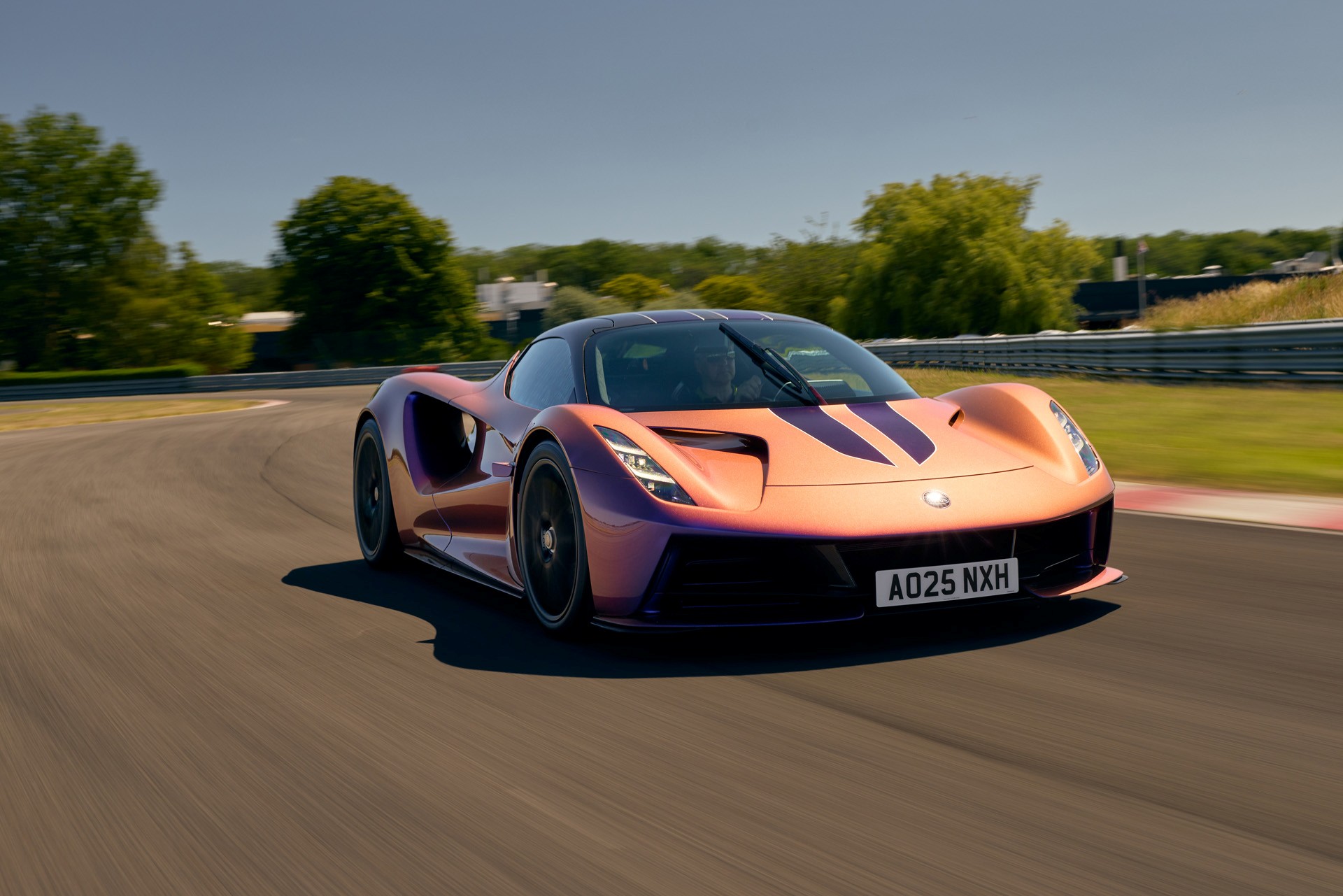
2025 Lotus Evija
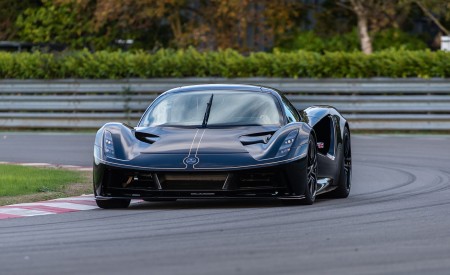
Ever since its unveiling, the Lotus Evija has been turning heads as a striking symbol of British engineering – a fully electric hypercar with over 2,000 PS of power and unmatched performance, designed to set new benchmarks in advanced EV technology. Put simply, the Lotus Evija is the most powerful electric production car ever built.
With first cars delivered to customers around the world, the Lotus Evija has made a notable entrance, welcomed with enthusiasm by discerning, avid special car buyers and dedicated Lotus fans. Its launch included the exclusive Fittipaldi Edition, limited production number of eight cars, created in collaboration with the Team Lotus race legend after whom it is named. Exclusive test drives are now underway, offering customers and media a taste of the Evija's staggering performance.
Like all Lotus cars throughout the brand's storied 77-year history, Evija has been precision-engineered to deliver an outstanding driving experience both on the road and track. It is the most dynamically accomplished model ever built by the company, setting new standards for Lotus driving performance. Above all else, it is 'For The Drivers'.
Exclusivity and desirability go hand in hand in the world of hypercars, and Evija is blessed with an abundance of both. Production is limited to a maximum of 130 cars, a figure set in tribute to the car's project code 'Type 130'. Lotus road and race cars throughout the brand's seven decades of success have been assigned a Type number, and Evija is no exception.
Matt Windle, President and CEO Lotus Cars Europe: "Engineers dream of working on something like the Evija. I've been at the core of the project and have seen our passionate teams turn a vision into a halo proudly showcasing what Lotus can achieve. Evija pushes boundaries, explores new ways of thinking and uses elegant engineering to deliver performance and feel – it's a Lotus in every sense."
 Lotus
Lotus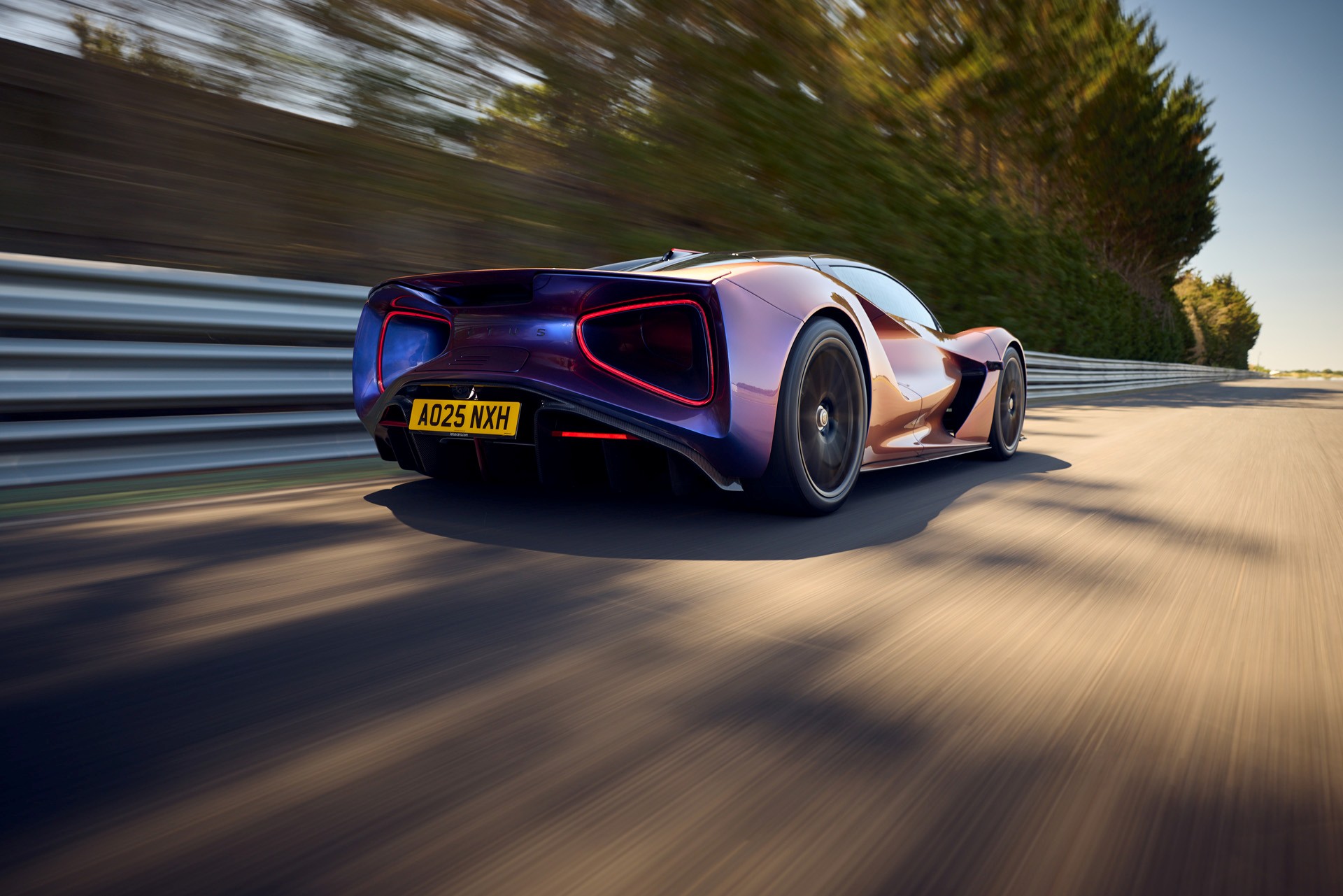 Lotus
Lotus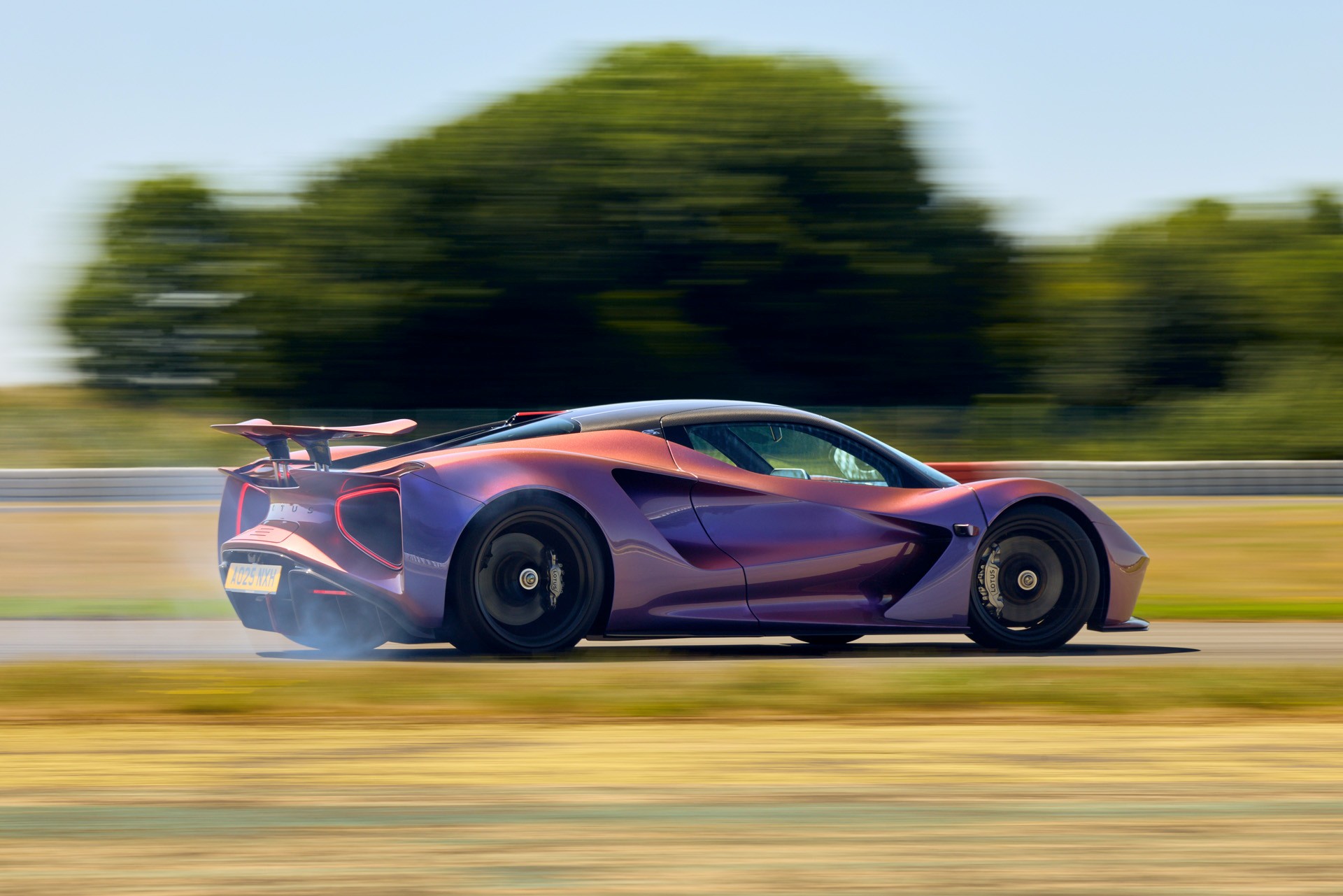 Lotus
Lotus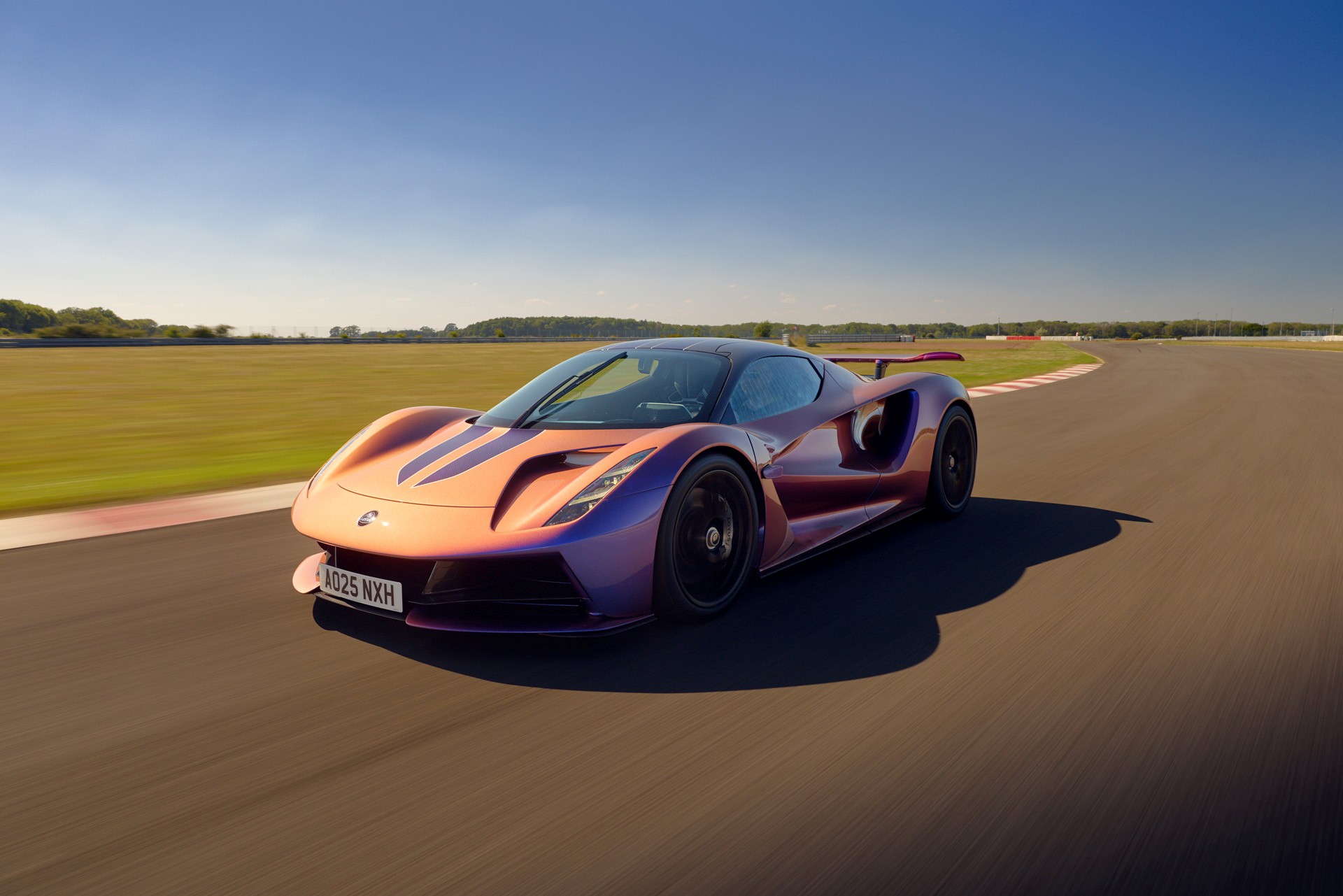 Lotus
Lotus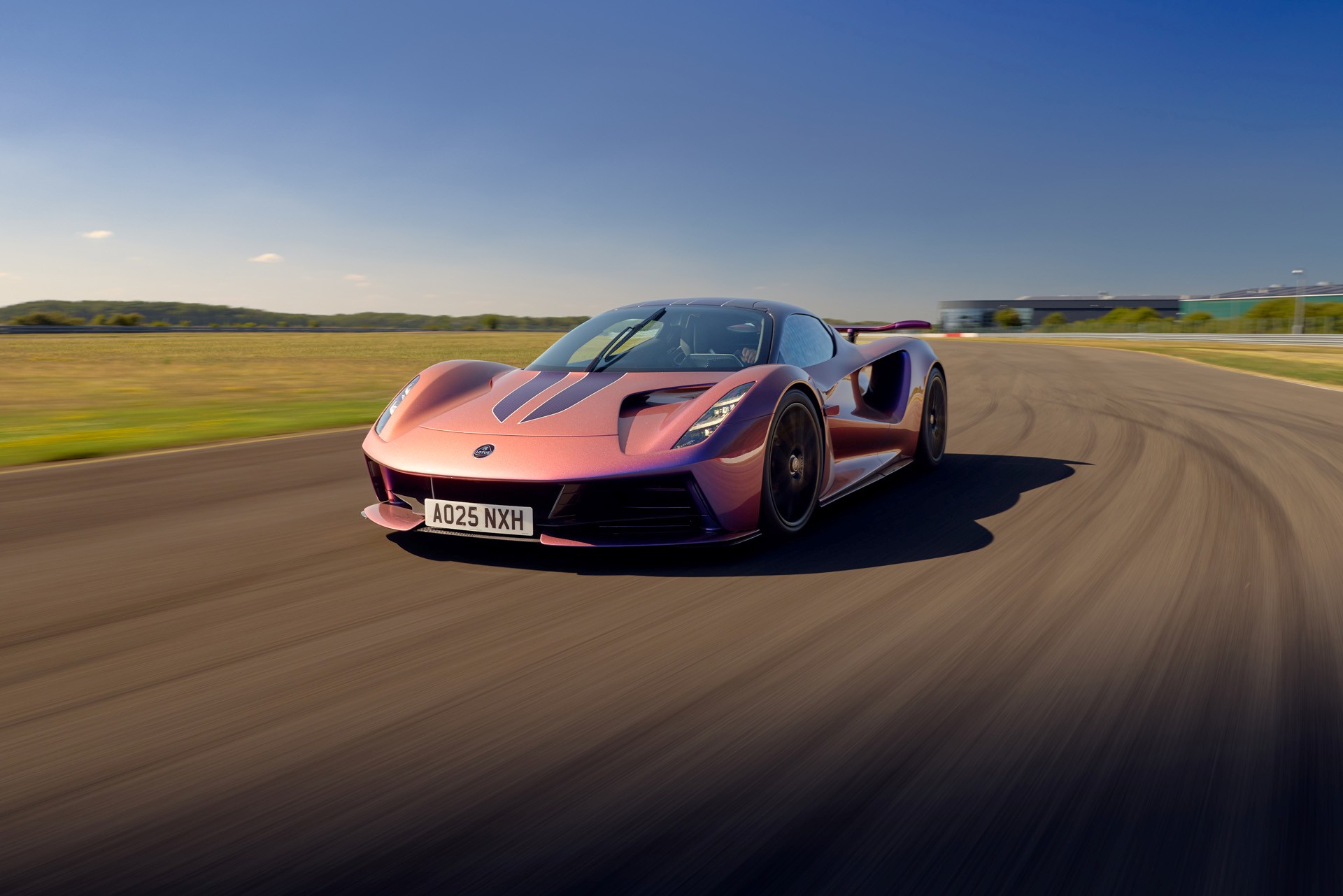 Lotus
Lotus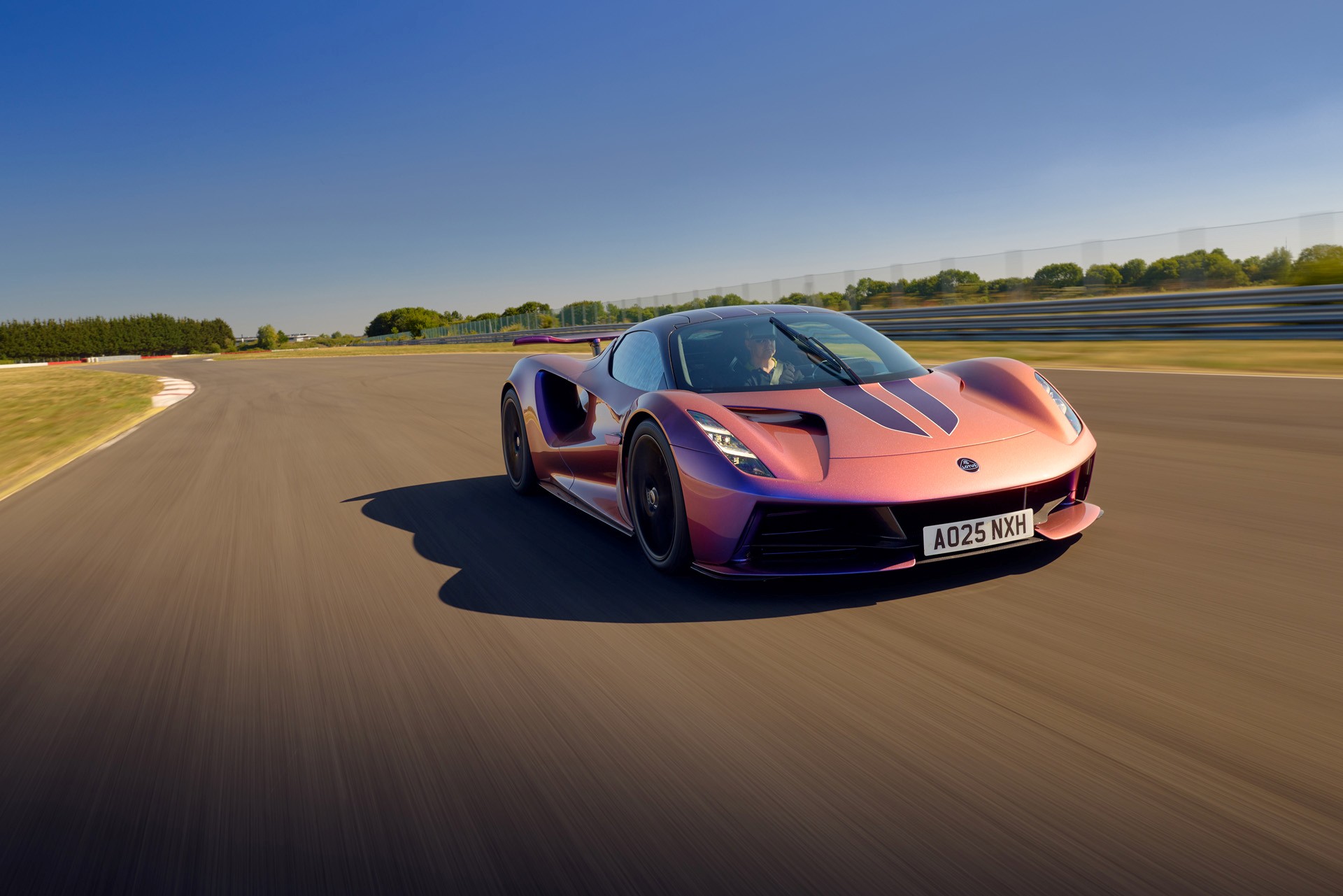 Lotus
Lotus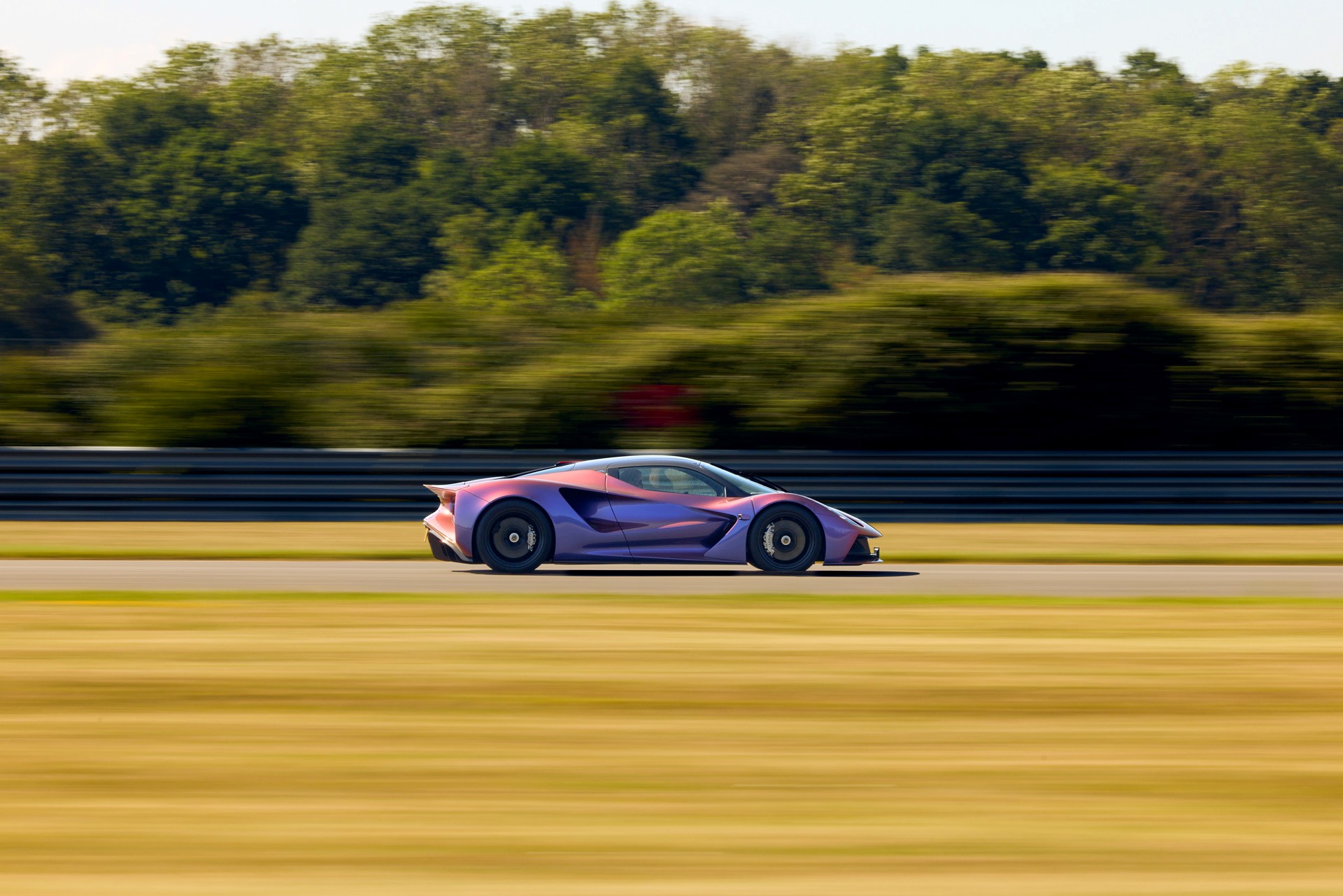 Lotus
Lotus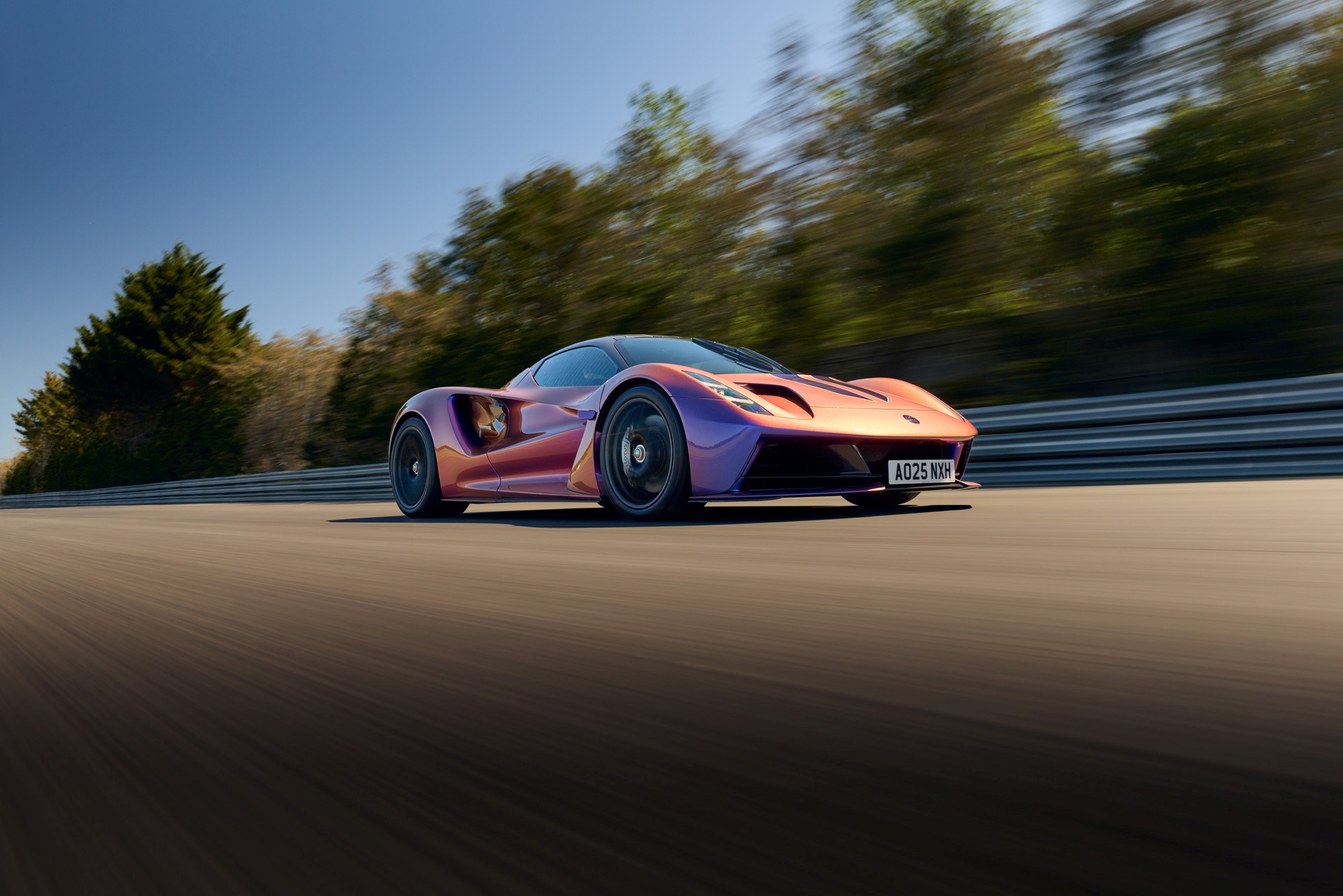 Lotus
Lotus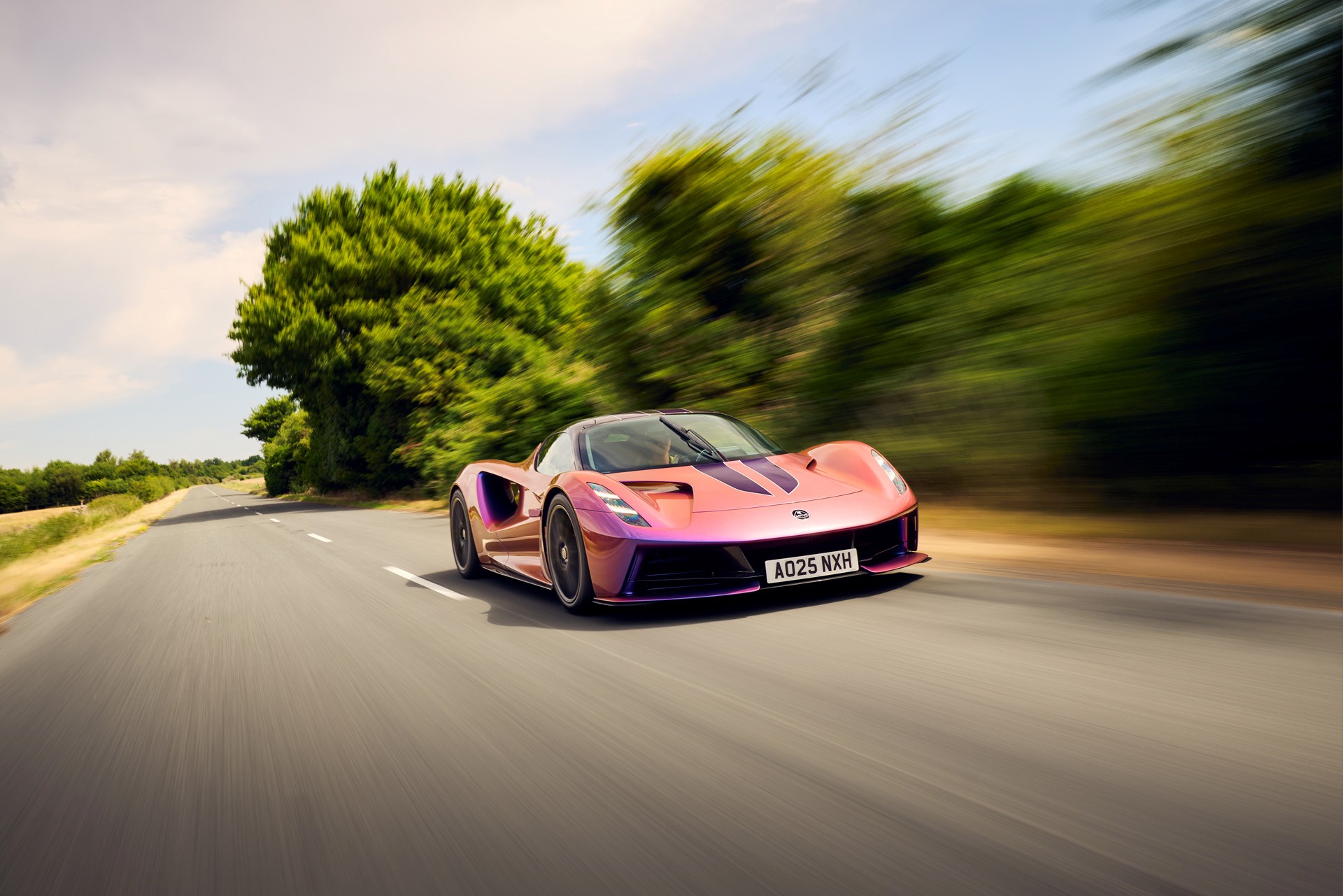 Lotus
Lotus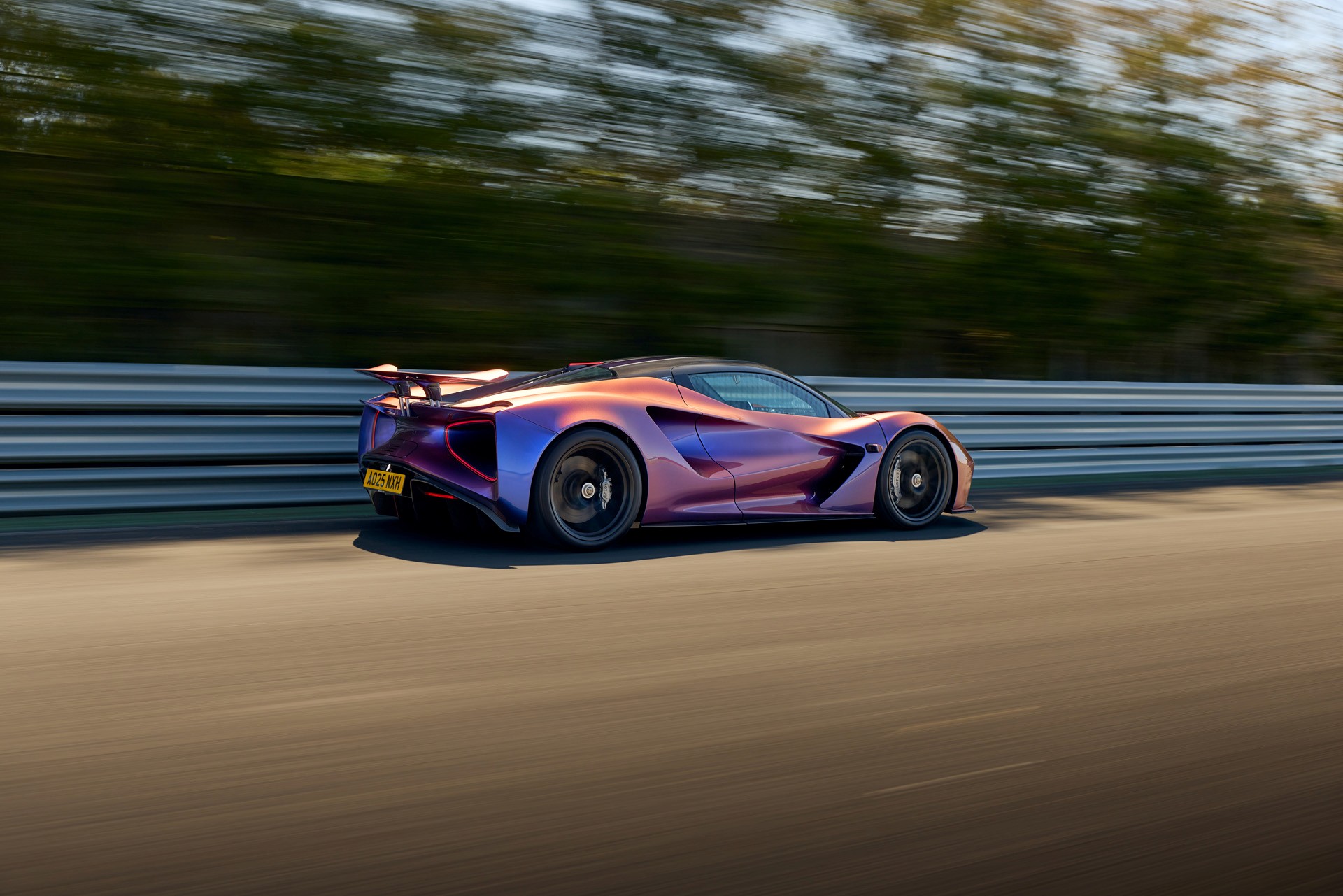 Lotus
Lotus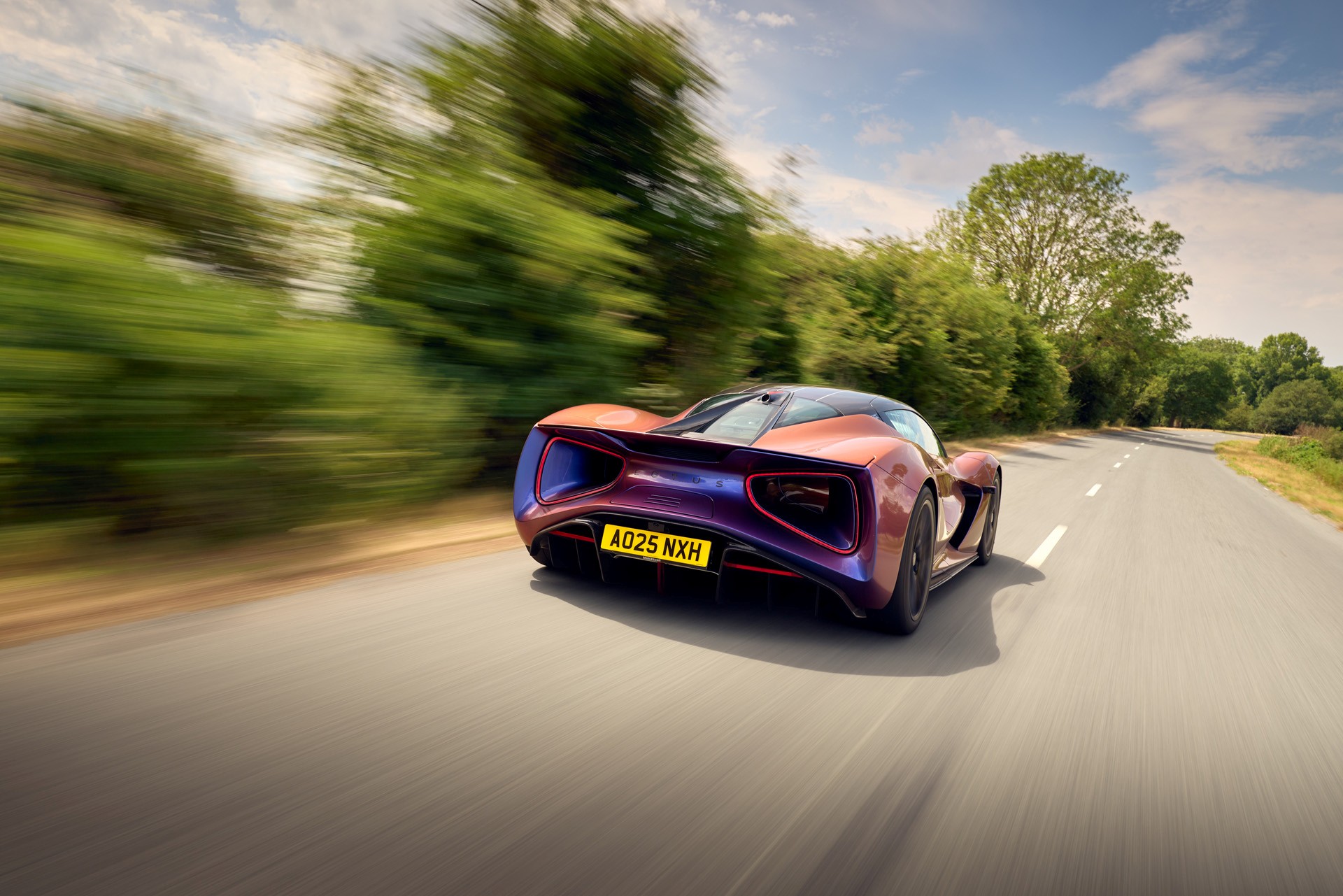 Lotus
Lotus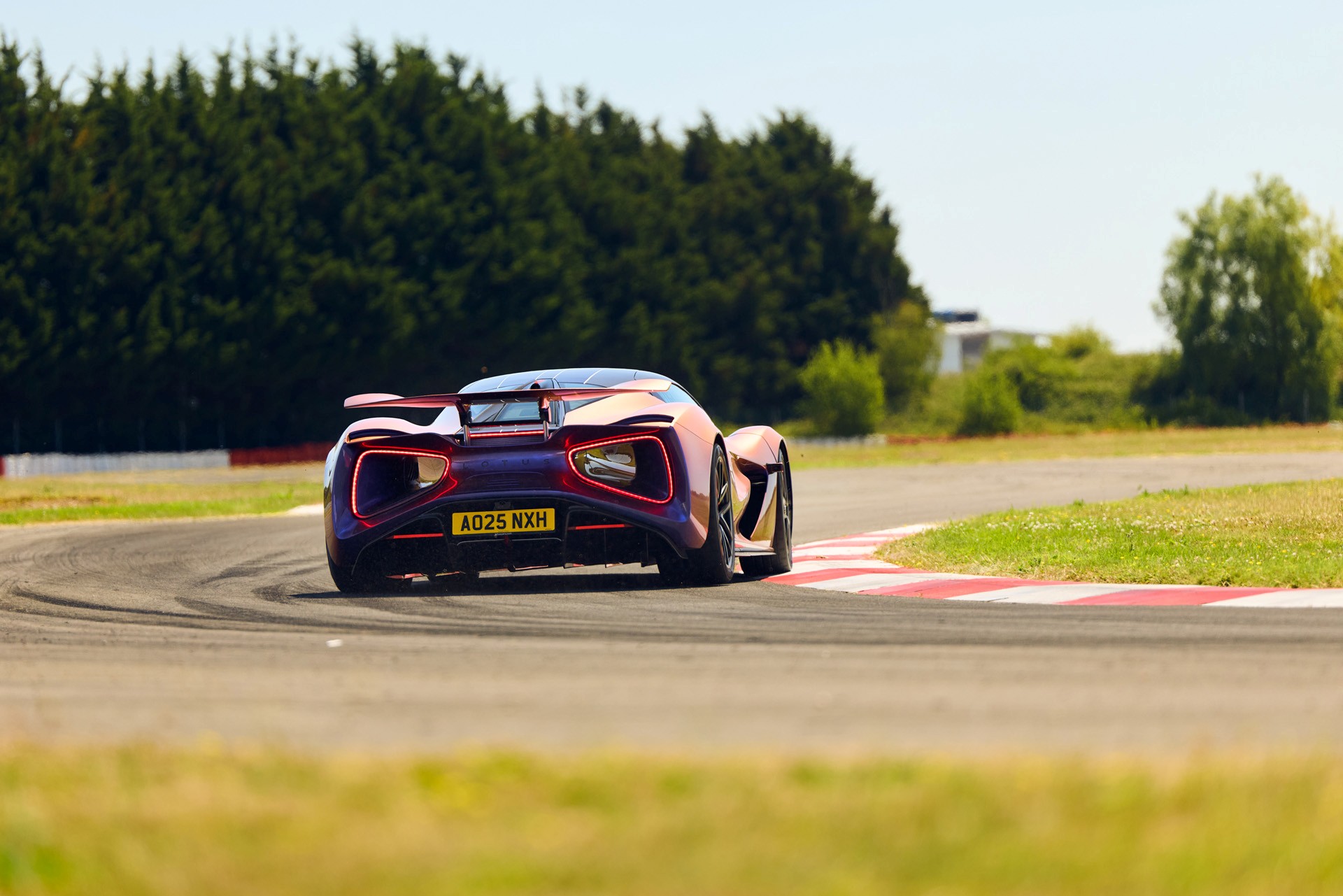 Lotus
Lotus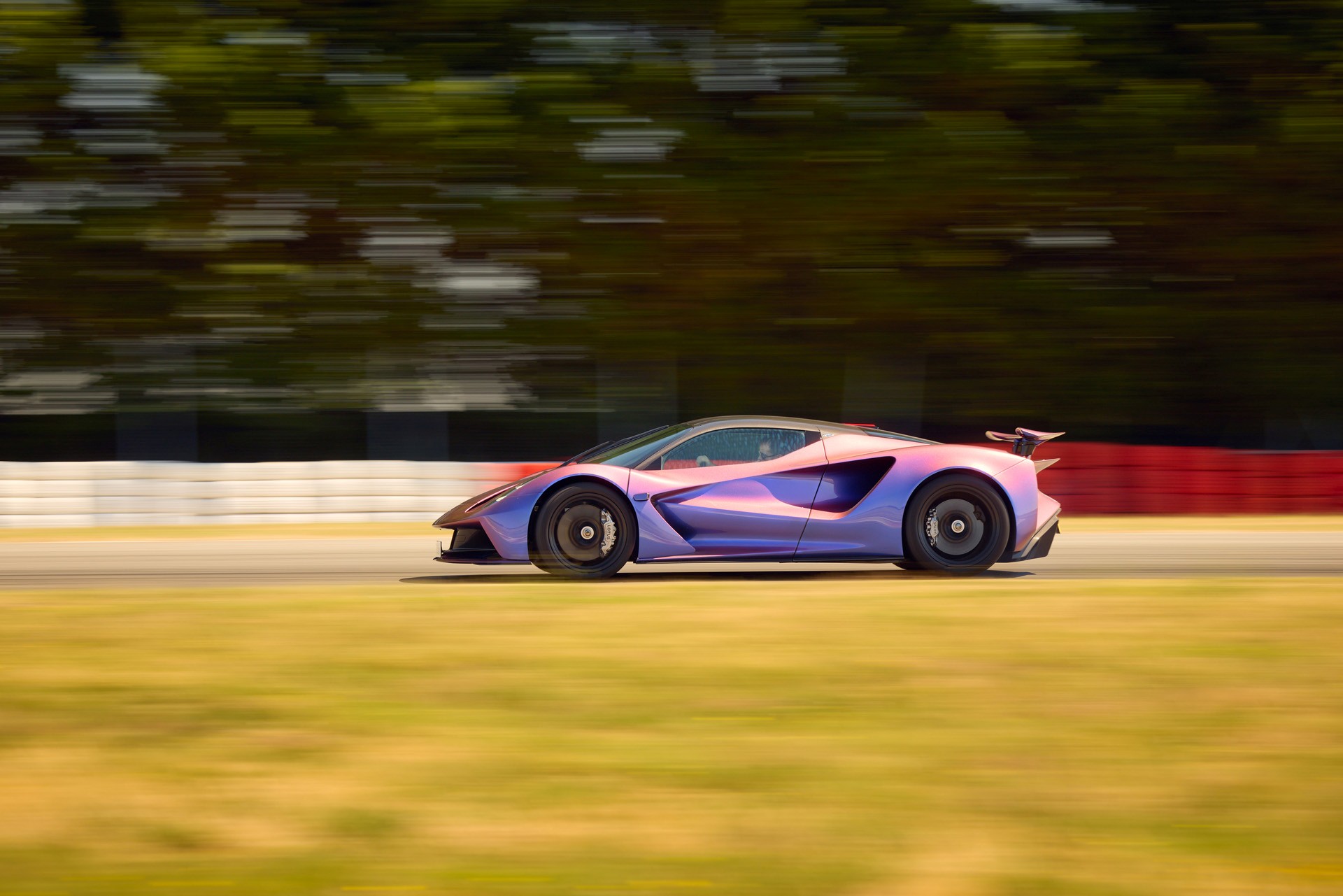 Lotus
Lotus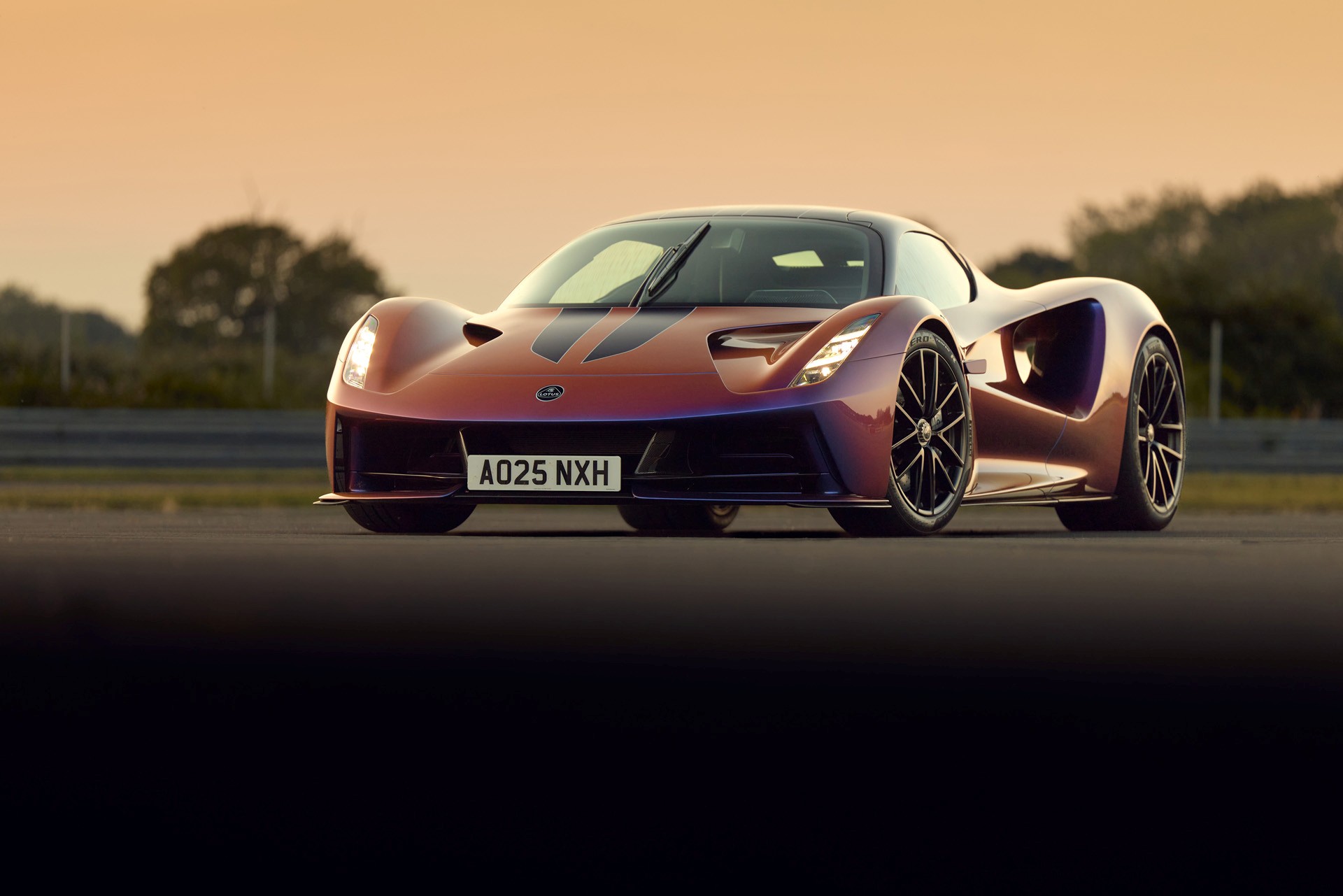 Lotus
LotusIllustrative of the innovative thinking and ingenuity which has always been part of the Lotus DNA, Evija is a technical tour de force. It continues the legendary Lotus bloodline that is rich in firsts and technical game-changers, both in the automotive and motorsport sectors. It remains true to the company's DNA and the guiding principles of founder Colin Chapman, who built the first Lotus in 1948.
Engineered for precise and sustained performance, Evija has five driving modes – Range, City, Tour, Sport and Track – and sprints from 0-62 mph (0-100 km/h) in under three seconds.
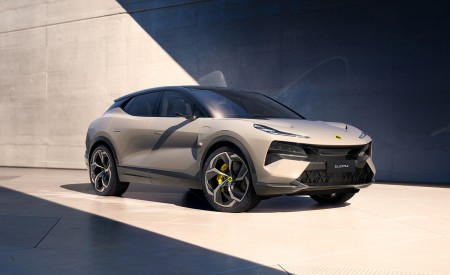
From the moment it was revealed, Evija signalled the beginning of an exciting new chapter for one of Britain's most iconic and beloved sports car brands. As Lotus' first hypercar, Evija laid the groundwork for a new generation of high-performance lifestyle models, including the Eletre hyper-SUV and Emeya hyper-GT.
Exterior design
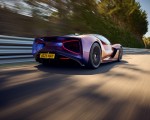
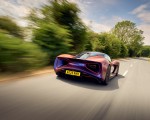
One of the most striking elements of the Lotus Evija is its exterior. From every angle the full carbon fibre bodywork is stretched taut, appearing shrink-wrapped over the mechanical components. Crouching low to the ground, with a ride height of just 105 mm, the pronounced muscular haunches envelop the teardrop cabin that sinks between them.
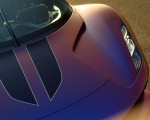
Taking inspiration from the aeronautics industry, the exterior is a perfectly proportioned blend of fluid forms and crisp lines. This is clearly illustrated by the gently curved but sharp leading edge of the bonnet, which is reminiscent of so many classic Lotus road and race cars.
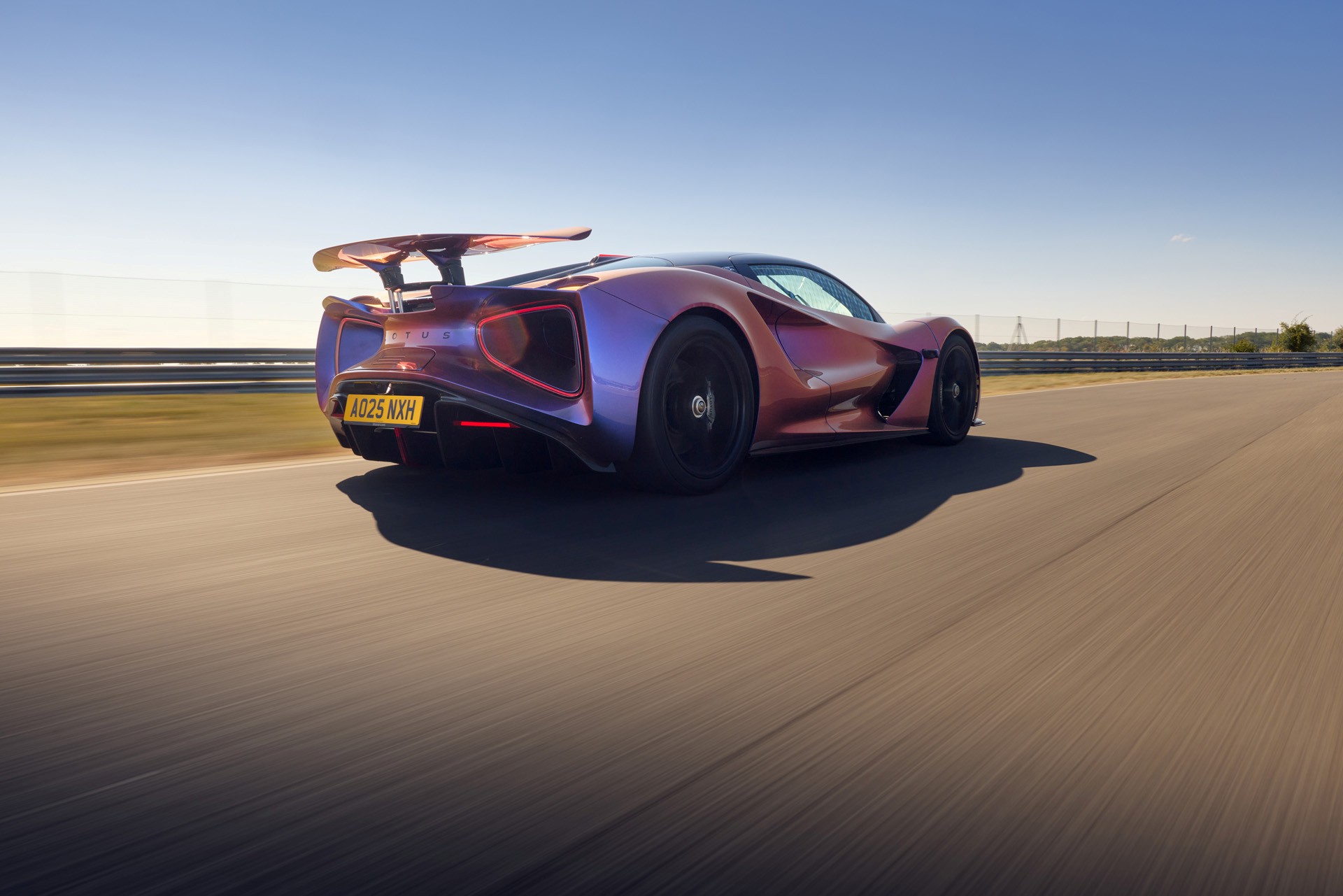
True to Lotus founder Colin Chapman's core belief that every component should serve multiple purposes, the design is also exceptionally efficient. The most obvious example of this – and unquestionably the most dramatic element of the exterior – are the Venturi tunnels that pierce each rear quarter. Inspired by Le Mans race cars, they optimise air flow by directing it through the bodyshell. In the case of Evija, it also helps optimise airflow and generate drag to improve grip-staying true to Chapman's philosophy.
Russell Carr, Design Director, Lotus Cars, says of its conception: "We studied how Le Mans race cars use air flow creatively to go over, under and around the vehicle, but also through it. This concept of 'porosity' is key to Evija and has enabled us to create a timeless design with exceptional amounts of downforce."
Aside from creating a breathtaking presence, this design concept – known as 'porosity' – aids the delivery of high-energy air flow to the rear of the car. This in turn counteracts the low pressure behind the car to reduce drag. Furthermore, the Venturi effect inside the tunnels pulls air through the rear wheel arch louvres, maintaining air quality in the diffuser.
The directional indicators are incorporated into the corners of the ribbon, while the reversing light is provided by the illuminated 'T' of the 'LOTUS' wordmark above the charging flap.
The Lotus Evija features laser lights for both main and dipped beams. The lighting modules are very compact and provide an outstanding view of the road or track ahead. The strikingly thin vertical headlamps provide the perfect balance of crystal-like beauty and a highly technical design. Inside the lenses, unique 'wing-like' elements form the daytime running lights and directional indicators.
Active aerodynamics
A key feature of Evija's sophisticated aerodynamic system is the bi-plane front splitter. It's another illustration of form and function working perfectly in tandem. Designed in three sections, the larger central area provides air to cool the battery pack – mid-mounted behind the two seats – while the air channelled through the two smaller outer sections cools the front e-axle. Lotus aficionados may notice a respectful nod to the iconic Type 72 Formula 1 car, with its square front central section and two side wings.
Active aerodynamics are deployed in the form of a rear spoiler, which elevates from its resting position flush to the upper bodywork, and an F1-derived Drag Reduction System (DRS). Both are deployed automatically in Track mode, though can be deployed manually in other drive modes.
The absence of traditional door mirrors plays a part in reducing drag. Cameras integrated into the doors are electronically deployed on unlock, while another camera built into the roof provides a central view. Images are displayed on three interior screens.
Interior design
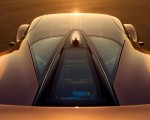
The interior of the Lotus Evija is as dramatic as the exterior. Inspired by the technical precision of race car engineering, the dominant characteristic of the cabin is the 'floating wing' dashboard which can be glimpsed from outside through the windscreen. The design also echoes the porosity of the exterior.
Access to the cabin is through the two dihedral doors. Handle-free to preserve the sculpted exterior, they're operated via the key fob. While they make for a moment of dramatic theatre they also provide maximum space for getting in and out.
An exceptional attention to detail – as people would expect from Lotus – is at the heart of the interior. For example, visible carbon fibre surfaces enhance the sense of light weight, while a thin metal band – engraved with the words 'For The Drivers' – runs centrally through the squab of both seats.
Once in the car, a switch in the roof console closes the doors. The location aids the minimalist layout of the main control panel and prevents them being activated accidentally. Russell Carr, Design Director, Lotus Cars, explains it's in tribute to one of the most iconic Lotus cars, commenting: "Versions of the Lotus Esprit Turbo featured a huge roof console in the late Seventies and early Eighties. It's not something you might expect on a contemporary hypercar but Lotus fans love the connection."
Inside, the cabin strikes the perfect balance between the precise functionality of a track car and the comfort of a road car. The driving position is fully adjustable to accommodate the greatest range of occupants. The elegant carbon fibre shell seats are hand-trimmed with thick Alcantara-finished pads, and feature manual fore / aft adjustment plus electric back operation. The steering column is manually adjustable for both rake and reach. Three-point seatbelts are fitted as standard, with four-point harnesses an option. Built into the bodyshell, close to the occupants' hip point, are two storage areas.
The design of the steering wheel, similar to that found in an LMP or F1 car, further reinforces Evija's sporting intentions. The outer ring is finished in Alcantara as standard with leather available as an option. Buttons are grouped in an intuitive manner and govern functions including phone use, cruise control and DRS deployment.
Ahead of the steering wheel is a state-of-the-art digital display, providing the driver with key information such as mode, battery charge and remaining range. It is the car's only information screen, putting all necessary information in one place. The screen displays essential functions only, with information appearing as required when the appropriate button is pushed, then fading when no longer needed.
Further controls are located on the floating ski slope-style centre console, which features touch-sensitive haptic feedback buttons. Each is integrated in hexagonal recesses to help guide the driver's fingers. As the light plays over the surface it creates an almost organic visual effect. The driver can also interact intuitively with the car's technology via a control wheel. The honeycomb design of the buttons is replicated on indicator stalks and on the surface of the aluminium pedals.
Climate control and a premium infotainment system are fitted as standard. Customers can seamlessly integrate their smartphones via Apple CarPlay and Android Auto, accessing their own music and navigation.
The ultimate in personalisation
Lotus offers Evija customers an unparalleled level of personalisation, enabling them to specify the car exactly as they wish. This includes the opportunity to select limitless paint finishes, unique interior trims and detailing.
Marquetry-style badging provides further bespoke opportunities, where the customer is fully involved in each step of the Commissioning Programme. Lotus has developed the ability to inlay metal elements directly into the carbon fibre bodyshell, so that the badge – courtesy of the famed Jewellery Quarter in Birmingham (UK) – sits completely flush with the bodywork. Evija carries a partial Union Flag badge on the C-pillar, signifying its status as a British-built hypercar. However, this could be another flag, a family crest or personal logo.
"This marquetry-style badging is similar to that associated with traditional cabinet-making, where you inlay different colours of wood," explains Russell Carr, Design Director, Lotus Cars. "On Evija it's really up to the customer to choose whatever materials and designs appeal to them."
Charging technology
Using existing charging technology – such as the widely available 350 kW fast chargers commonly found at public stations – Evija's charge time is under 18 minutes from 10-80%. A typical 11 kW home charging system can recharge Evija in under 7.5 hours. The car's range is 195 miles (314 km) on the WLTP Combined Cycle.
The CCS2 charging socket is hidden behind a vented flap at the rear of the car. In the same location is a small plaque, reminding customers of the Britishness of Evija.
Battery
At the heart of the Evija is an ultra-advanced all-electric powertrain. It has been developed with technical partner Fortescue Zero (formerly Williams Advanced Engineering) using experience from Formula One and Formula E. The battery pack is mid-mounted behind the two seats.
This positioning delivers significant advantages in terms of styling, aerodynamics, packaging, weight distribution, occupant comfort and dynamic handling. It also supports fast and convenient servicing and maintenance. Furthermore, the set-up has been designed so that in the future alternative battery packs – for example, to optimise track performance – can be easily installed.
Power is fed from the battery pack to four independently controlled high-power density e-motors. These feature integrated silicon carbide inverters and an epicyclic transmission on each axle of the four-wheel drive powertrain.
Torque-vectoring, enabled by the four e-motors, provides exceptional dynamic response and agility on the road. This fully automatic, self-adjusting system can instantly distribute power to any combination of two, three or four wheels within a fraction of a second. In Track mode the ability to add more power to individual wheels enables the radius of corners to be tightened, potentially reducing lap times.
Four exceptionally compact, extremely light and highly efficient single-speed, helical gear ground planetary gearboxes transfer power to each driveshaft. Measuring a mere 100 mm in depth, each gearbox comes packaged with the e-motor and inverter as a single cylindrical Electrical Drive Unit (EDU). With a power of roughly 500 PS / 375 kW per e-motor, this is the most efficient and elegant engineering solution to deploying so much power with precision.
As part of the development and validation process, thousands of hours of virtual testing and digital analysis have been conducted. This comprehensive programme has been designed to ensure the car meets its performance targets.
The Lotus Evija is equipped with ESP stability control to ensure safety in all road conditions, with further grip provided by the four-wheel drive system. A pure steering feel – a vital ingredient of every Lotus – is assured via an electro-hydraulic system.
Precision performance
The Evija is the first Lotus production car to feature a one-piece carbon fibre monocoque chassis. Moulded as a single piece for exceptional strength, rigidity and safety, the full length of the underside is sculpted to optimise downforce. The cabin, from the fully adjustable race-style seats to the multi-function steering wheel, is the very pinnacle of motorsport-inspired road car design and technology. It is supplied by CPC, the Modena, Italy-based world-leader in composite technology. Constructed from multiple carbon plies, the manufacturing process is identical to that of an F1 chassis, and ensures the lightest, stiffest, safest and most technically advanced Lotus road car platform ever built. The total weight of the monocoque tub is a mere 129 kg.
Mounted centrally at the base of the Evija's steering wheel hub is the mode controller. It allows for easy low-speed driving and the driver to select each one of the five driving modes: Range, City, Tour, Sport and Track. Each mode has been engineered to suit specific driving conditions and preferences.
In Range mode, Evija prioritises energy efficiency by limiting power output (maximum torque to 600 Nm and capping top speed at 81 mph/130 km/h).
City mode prioritises smooth, low-speed operation in urban environments by offering greater power control and a more urgent throttle response compared to Range. In this setting, torque output increases to 800 Nm with a top speed of 99 mph/160 km/h, while the rear wing remains retracted unless additional cooling is required.
Tour mode unlocks the Evija's maximum top speed of 217 mph (350 km/h), increases maximum torque to 1,000 Nm, makes the throttle response more progressive and is intended for use beyond urban settings. It encourages the driver to explore the car's full performance potential in a controlled, refined manner.
From Sport mode onwards, Evija gets another damper setting, a looser Electronic Stability Control (ESC), and an even more urgent and responsive feel. Sport is the most dynamic setting available at ignition and is best suited to smooth roads with ample space for performance driving.
Track mode is accessible through a specialist configuration and is designed exclusively for circuit use. Evija features torque vectoring when Track is selected, while moveable floor underbody elements increase the size of the rear diffuser for more downforce.
Reflecting the bespoke nature of the Evija ownership experience, Lotus also offers tailored driver experiences to meet each customer's individual requirements.
As with every Lotus, the Evija is 'For The Drivers' and its searing pace is delivered in one seamless, sustained surge. The 0-62 mph (0-100 km/h) sprint is completed in under three seconds, while its electronically limited top speed is 217 mph (350 km/h).
These headline statistics only tell part of the car's performance story. Further performance figures include acceleration from 100-200 km/h in less than three seconds, and 200-300 km/h in less than four seconds.
Power can also be delivered over a sustained period. The car's advanced aerodynamics and four-radiator cooling package keep the battery at an optimum temperature. It means that Evija is capable of being driven flat-out with no derate for at least seven minutes in Track mode.
Calibrated to provide the optimum blend of extreme track performance and on-road comfort, Evija's motorsport-derived suspension features three adaptive spool-valve dampers for each axle. Two are corner dampers with a third to control heave. These are mounted in-board to optimise the aerodynamic performance. They are manufactured by Multimatic, specialists in developing high-performance suspension technology for on-road, off-road and motorsport applications including Formula 1.
Magnesium wheels provide optimum lightness and strength and are sized 20 and 21 inches at the front and rear respectively. They are shod with Pirelli Trofeo R tyres, developed specifically to achieve ultimate performance. To deal with Evija's extreme performance, the car is equipped with a forged aluminium AP Racing braking system with carbon ceramic discs front and rear.
As a pure EV, Evija is quiet at low speeds. Regulations require that it emits a digitally created sound – transmitted via a front-mounted speaker – which will alert pedestrians to its presence. At higher speeds, Evija emits a pure, evocative sound from its EDUs, sparking the driver's imagination. The signature 'Becker corners' make it easy to place the car precisely on the road – a feature conceived by Roger Becker, former chassis development director and factory driver at Lotus.
Connected to the cloud
Evija provides drivers with a full suite of digital connected infotainment, which benefits from over-the-air software updates. A powerful on-board modem enables communication to the cloud, and the driver can interact with that data through a Lotus smartphone app. The app enables drivers to monitor their Evija from anywhere in the world, for example, to check the battery charge status and driving range. It also supports remote use of air-con, to heat or cool the cabin ahead of the next drive.
Evija's infotainment system includes a chronograph to allow the driver to record their lap times. Connection to the cloud means they can view their performance while at the track and recall previous sessions through the app.
Built in Great Britain
Hethel, close to the historic city of Norwich in the east of England, UK, has been the home of Lotus since 1966 – and is also where the groundbreaking Evija is built. The Lotus Evija has been designed and engineered at Lotus' historic home in Hethel, UK, and production takes place in a dedicated on-site manufacturing facility. Roughly 80% of the parts used in the production process of the Lotus Evija are made in Britain.
A maximum of 130 production slots are available with cars only built at request, guaranteeing exclusivity to match the stunning looks, ground-breaking technology and world-beating performance. They will be sold directly to customers by Lotus, with the global network of retailers in support.
Technical Specifications
Powertrain: Pure electric, 4WD, four electric motors
Power: 2,039 PS / 1500 kW (4 x 375 kW)
Battery: 91 kWh, mounted behind the cabin
Torque: 1,704 Nm with torque vectoring
0-100 km/h (0-62 mph): <3s
0-300 km/h (0-186 mph): <10s
Max speed: Electronically limited to 217 mph (350 km/h)
All-electric range (WLTP Combined): 195 miles (314 km)
Charging time (10%-80%)
- 400V 11 kW charger: <7.5 hours
800V 350 kW charger: <18 mins
Length: 4,459mm
Width: 2,000mm
Height: 1,122 mm
Front: 390 mm x 34 mm carbon ceramic cross-drilled discs, 6-piston fixed-opposed callipers
Rear: 390 mm x 34 mm carbon ceramic cross-drilled discs, 4-piston fixed-opposed callipers
(Lotus Press Release)
Gallery: 2025 Lotus Evija Wallpapers
38+ car wallpapers of the 2025 Lotus Evija for desktop and mobile phones. Download 2025 Lotus Evija wallpapers in high-quality HD and 4K resolutions.